
Designer Radiators Products
Frequently Asked Questions
How do I calculate the correct BTU output for a designer radiator?
To ensure your room stays warm, you must calculate the British Thermal Units (BTU) required based on the room's volume and heat loss factors. Measure the length, width, and height of your room, and account for window sizes and insulation quality. It is always recommended to choose a radiator with a slightly higher BTU than required; you can use a Thermostatic Radiator Valve (TRV) to reduce the heat, but an undersized radiator will never sufficiently heat the space during a UK winter.
What is the difference between Mild Steel and Aluminium designer radiators?
Mild Steel: The industry standard for designer radiators due to its durability and cost-effectiveness. It retains heat longer after your heating system is turned off.
Aluminium: A premium, high-efficiency material. Aluminium radiators have lower water content and higher thermal conductivity, meaning they heat up almost instantly. They are also lighter, making them ideal for installation on stud or partition walls.
Can I install a vertical designer radiator on a standard central heating system?
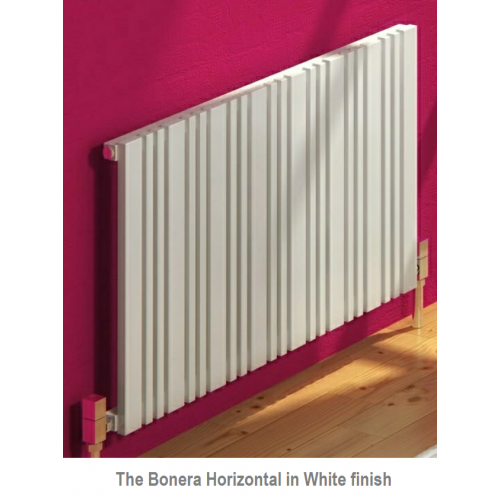
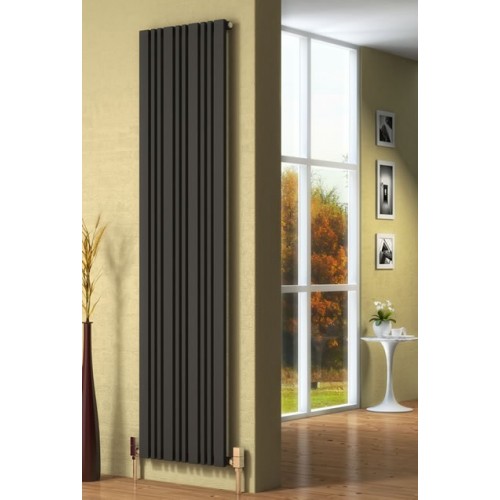
Yes, all radiators in our collection, including the Bonera and Coredo series, are compatible with standard UK modern central heating systems. However, because vertical radiators are taller, they may require specific valve configurations (such as angled or corner valves) depending on whether your pipes come from the floor or the wall.
What are the benefits of Anthracite and Matte Black finishes over Chrome?
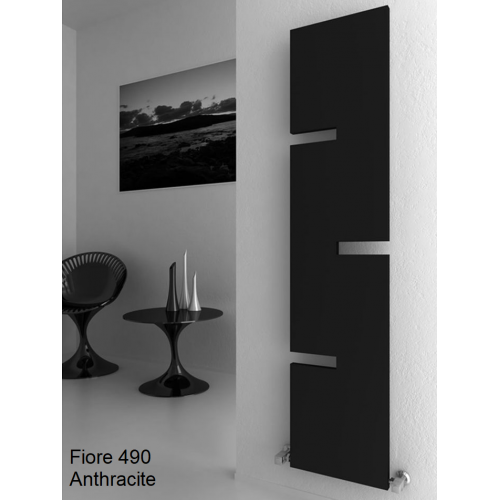
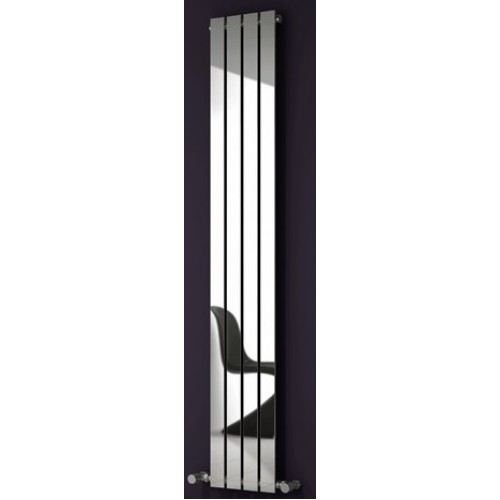
While Chrome is a classic aesthetic, powder-coated finishes like Anthracite and Matte Black actually offer a slightly higher heat emission rate. Chrome finishes can act as an insulator, slightly reducing the heat radiated into the room. If maximum thermal efficiency is your priority, a textured or matte finish is the superior technical choice.
Are designer radiators compatible with Heat Pumps and low-temperature systems?
Yes. Our 2026 designer range is engineered with larger surface areas to perform efficiently even with the lower flow temperatures associated with Air Source Heat Pumps (ASHPs). If you are switching to a green energy system, we recommend slightly oversizing your radiator dimensions to maintain comfort levels.
Do I need special valves for my designer radiator?
While standard valves will work, we strongly recommend using Thermostatic Radiator Valves (TRVs). These allow for individual room temperature control, preventing energy waste. For a professional "showroom" finish, match your valves and pipe shrouds to the specific model finish, such as using matte black valves for the Dimaro or Osimo series.