
Designer Towel Rails Products
Frequently Asked Questions
How do I calculate the correct British Thermal Unit (BTU) output requirement to ensure a designer towel rail heats my entire bathroom and not just the towels?
You must measure your bathroom height, width, and length in metres. Use our online BTU calculator to get a number. If the number is high, you need a larger rail or one with double bars. A small rail only warms towels, but a high BTU output rail warms the whole room.
What is the specific functionality of a Dual Fuel towel rail kit and how does the T-Piece adapter allow connection to both central heating and the mains electricity supply?
A Dual Fuel kit lets you use the rail all year. In winter, your central heating warms it up. In summer, you turn on the electric heating element instead. The T-Piece is a small pipe connector that lets water flow from the boiler while also holding the electric wire stick inside the rail.
Why does a chrome-finished designer radiator generally provide a lower heat output compared to white or painted mild steel alternatives of the same dimensions?
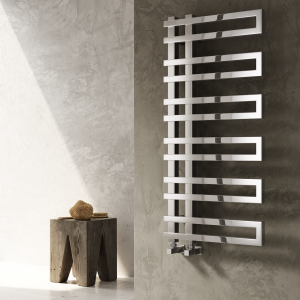
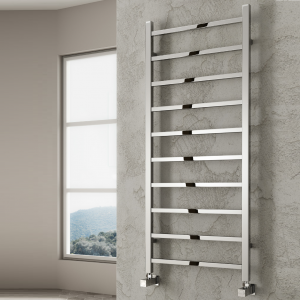
Chrome is shiny and acts like a mirror for heat. It keeps some heat inside the metal instead of letting it out into the room. A white or painted rail lets heat escape easier. Usually, chrome gives out about 20% less heat, so buy a slightly bigger size if you choose chrome.
What is the difference between Angled, Straight, and Corner radiator valves, and how do I determine which type matches my existing bathroom pipework configuration?
Look at where your water pipes come from. If pipes come out of the floor, use Straight valves. If pipes come out of the wall, use Angled valves or Corner valves. Corner valves look neatest because they do not stick out into the room as much.
Can I install a thermostatic radiator valve (TRV) on a bathroom towel rail, and will the towel coverage affect the temperature sensor's accuracy?
Yes, you can use a Thermostatic valve, which saves money by turning off when the room is warm. However, if you cover the valve or the rail with thick towels, the sensor might think the room is hot and turn off too early. It is often better to put the sensor where air flows freely.
What does the Ingress Protection (IP) rating IP44 mean for an electric heated towel rail and is it safe for installation in Bathroom Zone 2?
IP44 means the rail is safe from water splashing on it from any direction. This is the standard safety level required for Bathroom Zone 2, which is the area close to your sink or bath. Always check the rating to stay safe and follow UK electrical rules.
Why is stainless steel often recommended over mild steel for towel rails in wet environments, and how does it impact the warranty and lifespan of the product?
Stainless steel does not rust, even in very damp bathrooms. Mild steel is painted to stop rust, but if the paint scratches, it can rot. Stainless steel costs more but lasts much longer, often coming with a 25-year warranty because it is so strong.
How do I accurately measure the Pipe Centres of my existing radiator to ensure a direct replacement without altering the underfloor copper pipework?
Measure the distance from the centre of the left pipe to the centre of the right pipe. Do not measure the full width of the radiator. You must match this Pipe Centre number exactly if you do not want to dig up your floor to move the pipes.
What is the purpose of the liquid glycol solution used in pre-filled electric-only designer radiators, and does it require topping up over time?
Glycol is a special oily water that stops rust and freezing inside the rail. It also spreads heat very evenly. In a sealed electric radiator, you never need to top it up. It is factory-sealed to last for the life of the product.
Does the installation of a vertical designer radiator require higher system pressure or specific balancing compared to a standard horizontal panel radiator?
No, it works on the same pressure. However, because vertical radiators are tall, air can get stuck at the very top. You might need to bleed the radiator (let air out) more often when you first install it to make sure the top bars get hot.
How does an aluminium towel rail compare to a steel one in terms of thermal conductivity and heat-up speed for energy efficiency?
Aluminium is a super-metal for heating. It heats up 5 times faster than steel. This makes your bathroom warm very quickly when you turn it on. It is also very light, which is great if you have thin walls that cannot hold heavy steel rails.
What is the delta T (?t) value, such as ?t50, shown in technical specifications, and why is it critical for comparing heat outputs between different brands?
Delta T50 is the standard setting for testing heat. It assumes your boiler water is 75
Can I convert a standard central heating designer radiator into an electric-only version, and what components are required for this modification?
Yes, you can. You need to fill the rail with water and inhibitor fluid, screw in an electric heating element, and seal the other holes with blank plugs. You must leave a small air gap at the top for the water to expand when hot.
What causes cold spots at the top of a heated towel rail, and what is the technical procedure to rectify this issue using the bleed valve?
Cold spots mean air is trapped inside. To fix this, turn off the heating and wait for it to cool. Use a radiator key to slightly open the bleed valve at the top. You will hear a hiss. When water starts to drip out, close it tightly. The rail should now be hot all over.
Is it necessary to add a chemical inhibitor to the central heating system after installing a new designer radiator to prevent internal corrosion and sludge?
Yes, absolutely. When you drain water to fit a new rail, you lose the protective chemicals. You must add a central heating inhibitor back in. This liquid stops black sludge from building up and keeps your new designer rail working efficiently for years.
How much weight can a wall-mounted ladder towel rail support, and do I need special fixings for plasterboard or stud walls?
A fully filled rail covered in wet towels is very heavy. Standard wall plugs are not safe for plasterboard. You should find the wooden studs in the wall to screw into, or use heavy-duty toggle bolts. If unsure, ask a builder to ensure it does not pull off the wall.
What is the difference between a standard On/Off electric element and a thermostatic electric element with a timer function?
A standard element is like a kettle; it is either boiling or off. A thermostatic element is smarter. It lets you choose a temperature (like 20
Why do some designer radiators have a rough or textured anthracite finish, and does this affect the thermal emission or cleaning requirements?
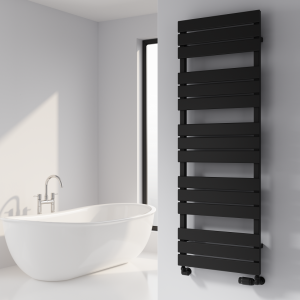
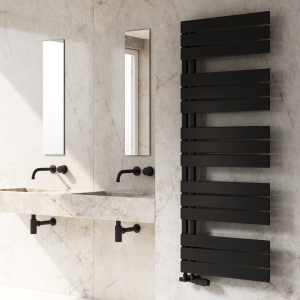
Anthracite (dark grey) often has a textured finish to look modern and increase the surface area slightly, which can help heat output. It is very good at hiding dust and fingerprints compared to chrome. You just need a soft brush to clean it.
How does the water capacity of a large designer towel rail impact the warm-up time of my central heating system boiler?
A big rail holds more water. This means your boiler has to work a little harder for a few minutes to heat that extra water. However, once hot, a larger volume of water stays warm for longer, keeping your bathroom cosy even after the boiler turns off.
Are there specific electrical zones or distance regulations for installing an electric towel rail switch or fused spur outside the bathroom?
Yes. The switch to turn the rail on must be outside the bathroom, or it must be a pull-cord inside. You cannot have a normal light switch inside the bathroom due to wet hands. The fused spur (connection box) is usually placed on the wall outside the bathroom door.