
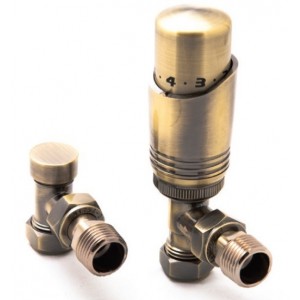
Modern Thermostatic Radiator Valves Products
Frequently Asked Questions
How does the liquid sensor inside a modern thermostatic radiator valve actually control the room temperature
Inside the head of your modern thermostatic radiator valve there is a canister filled with a special liquid or wax. When the room gets warm this liquid expands and pushes a metal pin down. This pin closes the valve body and stops hot water from entering the radiator. When the room cools down the liquid shrinks and the pin rises to let hot water flow again. This automatic cycle keeps your room at the perfect temperature without you touching it.
What is the technical difference between an Angled TRV and a Corner TRV and which one fits my pipes
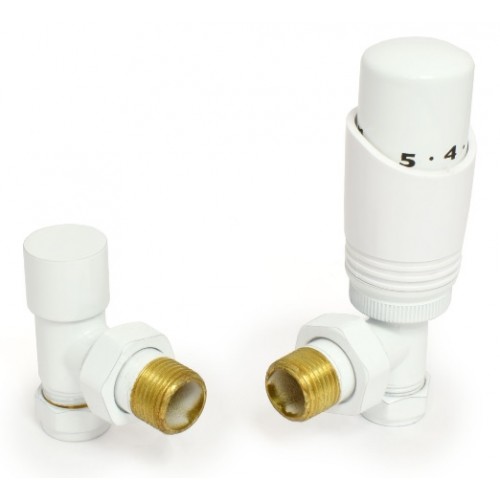
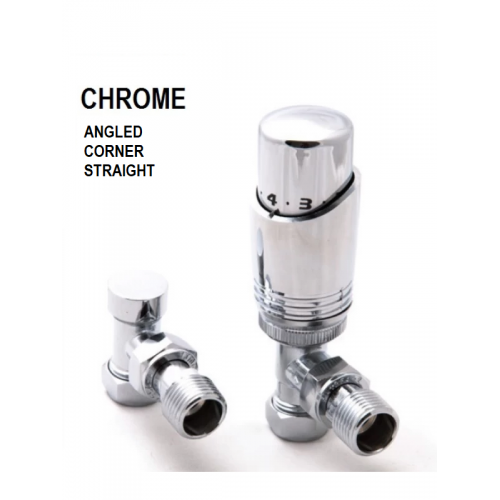
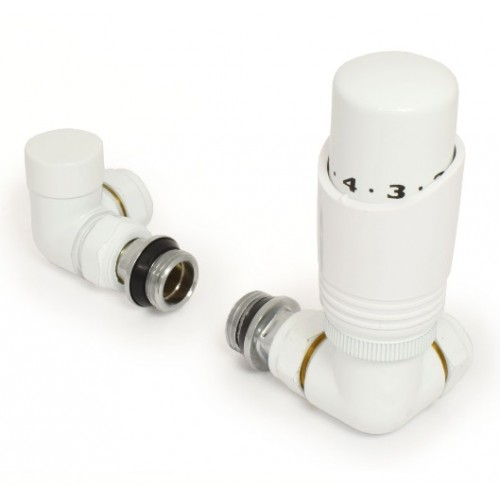
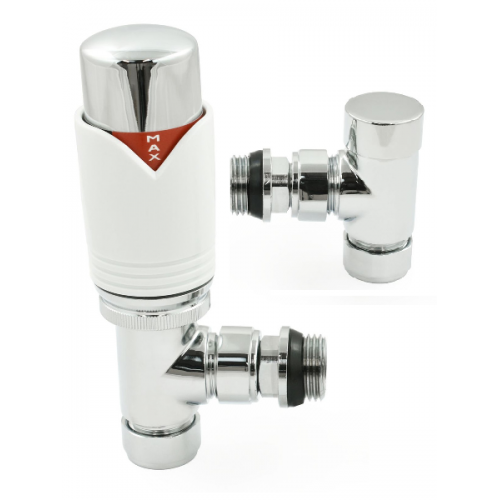
This depends on the angle of your pipes. An Angled TRV connects the radiator to pipes coming up from the floor at a 90 degree angle. A Corner TRV is different because it is designed for pipes coming out of the wall. The Corner valve turns the head inward so it does not stick out into the room which prevents you from accidentally kicking it. You should check if your pipes come from the floor or wall to choose the correct shape.
Why do I need a Lockshield valve included with my modern thermostatic radiator valve set
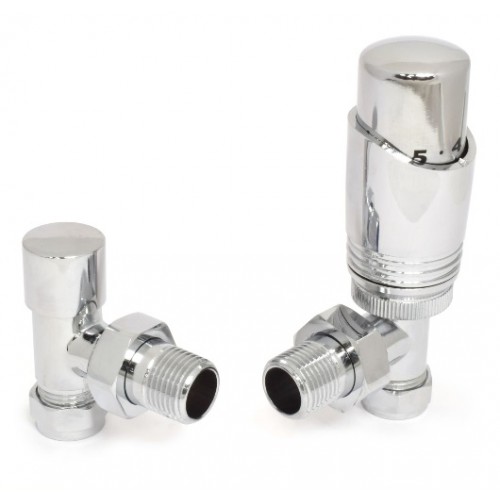
You need a Lockshield valve to balance your central heating system. While the TRV controls the temperature the Lockshield valve on the opposite side controls the speed of the water leaving the radiator. By adjusting the Lockshield you ensure that water flows evenly to all radiators in the house so that the radiators furthest from the boiler get hot just as quickly as the ones nearby.
Can installing modern thermostatic radiator valves really reduce my heating bills and energy usage
Yes replacing manual valves with modern thermostatic valves can significantly lower your bills. Manual valves keep the radiator hot even when the room is already warm which wastes energy. A TRV stops the boiler from heating water for rooms that are already at the target temperature. This makes your heating system more efficient and stops you from paying for heat you do not need.
What does the frost protection setting on my radiator valve do during the winter months
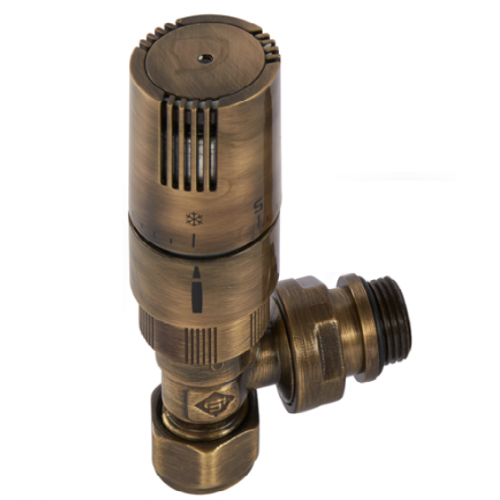
The frost protection setting is usually marked with a snowflake symbol on the dial. When you select this the valve stays closed unless the temperature in the room drops very low typically below 7 degrees Celsius. If it gets that cold the valve opens slightly to let warm water flow. This prevents the water inside your radiator pipes from freezing and bursting which protects your home from flood damage.
How do I know if my central heating pipes are the standard 15mm size for these valves
Most residential homes in the UK use 15mm copper pipes for heating. You can measure the width of the pipe with a ruler or tape measure. If the pipe is approximately 15mm wide our standard modern valves will fit perfectly. If you have microbore pipes which are smaller at 10mm or 8mm you will need a simple reducer or adapter to fit the standard 15mm valves.
Why is my radiator not getting hot even though the thermostatic valve is turned to the maximum number
If the TRV is fully open but the radiator is cold the pin inside the valve body might be stuck. This often happens after summer when the heating has been off. To fix this remove the plastic head and you will see a small metal pin. Gently push the pin down and see if it springs back up. If it is stuck tap the side of the valve body gently to loosen it. Also check if the Lockshield valve on the other side is open enough to let water flow.
What is a bi directional valve body and why is it important for modern heating installations
A bi directional valve body allows water to flow through the valve in either direction without making a banging noise. In older systems water had to flow in a specific direction or the valve would vibrate and hammer. Our modern thermostatic valves are bi directional which means you can install the TRV on either the flow pipe or the return pipe without worrying about loud noises or flow errors.
Do the numbers 1 to 5 on the valve head correspond to specific room temperatures in degrees
Yes the numbers usually represent a temperature range. Setting 1 is typically around 10 to 12 degrees Celsius. Setting 3 is usually about 20 degrees Celsius which is standard for living rooms. Setting 5 is around 28 degrees Celsius. However these are approximate because the size of the room and the location of the radiator can affect the sensor reading so you should adjust it until you feel comfortable.
Is it possible to install modern thermostatic radiator valves on old cast iron radiators
Yes you can install modern valves on old cast iron radiators as long as the pipe connections match. Most modern valves use a standard half inch BSP thread to screw into the radiator. If your old radiator has different size holes you can buy adapters. Adding a modern valve to an old radiator is a great way to make a vintage heating system more energy efficient.
Why should I not install a thermostatic radiator valve in the same room as my main wall thermostat
You should not put a TRV in the room with your main wall thermostat because they will fight each other. The main thermostat tells the boiler when to turn on and off for the whole house. If a TRV shuts off the radiator in that room the main thermostat will think the house is still cold and keep the boiler running unnecessarily. Leave one radiator in the hall or living room with a manual valve to keep the system flowing.
How does a liquid sensor in the valve head compare to a wax sensor for accuracy and speed
Liquid sensors are generally considered better than wax sensors because they react faster to temperature changes. A liquid sensor might react to a change in room heat in about 20 minutes whereas a wax sensor might take 40 minutes. This means a liquid sensor maintains a more steady temperature and stops the room from overheating or getting too cold before the valve adjusts.
What tools do I need to replace my old manual valves with new modern thermostatic ones
To replace a valve you will need an adjustable spanner or wrench a pair of water pump pliers some PTFE tape or plumbing sealant and a towel or tray to catch water. You will also need a radiator bleed key. It is a technical job that requires draining the water from the radiator so if you are not confident with plumbing it is safer to hire a professional heating engineer.
Can I install these modern valves on a towel rail in my bathroom or shower room
You can use them on towel rails but you must be careful. Building regulations often suggest leaving towel rails without TRVs so they can act as a bypass for the system. However if you do install one make sure the chrome finish is high quality to resist the humid bathroom air. Also remember that if you cover the valve head with a wet towel the sensor will think the room is hot and turn the radiator off leaving your towels damp.
Why is my thermostatic radiator valve making a loud whistling or banging noise when the heating is on
A whistling noise usually means the water is flowing through the valve too fast because the pump speed is too high or the system is not balanced. A banging noise often means the valve was installed the wrong way around on an older uni directional system. Since our modern valves are bi directional checking the system pressure and balancing the Lockshield valves usually stops the noise.
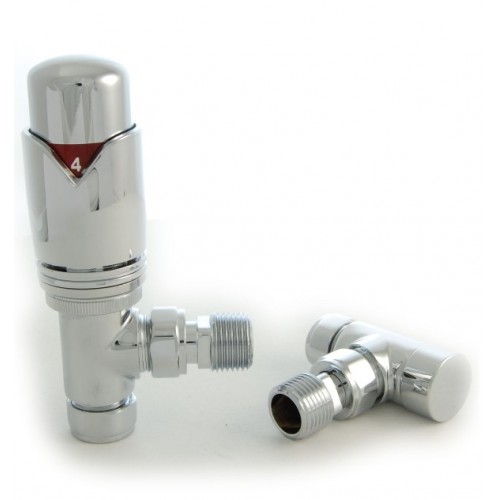
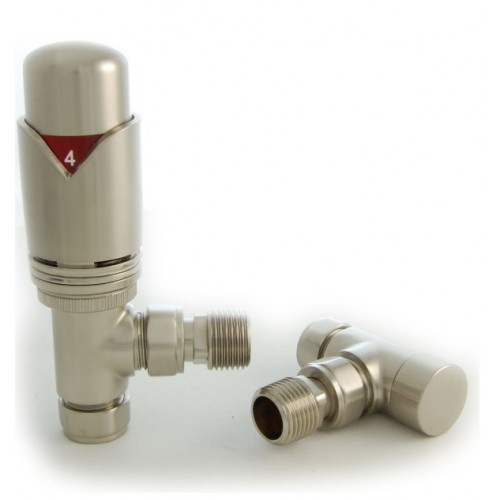
What is the benefit of the polished chrome or brushed nickel finish on the Bexley valve range
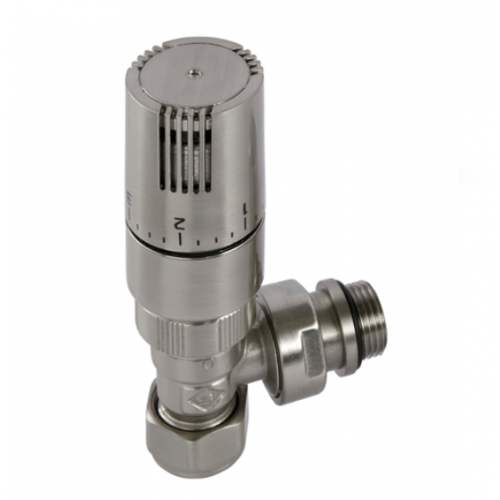
The finish is not just for decoration it also protects the brass body of the valve. High quality plating like polished chrome or brushed nickel prevents the brass from corroding or tarnishing over time. This ensures that your valves look new for years and are easy to wipe clean with a soft cloth. It makes them durable against scratches and heat discoloration.
How do I maintain my thermostatic radiator valves to stop them seizing up over summer
The best maintenance is to turn your valves to the highest number setting during the summer months when the heating is off. This keeps the internal valve pin in the open position and stops it from getting stuck in the closed position due to sludge or debris. When winter comes simply turn them back down to your preferred number and they should work perfectly.
Can I use a smart head on these valve bodies later if I want to upgrade to WiFi control
Yes most standard modern thermostatic valve bodies use a universal thread size usually M30 x 1.5mm. This means you can unscrew the standard manual TRV head and screw on a smart electronic head from brands like Hive or Tado later on. This makes our valves a future proof investment if you decide to upgrade to a smart home system in the future.
What happens if I install the thermostatic valve on the return pipe instead of the flow pipe
With older valves this would cause a loud hammering noise because the water would flow against the valve washer. However our modern valves are bi directional so they work perfectly on either the flow pipe where water enters or the return pipe where water leaves. This gives you flexibility during installation especially if your pipes are in awkward positions.
Why does the radiator get hot at the bottom but stay cold at the top after fitting new valves
This is usually not a fault with the new valves but a sign that air is trapped inside the radiator. When you drain the system to fit valves air gets into the pipes. Air rises to the top of the radiator and stops hot water from filling it. You need to use a radiator bleed key to open the small vent at the top of the radiator until the hissing air stops and water comes out.