
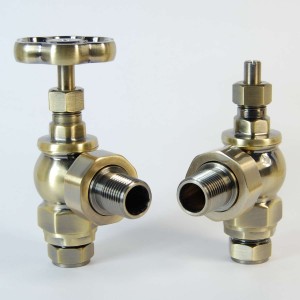
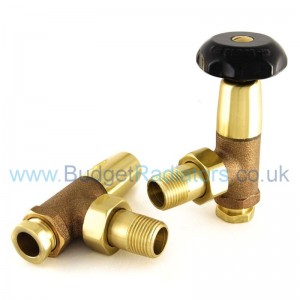
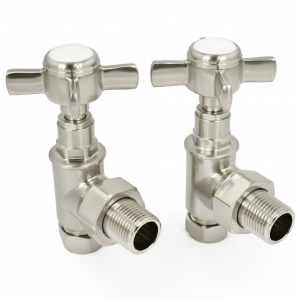
Traditional Manual Radiator Valves Products
Frequently Asked Questions
What is the fundamental difference between a traditional manual radiator valve and a thermostatic valve regarding automatic temperature control and energy efficiency in a central heating system?
A traditional manual radiator valve works exactly like a standard tap. You must turn the handle yourself to open or close the flow of hot water. Unlike thermostatic valves, it does not have an internal sensor to detect room temperature changes. This means it will not turn off automatically when the room gets warm. They are excellent for bathrooms or rooms where you want constant heat, and they are often smaller and more historically accurate for period properties than modern thermostatic options.
How do I determine if I require angled, straight, or corner orientation valves based on the specific location of my central heating pipework and radiator inlets?
You must look at where your water pipes come out of the room. If your pipes come up from the floor and connect to the side of the radiator, you need Angled valves. If your pipes run along the wall or come up from the floor to connect underneath the radiator, you need Straight valves. If your pipes come out of the wall and connect to the side, you can use Corner valves or Angled valves. Choosing the correct shape ensures the valve head faces the room and not the wall.
Are the Abbey and Belgravia traditional manual radiator valves compatible with standard United Kingdom 15mm copper pipework and 1/2 inch BSP radiator threads?
Yes, all our ranges including the Abbey and Belgravia sets are manufactured to fit the UK standard. They have a 15mm compression fitting for your copper pipes and a standard 1/2 inch BSP threaded tail that screws into the radiator. This makes them a universal fit for almost all cast iron, column, and standard radiators sold in the UK. If you have older or wider pipes, you may need a simple adapter, but 15mm is the industry standard.
What is the specific function of the lockshield valve included in the set, and how does it assist in balancing the hydronic heating system across the property?
The lockshield valve is the valve that goes on the opposite side of the radiator from the main control handle. Its job is to restrict the maximum flow of water out of the radiator. By adjusting this, you ensure that the water pressure is balanced across your whole house. If you do not adjust the lockshield, the radiators closest to the boiler might get very hot while the ones far away stay cold. It is usually set by a plumber and then covered with a cap so it is not accidentally moved.
Can I install traditional manual radiator valves on modern steel panel radiators, or are they exclusively designed for cast iron and column radiators?
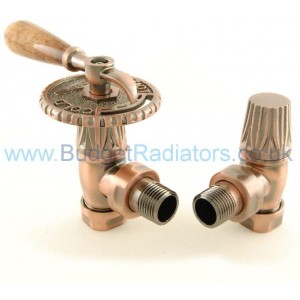
You can absolutely install them on modern steel radiators. While the design of valves like the Abbey lever or Belgravia crosshead is made to look vintage to match cast iron or column radiators, the physical connection is identical to modern valves. Many customers use our traditional valves on modern radiators to add a touch of classic style to a contemporary room.
What is the correct procedure for sealing the threaded tails of the valve into the radiator to prevent water leaks under system pressure?
To stop leaks, you must create a watertight seal on the thread that screws into the radiator. The best way to do this is using PTFE tape or plumber's hemp. Wrap the tape around the threads of the valve tail about 10 to 15 times in a clockwise direction before screwing it into the radiator. This fills the tiny gaps between the metal threads and prevents water from escaping.
Do the Abbey and Belgravia manual valve sets include both the wheelhead control valve and the lockshield valve, or do I need to purchase them separately?
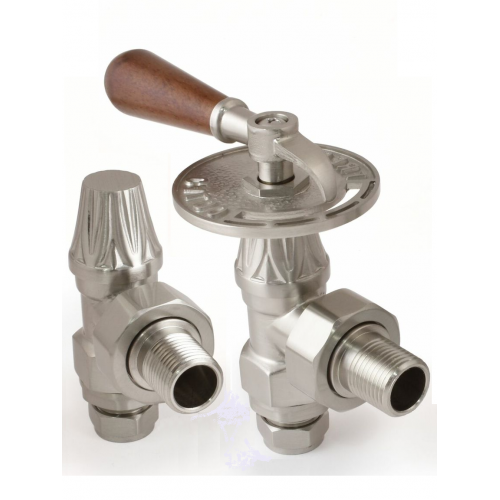
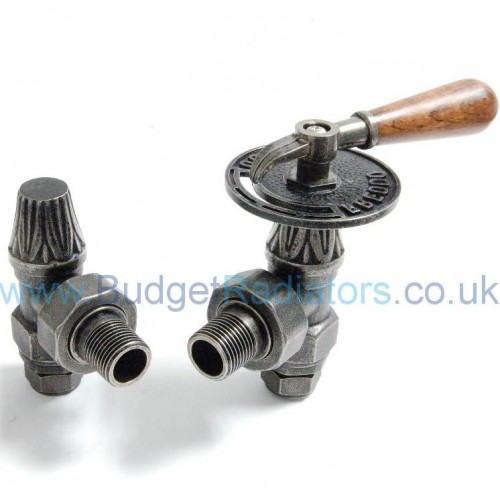
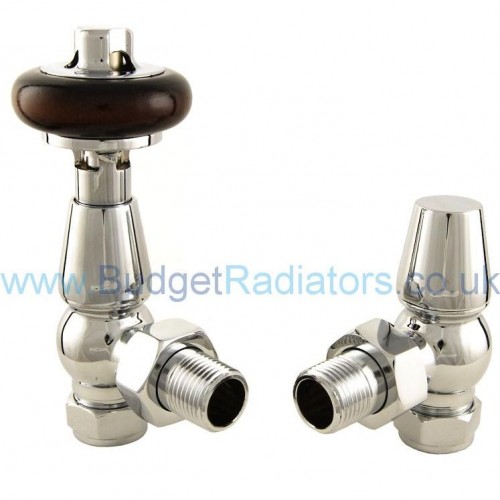
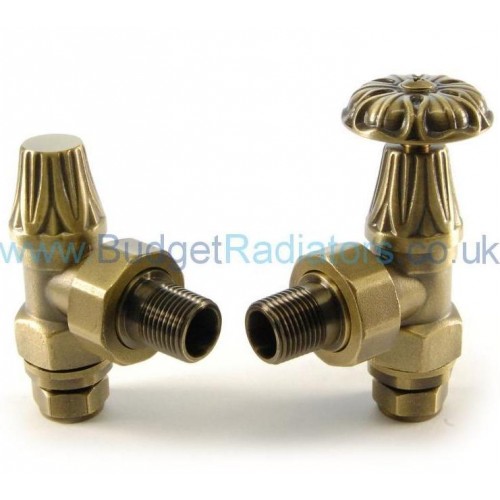
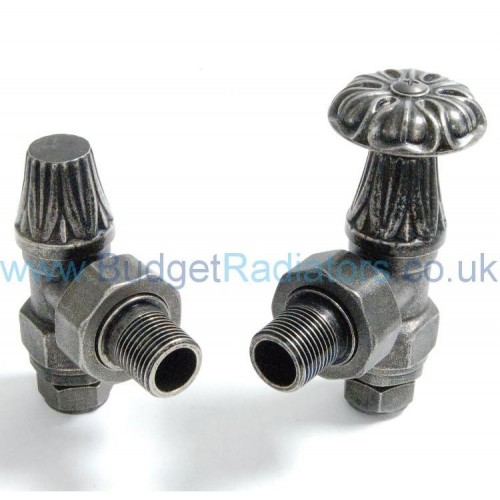
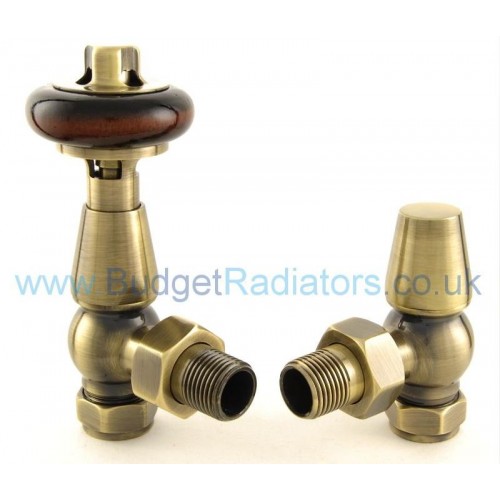
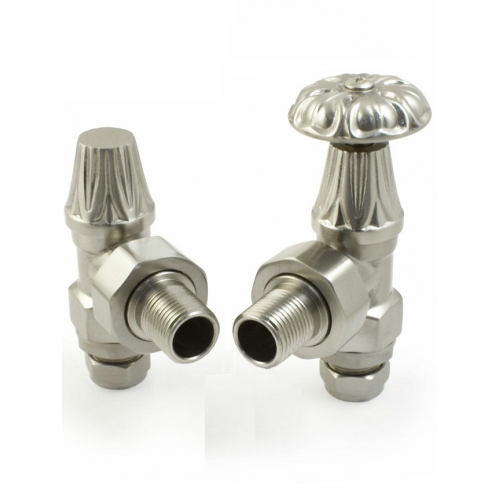
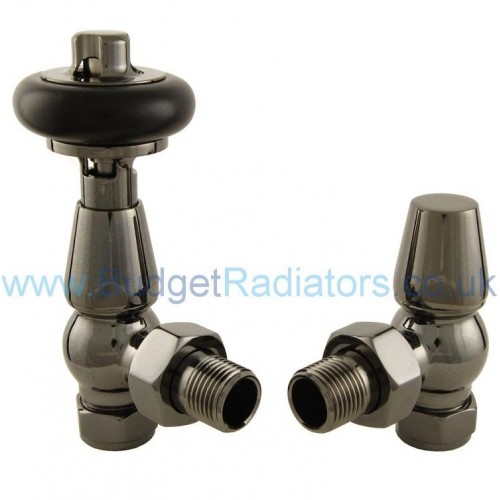
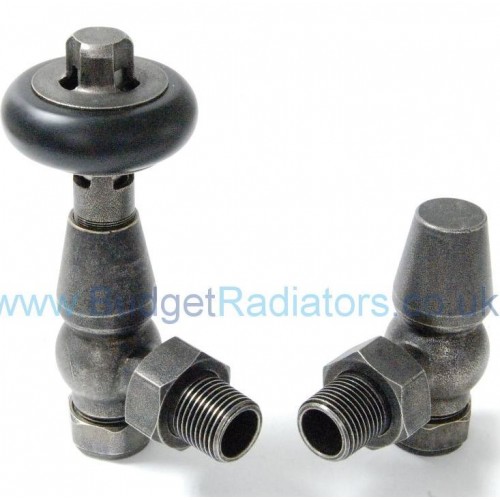
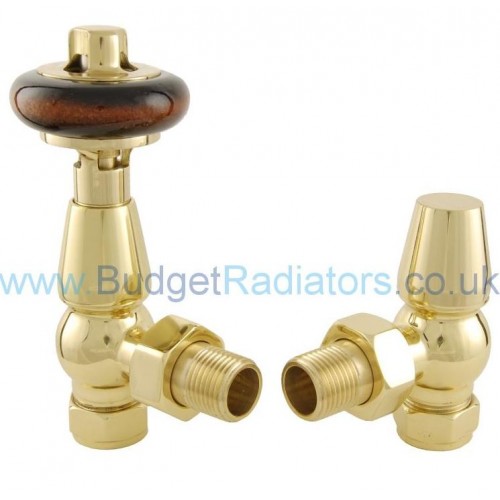
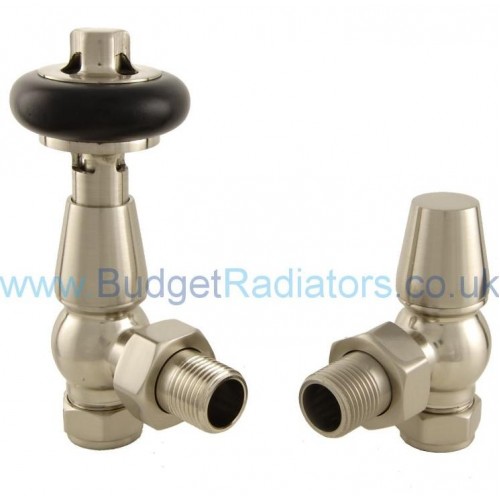
All our valve products are sold as complete sets. When you buy an Abbey or Belgravia set, you receive one wheelhead valve (the one with the handle you turn) and one matching lockshield valve for the other side. This ensures both sides of your radiator look identical in your chosen finish, whether that is Old English Brass, Pewter, or Satin Nickel.
How does the lack of a frost protection setting on manual valves affect the radiator if I leave my home for an extended period during winter?
Because manual valves do not have a sensor, they cannot automatically open to stop pipes from freezing if the temperature drops very low. If you are going away in winter, you should leave your manual valves slightly open (turned on) rather than fully closed. This allows a small amount of warm water to flow through the system, preventing the water inside the radiator from freezing and cracking the metal.
Are these valves bi-directional, or do I need to identify the flow and return pipes before installing them on the radiator inlet?
Most traditional manual valves function simply by opening a gap for water to flow, so they can technically accept water from either direction. However, it is always best practice to identify which pipe brings hot water into the radiator (the flow) and which takes it away (the return). Installing the wheelhead valve on the flow pipe is the traditional method, but for manual valves, it is less critical than for thermostatic valves which can rattle if installed the wrong way.
My existing central heating pipes are 10mm microbore rather than the standard 15mm. Can I still use these traditional 15mm valves?
Yes, you can still use our high-quality 15mm valves, but you will need a small component called a reducer. A reducer sits inside the valve entrance or on the pipe to bridge the gap between your thinner 10mm pipe and the valve's 15mm opening. This allows you to have the beautiful aesthetic of a chunky traditional valve even with modern microbore plumbing.
What is the difference between the lever handle design of the Abbey range and the crosshead handle of the Belgravia range in terms of usability?
The internal mechanism works the same for both, so the choice is mainly visual and ergonomic. The Abbey range features a lever handle, which can be easier to grip and turn for people with limited hand strength. The Belgravia range uses a classic crosshead (X-shape) design, which is very authentic for Victorian styling but requires a twisting motion to operate. Both provide excellent control over the water flow.
How do I maintain the appearance of unlacquered brass or antique copper finishes without damaging the protective coating or surface?
For finishes like Antique Copper or Satin Nickel, you should avoid abrasive chemical cleaners or bleach. These can strip the finish and make it look patchy. The best way to clean them is to simply wipe them with a soft, dry cloth to remove dust. If they need a deeper clean, use a damp cloth with warm water and a tiny amount of mild soap, then dry them immediately. Unlacquered brass will naturally darken over time, adding to the antique character.
If I have a dual fuel towel rail, can I use these traditional manual valves alongside an electric heating element?
Yes, you can. For a dual fuel setup, you will need a T-piece component. The electric element goes into the T-piece, and the manual valve connects to the side of the T-piece. This allows you to heat the towel rail using central heating in winter (controlled by the manual valve) and electricity in summer. Manual valves are actually preferred for dual fuel systems because they ensure the radiator can be isolated easily.
What is the maximum operating pressure and temperature these traditional manual radiator valves are rated to withstand?
Our valves are designed to withstand standard UK domestic central heating pressures, which typically operate between 1 and 2 bar, and temperatures up to 100 degrees Celsius. They are built with solid brass bodies to ensure they can handle the heat and pressure of both combi-boilers and traditional tank-fed systems without leaking or failing.
Can the handle or head of the valve be replaced if it gets damaged, or do I need to drain the system and replace the entire valve body?
In many cases, the top head (the handle part) is attached to the valve body with a small screw. If just the handle is damaged, you might be able to replace it without draining the system. However, if the internal spindle is broken or leaking, you will need to replace the whole unit. Replacing the whole valve requires draining the radiator, but not necessarily the whole house system if you close the valves on other radiators first.
Why do some traditional radiators require a valve extension tail, and how do I know if I need one for my installation?
Sometimes, the decorative shroud or the specific position of the radiator bushings means the valve is a little too short to reach the radiator hole comfortably. A valve extension tail is a rigid piece of metal that screws into the radiator first, effectively making the connection point stick out further. You might need this if your radiator is set far back from the pipework or has deep recesses.
How many turns should I open the manual valve to get the maximum heat output from my radiator?
A manual valve is fully open when you turn it anti-clockwise until it stops. Usually, this is about 3 to 4 full turns. However, you do not always need it fully open. You can turn it halfway to restrict the flow slightly if the room is getting too hot. Unlike a thermostatic valve which sets a temperature, the manual valve simply sets the volume of hot water entering the radiator.
Do these valves come with a warranty or guarantee regarding the mechanical mechanism and the surface finish quality?
Yes, our valve sets, including the Abbey and Belgravia ranges, come with a 10-year guarantee. This covers you against manufacturing defects such as leaks, cracks in the brass body, or mechanical failure of the spindle. It ensures that you are buying a high-quality product that will last as long as your radiators.
Is it possible to swap my existing white plastic valves for these traditional brass ones without changing the actual copper pipework in the floor?
Yes, this is a very common upgrade. As long as your existing pipes are 15mm, you can unscrew the old plastic valves and screw on the new traditional brass ones. You may need to cut the pipe slightly or use a telescopic extension if the new valves are a different height, but you usually do not need to rip up the floorboards to replace the pipes themselves.
Why does the water flow through the radiator sometimes make a whistling or hissing noise, and can a manual valve fix this issue?
Whistling is often caused by water flowing too fast through a valve that is only slightly open, or by the system not being balanced. Because manual valves have a simple internal mechanism, they are often quieter than thermostatic valves. If you hear hissing, try opening the manual valve a little more to widen the gap for the water. If it persists, you may need to adjust the lockshield valve or turn down the speed of your central heating pump.