
How to Dust Your Radiator Quickly (The Secret Towel Method)
As winter approaches and the temperature drops, households across the UK prepare to switch on their central heating. It is a ritual as old as the boiler itself: turning the thermostat dial and waiting for that comforting warmth to fill the room. However, for many, this moment is accompanied by a less pleasant experience the distinct, acrid smell of burning dust and the realisation that their heating system is not performing as well as it did last year.
Radiators are the silent workhorses of our homes, often ignored until they stop working or become an eyesore. Over the spring and summer months, while they sit dormant, they become magnets for household debris. Pet dander, textile fibres, skin flakes, and general grime settle deep inside the convection fins and behind the panels, creating a felt-like blanket that does far more than just look unsightly. This hidden buildup acts as an insulator, preventing heat from escaping into your room and forcing your boiler to work overtime to maintain the temperature.
The problem is particularly acute in bathrooms and kitchens where humidity levels are higher, causing dust to stick stubbornly to surfaces. Whether you have standard panel heaters or modern designer towel rail radiators, neglecting this buildup can reduce your heating efficiency by up to 25%. This inefficiency hits your wallet directly through higher energy bills, but the consequences of a dirty radiator go beyond finances; they impact the very air you breathe.
The Hidden Cost of Dust: Efficiency and Health
Before we dive into the cleaning method, it is crucial to understand why this chore is necessary. Modern radiators work primarily through convection. They heat the air directly next to the metal surface, causing it to rise. As this warm air travels up towards the ceiling, it creates a vacuum at the bottom of the radiator, drawing cold air in from the floor to replace it.
This cycle creates a continuous loop of air movement. When your radiator is clogged with dust, two things happen:
- Thermal Blocking: Dust is an excellent insulator. A thick layer of grey "fluff" inside the radiator fins acts like a winter coat for the metal, trapping the heat inside the unit instead of letting it radiate into the room.
- Air Pollution: As the convection current pulls air from the floor, it picks up allergens. These particles are heated up and blasted out of the top of the radiator, circulating continuously in the air you breathe.
According to respiratory health charities like asthma + Lung UK, indoor air pollution is a significant trigger for asthma and allergy sufferers. The "burning dust" smell you notice in autumn is actually the pyrolysis (thermal decomposition) of organic matter trapped in your heater. By cleaning your radiators, you aren't just tidying up; you are sanitising the lungs of your home.
The Secret Towel Method: Step-by-Step
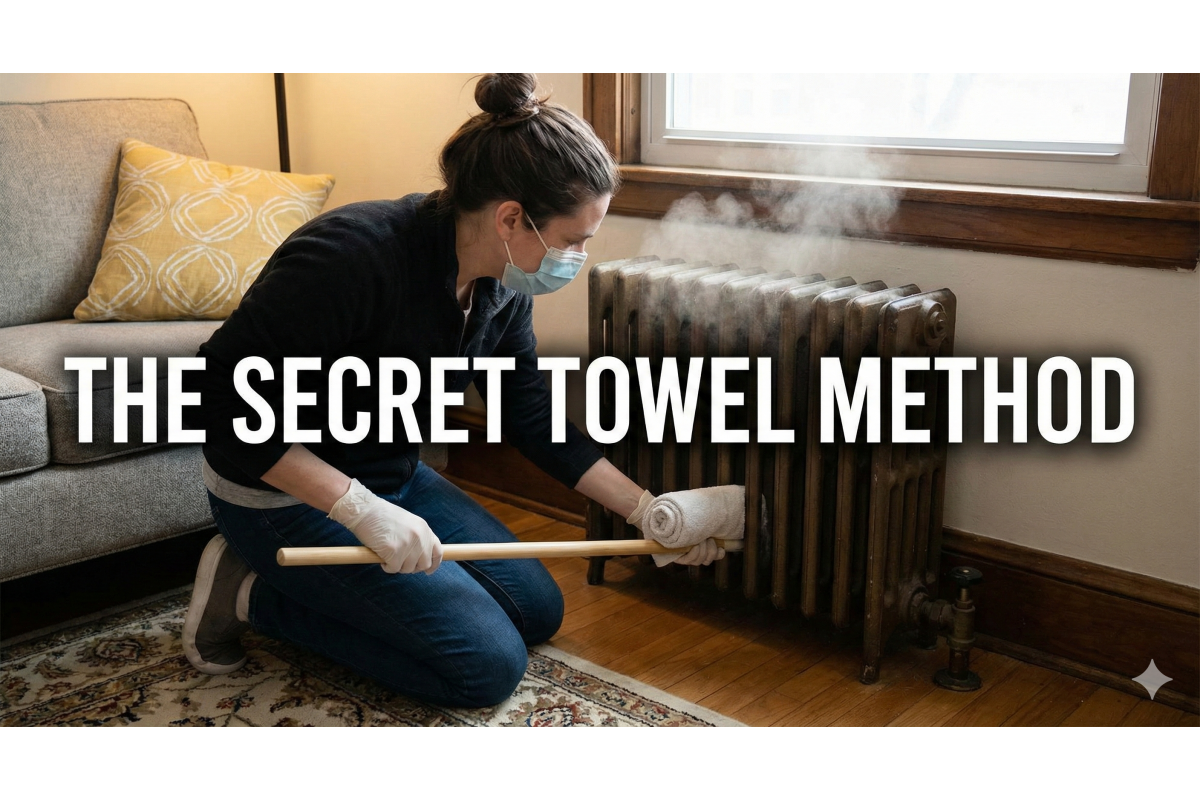
Traditional cleaning methods often fail with radiators. Vacuum cleaner attachments are often too bulky to fit between the narrow metal fins of a Type 21 or Type 22 panel radiator, and feather dusters simply push the dirt further down into the abyss. Enter the Secret Towel Method a viral cleaning hack that uses physics to blast dust out from the inside without requiring you to remove the radiator from the wall.
Tools You Will Need:
- A large bath towel or old sheet
- A hair dryer with a concentrator nozzle (flat attachment)
- A long-handled radiator brush (optional but recommended)
- A bowl of warm, soapy water
- A microfiber cloth
Step 1: Turn Off the Heating
Safety is paramount. Ensure your central heating is turned off and the radiators are completely cool to the touch. Blowing air into a hot radiator can blow hot dust back at you, and cleaning warm metal with wet cloths can cause rapid evaporation and streaking. Furthermore, you want the convection current to be inactive so your hair dryer doesn't have to fight against rising hot air.
Step 2: The Damp Towel Trap
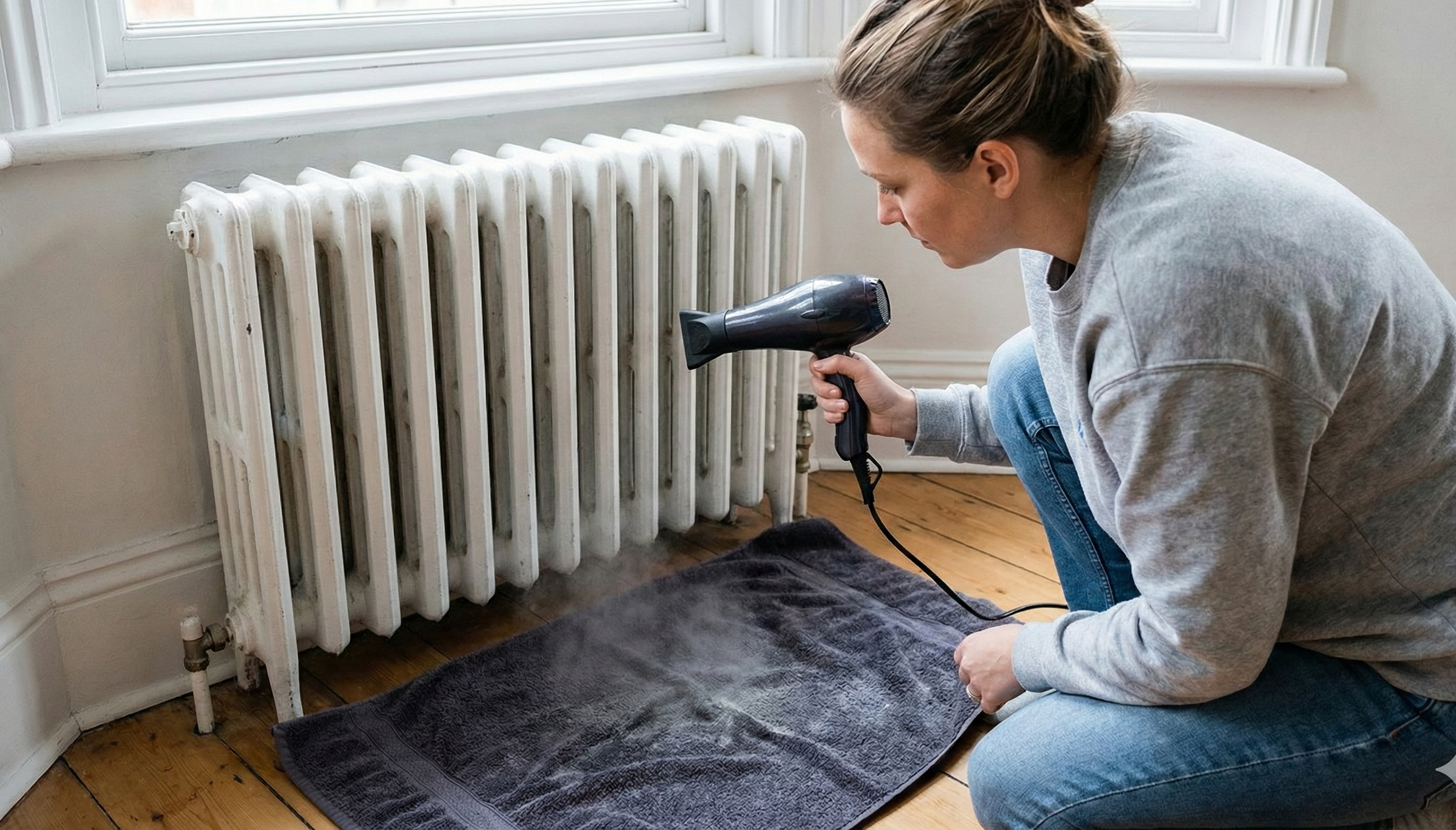
Place your large towel underneath the radiator. Crucially, the towel should be slightly damp. This is the "secret" part of the method. If you use a dry towel, the dust you blast out will simply hit the fabric and billow up into the room, settling on your furniture. A damp towel acts as a magnet; when the dust hits the moisture, it sticks instantly, trapping the dirt and preventing a mess.
Step 3: Loosen the Debris
If you have a long radiator brush, insert it through the top grille and push it down towards the bottom to break up the compacted dust. If you don't have a brush, you can skip this step, but it helps to loosen the stubborn "dust felt" that accumulates over years of neglect.
Step 4: The Air Blast
Plug in your hair dryer and attach the nozzle. Set it to the highest airflow speed but a cool or medium heat setting. Do not use the hottest setting, as you don't want to overheat the hair dryer motor if there is blowback.
Position the nozzle at the top of the radiator, aiming directly down into the fins. Work slowly from one end to the other. The high-velocity air will force the dust, pet hair, and spiders down through the fins. You will see a cloud of debris shoot out of the bottom of the radiator, landing safely on your damp catch-towel.
Step 5: The Exterior Polish
Once the inside is clear, use your warm soapy water and a soft sponge to wipe down the exterior panels, the valves, and the pipes. Dry immediately with a microfiber cloth to prevent water marks. This is especially important for Budget Radiators products with high-gloss finishes.
Deep Dive: Cleaning Towel Rail Radiators
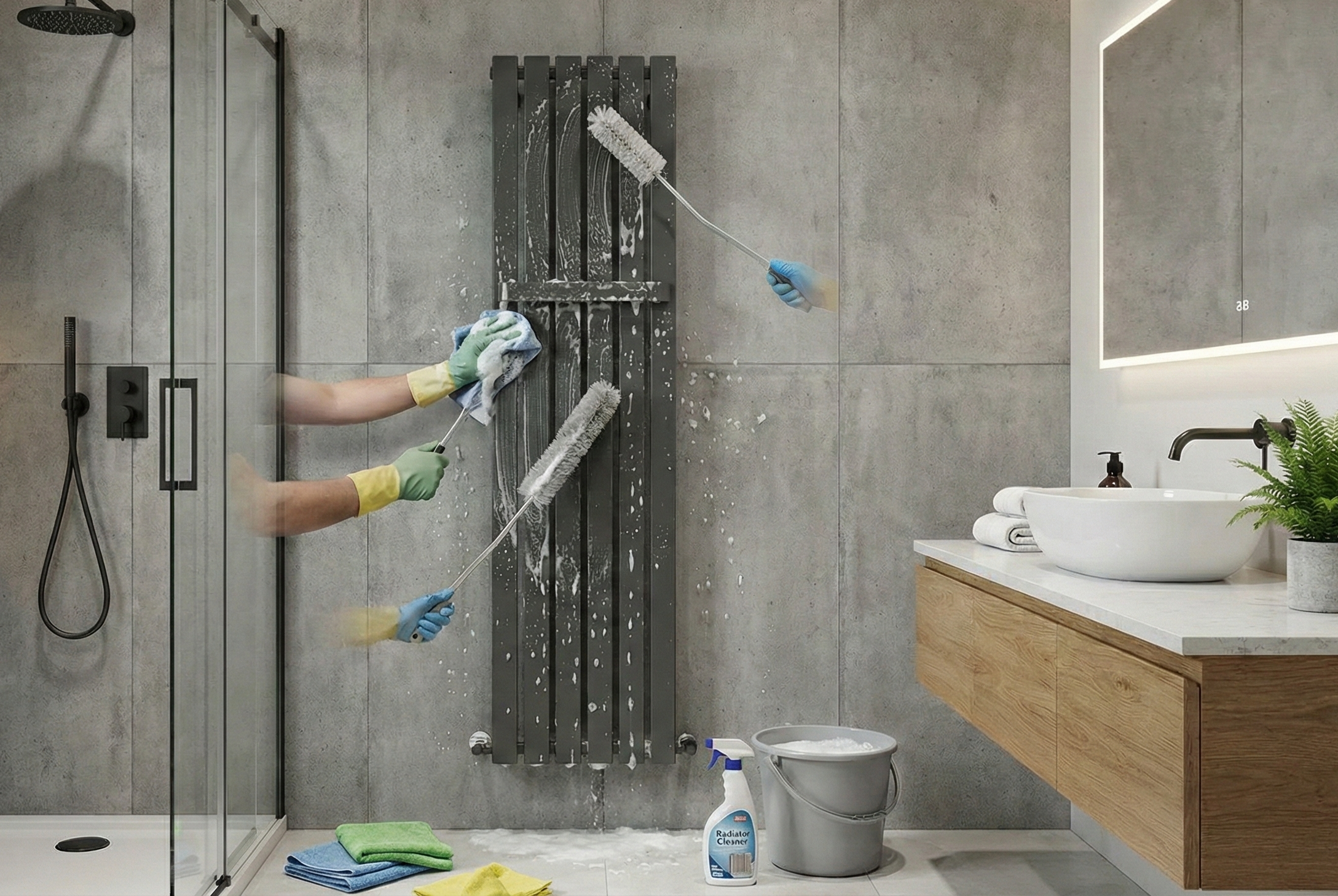
While the towel method is perfect for panel radiators with internal fins, towel rail radiators (often found in bathrooms) present a different challenge. These ladder-style units don't trap dust inside fins; instead, they collect grime on the back of the horizontal bars and in the tight spaces between the rail and the wall.
The "Flossing" Technique
Because hair dryers are less effective on open rails, the best approach here is mechanical. Take a long strip of microfiber cloth or an old cut-up t-shirt. Thread it behind the horizontal bar, holding one end in each hand. Pull the cloth back and forth in a sawing motion, like flossing teeth. This cleans the back of the bar that faces the wall—an area often neglected but prone to collecting damp dust.
Chrome vs. Anthracite: Material Matters
The finish of your radiator dictates how you should clean it. Using the wrong chemical can void your warranty and ruin the aesthetic of your bathroom.
Cleaning Chrome Radiators
Chrome is a plating that can be easily scratched. Never use scouring pads, wire wool, or abrasive cleaners (like Cif) on chrome rails. These will create micro-scratches that allow moisture to penetrate the steel beneath, leading to rust. Instead, use warm soapy water or a dedicated glass cleaner for a streak-free shine. If you want to maintain the sparkle of a premium unit, regular polishing with a dry microfiber cloth is essential to remove water spots.
Cleaning Anthracite & Matte Finishes
Dark radiators, such as the stunning Reina Grace or the Reina Arbori collections, are incredibly popular for modern interiors. However, matte finishes can be "polished" smooth if you rub them too hard, leaving a shiny patch that looks like a grease stain. Always wipe matte radiators gently with a soft cloth and avoid vigorous scrubbing. Do not use oil-based cleaners on matte surfaces.
The "Aluminium Foil Hack" for Rust
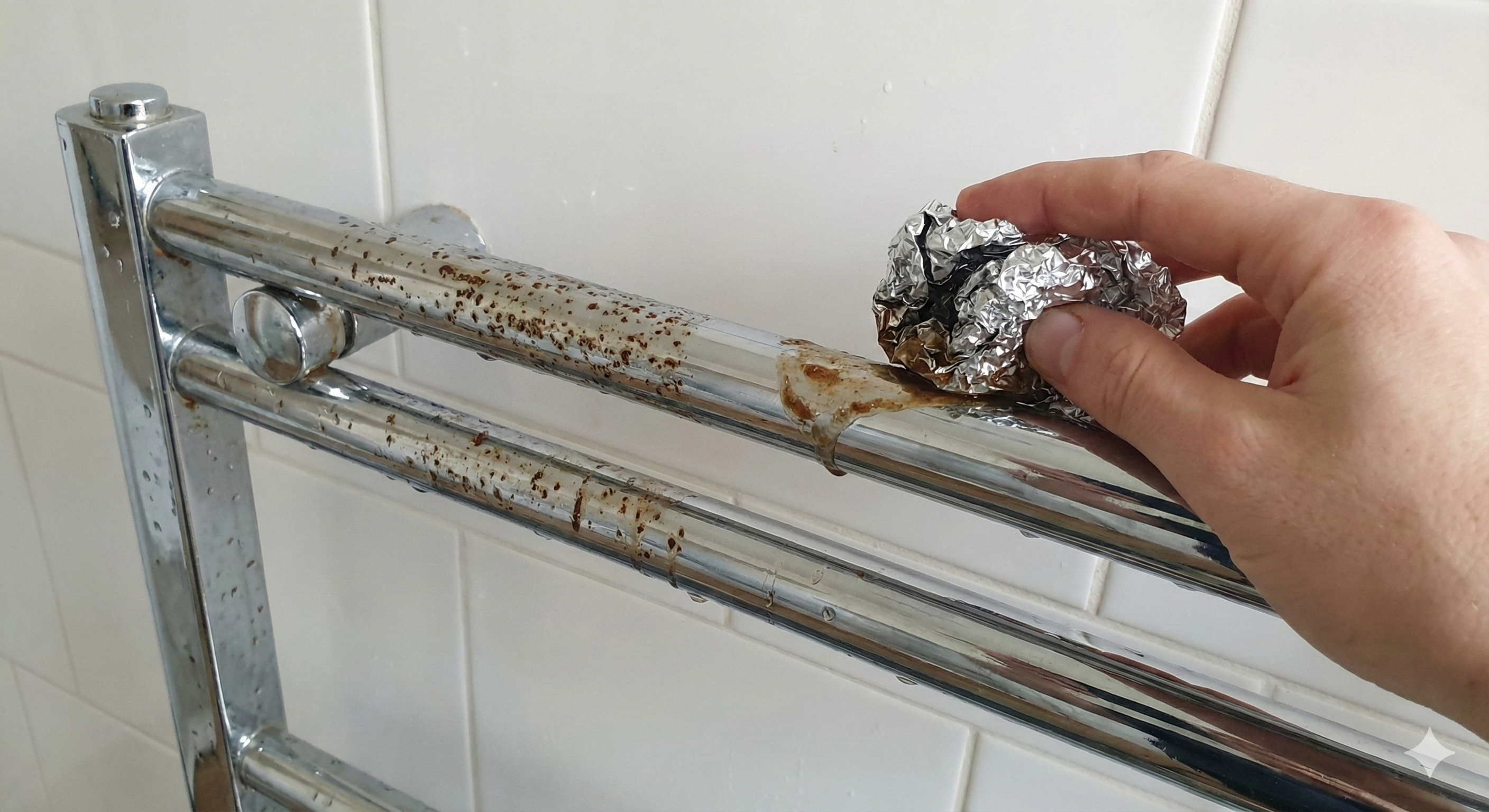
If you have a chrome towel rail, you may have noticed small spots of rust appearing, particularly on the underside of the bars where wet towels hang. Before you replace the unit, there is a chemical trick that can save it: the Aluminium Foil Method.
Note: This hack is ONLY for Chrome radiators. Do not use this on painted or anthracite models.
- Clean the area: Wash the rail to remove surface dirt.
- Prepare the foil: Tear off a square of kitchen aluminium foil and scrunch it into a ball.
- Lubricate: Dip the foil ball in water (some people swear by cola, but water works well).
- Scrub: Gently rub the wet foil over the rust spots.
Why does this work? It's simple chemistry. Aluminium is a softer metal than chrome, so it won't scratch the plating if used with water. However, aluminium is chemically more reactive than the iron in the rust. As you rub, the foil generates heat and aluminium oxide, which scrubs away the rust and fills in the microscopic pits in the chrome, essentially sealing the damage. Wipe away the grey residue with a clean cloth, and your radiator will often look brand new.
Preventative Maintenance Tips
To ensure your heating system remains efficient and your warranty stays valid, follow these simple maintenance habits:
- Don't Dry Wet Towels on Cold Radiators: Leaving a sodden towel on a cold radiator in summer creates a stagnant, humid environment that encourages rust. Only hang wet towels when the heating is on or the rail is warm.
- Bleed Your Radiators: If the top of your radiator is cold but the bottom is hot, trapped air is preventing the water from filling the unit. Use a radiator key to bleed the air out. This improves efficiency immediately.
- Check for Sludge: If the radiator is hot at the top but cold at the bottom, you may have internal sludge buildup. No amount of dusting will fix this; you may need a professional "power flush" to clear the system.
Conclusion
Cleaning your radiators is one of the most high-impact, low-effort maintenance tasks you can perform in your home. By dedicating just ten minutes per room using the "Secret Towel Method," you can unlock the full potential of your central heating system. You will lower your carbon footprint, reduce your energy bills, and create a healthier environment free from circulating dust and allergens.
Whether you are restoring the shine to a classic chrome ladder or protecting the matte finish of a modern designer panel, proper care ensures your radiators remain a stylish and functional asset to your home for years to come.
Is your radiator beyond saving? If rust has taken hold or your current model simply isn't heating your room effectively, it might be time for an upgrade. Explore the extensive range of energy-efficient designs at Budget Radiators. From traditional columns to sleek vertical aluminium options, we have the perfect heating solution to keep your home warm and stylish this winter.