
Top 5 Radiator Trends Taking Over UK Interiors This Year

Author: The Heating Expert | Published: October 26, 2023 | Reading Time: 10 Minutes
Redefining Warmth: The Radiator Renaissance
In the unpredictable climate of the United Kingdom, the central heating system is the heartbeat of the home. For decades, however, the delivery method of this heat the humble radiator was treated as an afterthought. It was typically a bland, white, pressed steel panel, often concealed behind furniture or boxed in with timber covers that stifled its efficiency. But the landscape of British interior design has shifted dramatically. Homeowners are no longer content with fixtures that merely function; they demand heating solutions that contribute to the aesthetic narrative of their living spaces.
This year marks a pivotal moment in the industry. With energy costs remaining a critical topic of conversation and a renewed focus on sustainable living, the market has responded with innovations that blend high-performance engineering with exquisite design. We are seeing a move away from the "hide it away" mentality to a "show it off" philosophy, where the radiator becomes a focal point, rivalling feature walls and statement furniture for attention.
Central to this evolution is the increasing popularity of advanced materials. While steel remains common, the discerning homeowner is turning to the aluminium radiator for its superior conductivity and sleek profile. These modern units heat up faster, cool down quicker, and offer a design versatility that traditional materials simply cannot match. Whether you are renovating a Victorian terrace in London or outfitting a modern apartment in Manchester, understanding these key trends is essential for creating a home that is as stylish as it is warm.
1. The Vertical Revolution: Mastering Spatial Efficiency
Perhaps the most significant shift in UK heating trends is the geometric pivot from horizontal to vertical. In a country where square footage is at a premium, particularly in urban centres, wall space is a valuable commodity. Traditional horizontal radiators often monopolise the prime wall space under windows or along the longest wall of a room, limiting where sofas, sideboards, or beds can be placed.
Why Vertical Works for British Homes
Vertical radiators, often referred to as "tall radiators," utilise the "dead space" found in almost every room. This could be the narrow strip of wall next to a patio door, the space beside a kitchen cabinet, or the alcove next to a chimney breast. By installing a radiator that is 1800mm high but only 300mm wide, you liberate the floor space below.
Beyond the practical benefits of furniture placement, vertical radiators draw the eye upward. In rooms with standard ceiling heights, this creates an optical illusion of grandeur and height, making the space feel airier. Visually, they act similarly to curtains or tall bookcases, adding vertical lines that break up the monotony of low-slung furniture.
Installation Considerations
Switching from horizontal to vertical isn't just a design choice; it requires plumbing forethought. Since the pipe centres will be much narrower, floorboards may need to be lifted to adjust the pipework. However, the result is a clean, architectural look that instantly modernises a property.
2. Material Matters: The Aluminium Advantage
While style is subjective, physics is not. The material your radiator is made from dictates how your boiler interacts with your home, affecting both your comfort and your heating bills. This year, aluminium has firmly established itself as the premium choice for efficiency-conscious homeowners.
Thermal Conductivity and Response Time
The science behind the aluminium trend is compelling. Aluminium is a superconductor of heat, possessing a thermal conductivity roughly five times greater than steel. In a real-world home scenario, this means an aluminium radiator responds almost instantly when the thermostat clicks on.
For the modern lifestyle, where we might only be home for a few hours in the morning and evening, this rapid response is vital. You don't need to set the heating to come on an hour before you wake up; 15 minutes is often sufficient. Conversely, when you turn the heating off, aluminium cools down quickly, preventing the room from becoming stiflingly hot—a common issue with cast iron, which retains heat for hours after it is no longer needed.
Low Water Content
Aluminium radiators typically require significantly less water volume to produce the same BTU (British Thermal Unit) output as a steel equivalent. This is known as "Low Water Content" technology. Because there is less water in the system, your boiler uses less gas or electricity to bring that water up to temperature. Over the course of a British winter, these marginal gains accumulate into noticeable savings on energy bills.
For further reading on improving your home's thermal efficiency, the Energy Saving Trust provides excellent independent guidance on heating controls and system upgrades.
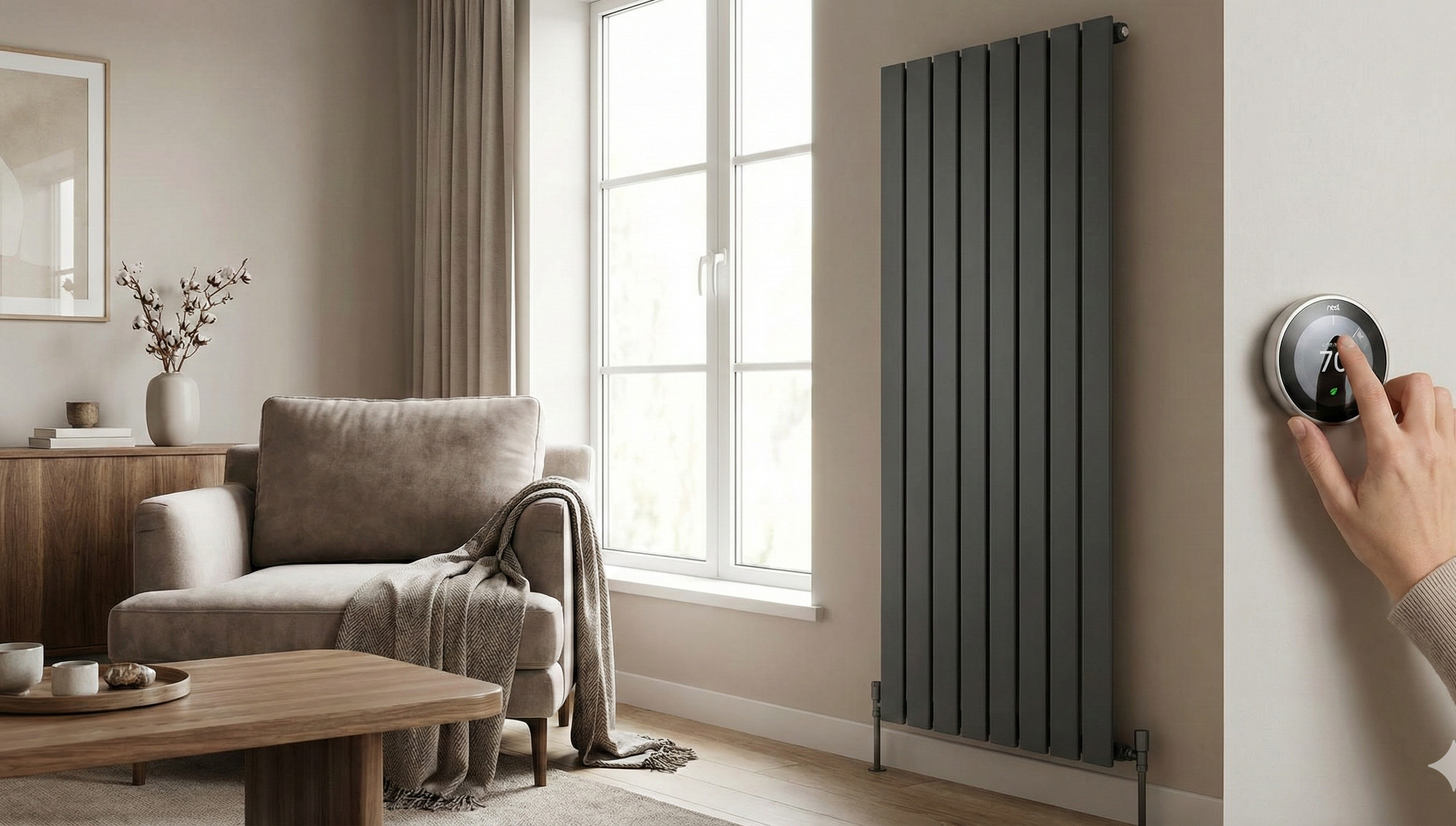
Interior design in 2024 is moving away from the "clinical white" aesthetic towards warmer, moodier, and more grounded palettes. Radiators have followed suit. The days of painting a radiator to match the skirting boards in an attempt to make it invisible are fading. The trend now is contrast.
Anthracite Grey: The New Neutral
Anthracite (RAL 7016) has become the de facto colour for modern renovations. It sits perfectly between harsh black and soft grey. An anthracite radiator looks stunning against white walls, creating a monochrome feature, but it also blends seamlessly with deep blues, sage greens, and exposed brickwork found in industrial-style lofts.
Matte Black Hardware
Following the trend seen in bathroom taps and shower heads, matte black radiators are surging in popularity. They offer a sophisticated, velvet-like texture that absorbs light rather than reflecting it. When paired with matching black valves and pipe sleeves, the result is a cohesive, high-end look that elevates the entire room.
Design Tip: If you choose a dark radiator, ensure your lighting is adequate. Dark surfaces absorb light, so consider placing these radiators near natural light sources or ensuring your ambient lighting highlights their sculptural form.
4. The Column Radiator Comeback: Modern Vintage
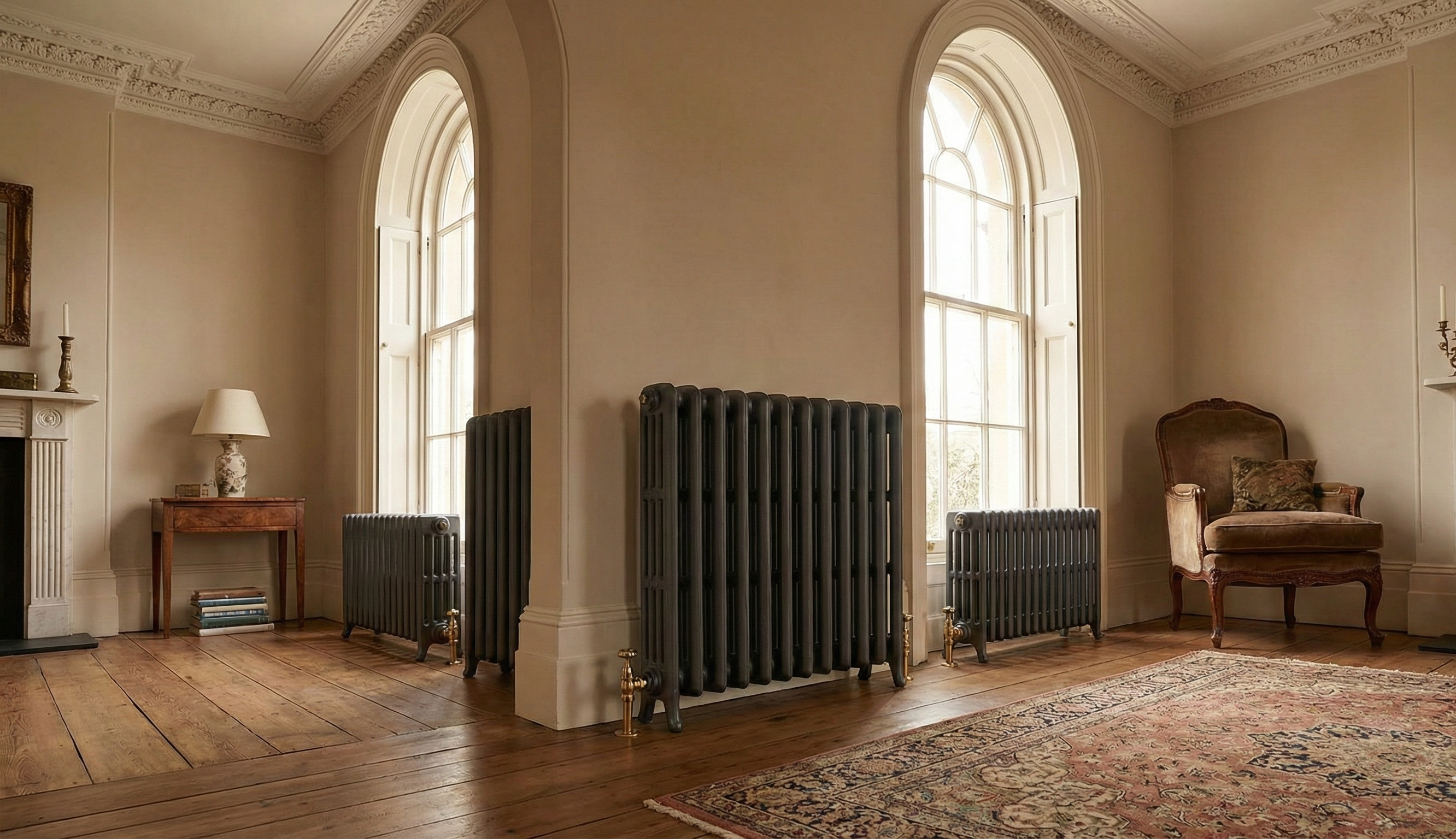
Nostalgia is a powerful force in design. As owners of Period properties Edwardian, Victorian, and Georgian homes look to restore original features, the "Column Radiator" has returned to the spotlight. Originally made from heavy cast iron, these radiators are iconic for their segmented, tubular design.
Old Style, New Tech
The trend this year isn't necessarily sourcing reclaimed cast iron (which can be prone to leaks and sludge buildup), but buying modern reproductions made from laser-welded steel or aluminium. These "Modern Vintage" column radiators offer the classic aesthetic chunky columns, ball-jointed feet, and ornate valves but with the reliability and pressure tolerance of a modern appliance.
These units are particularly effective in high-ceilinged rooms. The increased surface area of the columns allows for substantial heat output, necessary to warm large volumes of air found in period properties. They serve as a bridge between the old and the new, respecting the building's heritage while providing 21st-century comfort.
Finally, we look to the bathroom. The ladder rail is no longer just a place to dry towels; it is a piece of bathroom furniture. The trend this year moves beyond the standard chrome ladder. We are seeing asymmetrical designs, flat-panel rails, and metallic finishes like Brushed Brass, Copper, and Gold.
With bathrooms becoming smaller in new builds, "dual fuel" functionality is a massive trend. This involves fitting an electric heating element into a central heating towel rail. It allows you to heat the rail electrically in the summer to dry towels without turning on the entire house's central heating system a perfect marriage of practicality and energy efficiency.
Choosing the Right BTU for Your Room
Regardless of which trend captures your imagination, the fundamental rule of heating remains: Output is King. A radiator that looks beautiful but leaves you shivering is a failed investment.
Before making a purchase, you must calculate the required BTU (British Thermal Unit) for your specific room. This calculation takes into account:
- Room Dimensions: Height, width, and length.
- Window Type: Single glazing loses heat significantly faster than double or triple glazing.
- External Walls: The number of walls facing the outside elements affects heat loss.
We highly recommend using a precision BTU calculator before browsing. Once you have your required number, you can filter your search by output, ensuring that your chosen vertical aluminium or anthracite masterpiece is up to the task of keeping your family warm.
Conclusion: Invest in Your Comfort
The radiator trends of this year reflect a broader shift in UK home improvement: a refusal to compromise. We no longer have to choose between energy efficiency and style, or between saving space and staying warm. The market has matured to offer solutions that tick every box.
Whether you are drawn to the industrial sharpness of raw metal, the space-saving logic of vertical designs, or the eco-friendly prowess of aluminium, upgrading your radiators is one of the most impactful changes you can make to your home environment. It increases your property value, lowers your carbon footprint, and, most importantly, makes your home a more comfortable place to live.
Don't let outdated, inefficient white panels dictate the look and feel of your interiors any longer. embrace the change and let the warmth flow.