
Short on Wall Space? Why Vertical Radiators Are the Ultimate Space-Saving Hack
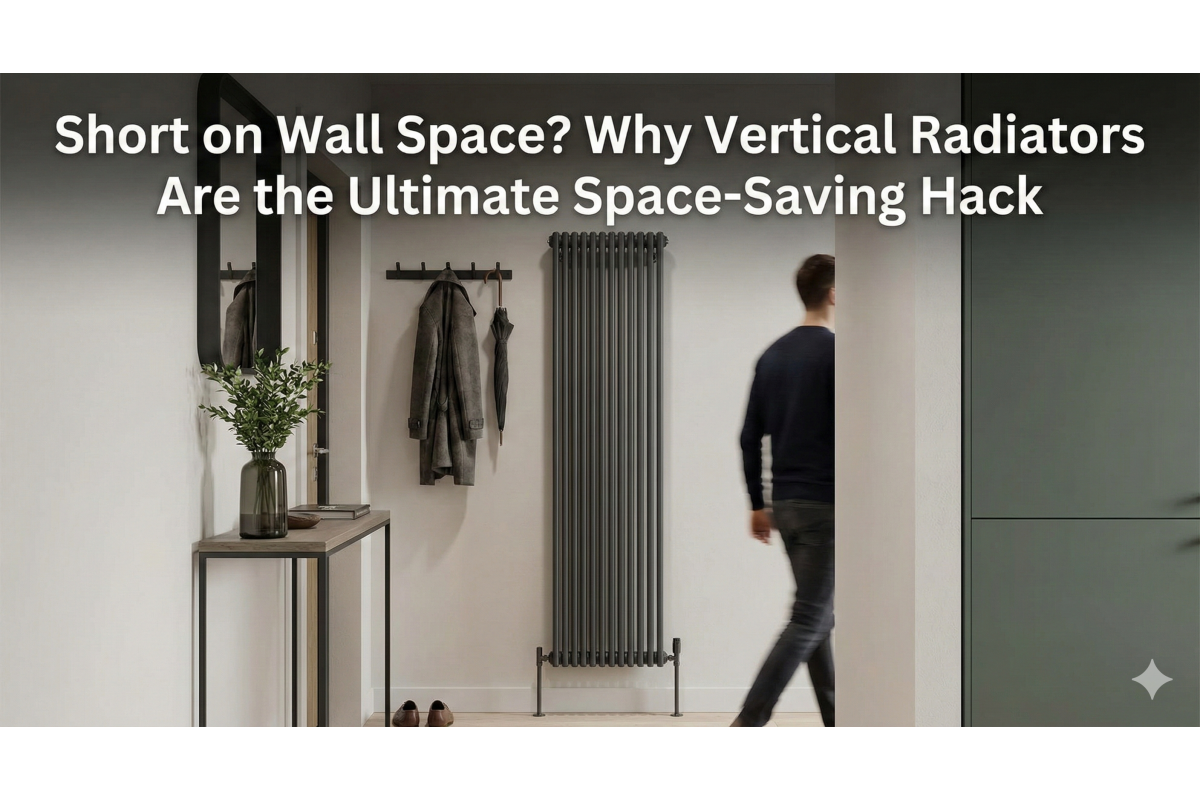
It is a scenario I have witnessed countless times in my fifteen years consulting on heating solutions for UK properties. I recall standing in a beautifully renovated Victorian terrace in Clapham, the dust sheets just removed, the owners beaming with pride at their new open-plan kitchen-diner. They had knocked through the dining room wall, installed stunning bi-fold doors to the garden, and fitted a sleek island unit. But as the winter chill set in, the realisation hit them: in their quest for light and flow, they had systematically removed every single wall capable of hosting a standard horizontal radiator. The only available wall space was a narrow, 400mm structural pillar between the bi-folds and the cabinetry. They were freezing in their dream kitchen because they were shackled to the outdated idea that a radiator must be a long, horizontal white panel.
This is not an isolated incident; it is the defining architectural challenge of modern British living. The United Kingdom is experiencing a spatial contraction. As property prices soar and urban density increases, the luxury of sprawling floor plans is becoming a relic of the past. Data indicates a stark reduction in living standards regarding space; the average square footage of new-build living rooms has shrunk from a generous 24.9m² in the 1970s to a modest 17.1m² in contemporary developments. This reduction of nearly 30% forces a radical rethink of interior layouts. Every square metre of floor space must now work harder, and every linear foot of wall is a battleground between furniture, art, and utilities.
In this high-stakes game of "Tetris" with our furniture, the traditional horizontal radiator is the losing piece. Spanning 1200mm to 1600mm, the ubiquitous "Type 22" panel radiator is an obstruction a barrier that dictates where a sofa can sit, prevents a door from opening fully, or forces a dining table into an awkward central position. The solution, however, is not to sacrifice warmth for space, but to change our geometric perspective. Enter the designer radiator, specifically the vertical model. By rotating the heating element 90 degrees, homeowners can utilize the "dead space" found in every room the narrow pillars between windows, the slice of wall behind a door, or the unused verticality of a hallway. This shift is not merely stylistic; it is an engineering necessity for the modern UK home.
The Architectural Context: Why We Are Running Out of Room
To understand the necessity of the vertical radiator, one must first appreciate the canvas upon which we are working: the British housing stock. Our homes are unique in Europe, dominated by aging infrastructure and a trend towards smaller new builds. Whether you are in a drafty period property or a compact new build, the battle for wall space is universal.
The Victorian and Edwardian Legacy
A vast proportion of UK housing stock dates from before 1919. These homes, while characterful, present specific heating challenges. They are characterised by solid brick walls with no cavity insulation, high ceilings (often exceeding 2.8m), and large, draughty sash windows. In almost every reception room, a chimney breast dominates the layout. Historically, the fire was the heat source. Now, with central heating, the chimney breast remains a focal point but is often unsuitable for a radiator due to the fireplace or a mounted television.
This leaves the alcoves narrow recesses on either side of the chimney breast. A standard horizontal radiator here often consumes the entire width, preventing the installation of built-in cabinetry or shelving, which is essential for storage in these homes. A slim vertical radiator, however, can sit snugly in the alcove, providing high heat output while leaving the upper 2 metres of the recess free for floating shelves. This allows you to regain the functionality of the room without compromising on the BTUs required to heat such a large volume of air.
The "Rabbit Hutch" New Build
Modern homes present a different challenge. In a "box room" or a third bedroom of a new build, which might measure only 2m x 2.5m, wall space is the most valuable currency. Developers typically install a radiator under the window. In a small room, this is often the only place a desk can go if the room is used as a home office, or where the bed headboard must go. A radiator here restricts furniture placement significantly. By moving the heating source to a vertical radiator behind the door or in a corner, the entire window wall is liberated, allowing for a desk with a view or a larger bed layout.
The Physics of Vertical Heating: Busting the Efficiency Myth
A persistent myth permeates the UK heating market, often propagated by old-school plumbers or ill-informed forum posters: "Vertical radiators are less efficient because heat rises." The logic goes that the heat from the bottom of the radiator rises over the top part, reducing the temperature difference and thus the heat transfer. As a domain expert, I can categorically state: This is a misunderstanding of thermodynamics. While there is a grain of theoretical truth regarding laminar flow, in real-world applications, vertical radiators can actually be more effective than horizontal ones for specific reasons.
The Chimney Effect
Radiators heat rooms primarily through convection (approximately 70-80%) and secondarily through radiation. Convection relies on air movement: cold air is drawn into the bottom, heated, and rises out the top. Vertical radiators leverage a thermodynamic principle known as the "Chimney Effect." In a tall vertical model (typically 1800mm high), the air remains in contact with the heated surface for a longer physical distance during its ascent compared to a standard 600mm high horizontal panel. This extended contact accelerates the air to a higher velocity.
When this rapidly rising warm air hits the ceiling, it spreads outward with significant momentum, displacing the cooler air and forcing it down the opposite walls and back across the floor to the radiator. This creates a powerful, whole-room convection current. In rooms with high ceilings, a vertical radiator can reduce heat stratification (where the ceiling is hot and the floor is cold) by forcing the air to mix more vigorously than a sluggish low-level radiator could achieve.
The Furniture Obstruction Factor
Efficiency is not just about the emitter; it is about the environment. A standard horizontal radiator is often placed behind a sofa or an armchair. A velvet sofa placed 10cm in front of a radiator absorbs a massive percentage of the radiant heat and blocks the convection current. The radiator might be "efficient" on paper, but in practice, its output is strangled. Vertical designer radiators are almost never blocked by furniture. They are installed on narrow wall spurs or in thoroughfares where furniture cannot go. Therefore, a vertical radiator usually operates at 100% of its potential capacity in the real world, whereas a horizontal one might be operating at 60-70% due to obstructions.
Deep Dive: Material Science in Designer Radiators
When browsing options like the Bonera or Coredo ranges at Budget Radiators, you will see terms like "Mild Steel" and "Aluminium." The choice of material is not just aesthetic; it dictates the thermal performance and suitability for your specific lifestyle.
- Mild Steel: The reliable workhorse. Mild steel strikes a balance between conductivity and heat retention. It heats up relatively quickly but also holds heat for a period after the boiler turns off. It is robust and cost-effective, making ranges like the Bonera Vertical incredibly good value for family homes.
- Aluminium: The Formula 1 of heating. Aluminium conducts heat approximately 5x to 7x better than steel. This means an aluminium radiator will reach operating temperature almost instantly. They are lightweight (ideal for stud walls) and contain less water, putting less strain on your boiler. However, they cool down just as fast, so they are best suited for rooms where you need rapid, responsive heat, such as a home office or conservatory.
The "Missing Baffle" Syndrome: A Critical Technical Analysis
I cannot write an expert guide on vertical radiators without addressing the "elephant in the room" or rather, the "cold spot in the radiator." Search any UK DIY forum, and you will find threads titled: "New vertical radiator cold at the bottom!" This is rarely a manufacturing defect. It is almost always a failure to install the Flow Diverter (also known as a Baffle).
The Hydraulic Mechanics
Water, like electricity, follows the path of least resistance. Most vertical radiators are constructed like a ladder: two vertical collector bars on the sides, connected by horizontal rungs. If the water enters at the bottom left and the exit is at the bottom right, the water's natural physical path is to flow straight across the bottom channel and exit. It has no incentive to travel up the 1.8-meter vertical tubes against gravity.
The result? The bottom bar gets boiling hot, but the rest of the radiator remains stone cold. The solution is the Internal Baffle. This is a small metal plug inserted inside the radiator inlet which physically blocks the water from flowing across the bottom. It forces the water to travel up the first set of vertical tubes to the top, ensuring the entire surface area is engaged. When purchasing from specialists like Budget Radiators, these ranges are engineered with these hydraulic requirements in mind, but you must ensure your plumber installs the baffle correctly.
Comprehensive Product Analysis: The Budget Radiators Ecosystem
To help you navigate the market, we have analyzed the core vertical ranges available, benchmarking them against the needs of typical UK homes.
Model Spotlight: The Bonera Vertical
The Bonera range represents the "sweet spot" of price-to-performance for the mid-market homeowner. It uses oval tubes, which are superior to round tubes for heating because they offer a larger surface area relative to their volume. The 1800 x 456 model pumps out an impressive 3520 BTUs (at ΔT50). This is sufficient to heat a medium-sized living room or a large kitchen-diner on its own, yet it only projects 100mm from the wall.
Model Spotlight: The Coredo
For those seeking architectural minimalism, the Coredo is a powerhouse option. The 1760 x 620mm model delivers over 4100 BTUs. This is a "double panel" equivalent in the vertical world. If you have a large, cold room with high ceilings, this is the beast you need. It effectively replaces two standard radiators with one vertical column, freeing up massive amounts of wall space for your furniture.
Technical Installation Guide: Ensuring Peak Performance
Ranking for "designer radiator" requires providing actionable technical value. Installing a vertical radiator has nuances that differ from standard swaps.
Piping Configuration and "The Extension"
Most UK homes have pipes emerging from the floor. If you are swapping a 1200mm wide horizontal radiator for a 400mm wide vertical one, the existing pipes are too far apart. You have two options:
- Lift the Floor: A plumber can lift the floorboards and re-route the pipes to the narrower center. This is the neatest finish.
- The "Dog Leg": If the floor is concrete or tiled, you can use chrome pipe and elbows to run the pipes along the skirting board to the new position. While visible, using high-quality chrome pipe makes this look like an intentional industrial feature.
Valve Selection
Selecting the right valve is crucial. If your pipes come from the wall, use Corner Valves. These are the neatest solution for vertical radiators as they allow the valve head to sit parallel to the wall rather than protruding into the room, saving yet more space and preventing you from catching your ankle on the valve head.
Conclusion: The Vertical Verdict
The shift toward vertical designer radiators is not a fleeting trend; it is a rational, engineered response to the shrinking footprint of the UK home and the rising demand for energy-efficient, aesthetically pleasing interiors. For you, the homeowner, the benefits are clear: you reclaim your walls, you utilise advanced convection dynamics to heat high-ceilinged rooms more evenly, and you modernize your home with a feature that adds value.
At Budget Radiators, the intersection of quality and affordability is paramount. By designing and manufacturing ranges like the Bonera and Classic Column directly, the middleman is removed, ensuring you don't have to choose between a warm home and a beautiful one. Don't let a lack of wall space leave you in the cold. Go vertical, and discover the ultimate space-saving hack for yourself.
Ready to transform your home? Browse the full range of vertical designer radiators today and use our BTU calculator to find your perfect match.