
Piccadilly 460mm Products
Frequently Asked Questions
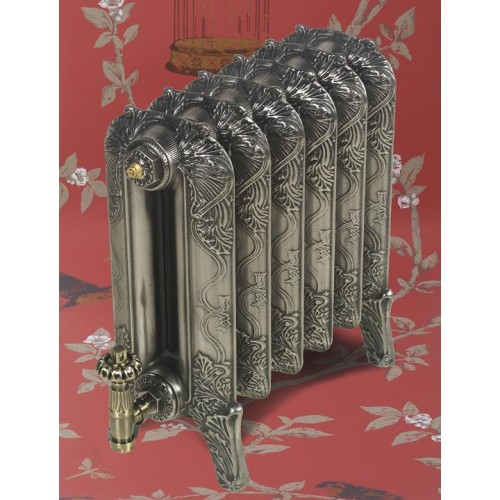
The Piccadilly 460mm radiator features an intricate Celtic ribbon design; does this affect the painting process if I buy it in Primer?
Yes, significantly. The Celtic ribbon and leaf pattern is complex and features deep undercuts. If you attempt to brush paint this radiator, paint will almost certainly pool in the recesses of the scrolls, obscuring the fine detail. The technical recommendation is to use spray application (HVLP or aerosol) to apply thin, even coats that coat the complex texture without filling it in.
With a depth of 185mm, does the Piccadilly 460mm radiator require special consideration for skirting board clearance?
Yes. The 185mm depth means the center of the radiator (and likely the pipe centers) sits roughly 92.5mm from the back of the radiator. Adding a 25mm air gap means your pipe centers will be approximately 115mm - 120mm from the wall. Standard pipe rough-ins are often closer to 70mm. You must measure and adjust your pipe positions to accommodate this deep profile before laying floors.
Can I highlight the Celtic pattern on the Piccadilly 460mm radiator myself?
Yes, this is a popular technique called "highlighting." After applying a base coat (e.g., black or anthracite), you can use a gilding wax or a contrasting metallic paint applied lightly with a fingertip or a dry brush to the raised surfaces of the ribbons and scrolls. This accentuates the 3D relief of the casting, making the design "pop" against the darker background.
Is the 460mm height sufficient to heat a room with high ceilings?
While 460mm is low, the Piccadilly compensates with its 185mm depth. This depth creates a large surface area for radiant heat. However, for rooms with very high ceilings (3m+), the reduced chimney effect of a short radiator means it may take longer to circulate warm air to the top of the room compared to a 760mm model. You may need to oversize the radiator slightly (add 10-15% more sections) to ensure the radiant heat is sufficient for comfort at the lower level.
What type of wall stay is best for the Piccadilly 460mm given its low height?
Because the radiator is only 460mm high, the "tipping point" is lower. A standard top-mounted wall stay might look obtrusive. We recommend using a low-level luxury wall stay clamped between the sections roughly two-thirds of the way up (approx 300mm). This provides stability without visually dominating the intricate top scroll work of the radiator.
Does the Piccadilly 460mm radiator come fully assembled?
Radiators up to a certain length (typically 10-14 sections) are shipped fully assembled. However, larger banks (e.g., the 27-section model weighing 172kg) may be shipped in two parts to ensure safe handling and prevent damage during transit. You will need a Cast Iron Joining Tool and nipples to assemble the two halves on-site.
How does the weight of 6.4kg per section impact installation on a first floor?
A 20-section Piccadilly weighs 127kg. While heavy, this is lighter than the taller Oxford or Montpellier models. Most standard timber floors can support this load if it is distributed. However, you should position the radiator so its feet sit perpendicular to the joists (spanning multiple joists) rather than parallel to a single joist, to spread the weight effectively.
Can I use thermostatic valves (TRVs) with the Piccadilly 460mm radiator?
Yes, but choose carefully. The ornate nature of the Piccadilly means a modern white plastic TRV will look out of place. You should specify Traditional Brass or Pewter TRVs (often with a wood or black handle) to match the Celtic aesthetic. Ensure the valve is a "Corner" or "Angled" pattern depending on your pipework to keep the installation neat against the 185mm depth.
Is the Piccadilly 460mm radiator suitable for a bathroom towel rail conversion?
Technically yes, but practically it is difficult. The top of the radiator is uneven due to the scroll "crowns," making it hard to hang a towel rail bracket securely or drape towels flat. It is better used as a dedicated space heater in the bathroom rather than a towel warmer.