
The Pienza Products
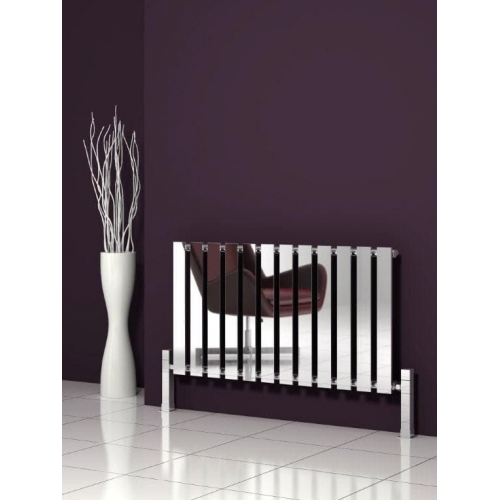
Showing 1 to 5 of 5 (1 Pages)
Frequently Asked Questions
What specific material is the Pienza radiator made from and why does it matter for heating efficiency?
Made from high-grade mild steel, which heats up quickly, retains warmth for a long time, and is strong enough to handle high pressure safely.
How do I calculate the correct BTU output to ensure the Pienza heats my room effectively?
Measure your room dimensions and use a BTU calculator. Match the radiator’s BTU output to your room to avoid underheating or wasting energy.
Can the Pienza radiator be installed on a dual fuel system for summer use?
Yes, it can be fitted with an electric element for summer use while remaining connected to central heating in winter. T-piece and element are purchased separately.
What type of valves do I need to purchase to install the Pienza radiator correctly?
Floor pipes: Angled Valves; wall pipes: Corner Valves; along-wall pipes: Straight Valves. TRVs are recommended to control temperature automatically.
What is the standard pipe center measurement for the Pienza and how do I measure my pipes?
Pipe center is the distance between the left and right pipe inlets. Add ~80–90mm for valves. Measure your current pipes; adjust with a plumber if needed.
Why does my new Pienza radiator have cold spots at the top while the bottom is hot?
Caused by trapped air. Bleed the radiator using the top vent valve to remove air and restore even heating.
Is the chrome finish on the Pienza radiator durable and resistant to rust in damp bathrooms?
Yes, triple-layer chrome plating resists corrosion. Avoid abrasive tools; scratches can lead to rust.
What is the maximum operating pressure for the Pienza radiator and is it safe for combi boilers?
Pressure tested up to 4 bars; standard UK combi boilers operate 1–1.5 bar. Safe for all standard closed-loop systems.
How far does the Pienza radiator project from the wall once it is fully installed?
Wall projection is 85–105mm depending on bracket adjustment, important for narrow spaces.
Can I install the Pienza radiator myself or do I need a professional heating engineer?
Professional installation is strongly recommended due to pipework, system draining, and balancing requirements.
What is the difference between Delta T50 and Delta T60 when reading the heat output figures?
Delta T50 is the UK standard (boiler 75°C, room 20°C). Delta T60 can overstate heat output; always rely on Delta T50 for accuracy.
Does the Pienza radiator come with all the necessary wall brackets and fixing screws?
Yes, it includes wall brackets, masonry plugs, screws, blanking plug, and bleed valve. Specialist fixings may be needed for plasterboard walls.
How do I flush the system to prevent sludge from damaging my new Pienza radiator?
Perform a chemical flush before installation, then refill with clean water and a corrosion inhibitor to protect the radiator.
What should I do if my Pienza radiator is making a loud banging or clicking noise?
Noise can be due to expansion or trapped air. Loosen wall bracket clips slightly or bleed the radiator to fix.
Can I paint the chrome Pienza radiator if I want to change the color later?
Not recommended. Chrome is too smooth for paint. Choose a pre-painted powder-coated radiator instead.