
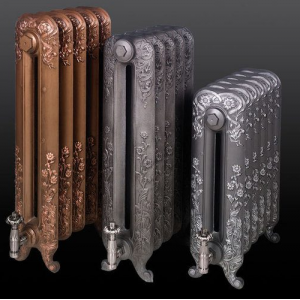
Cast Iron Radiators Products
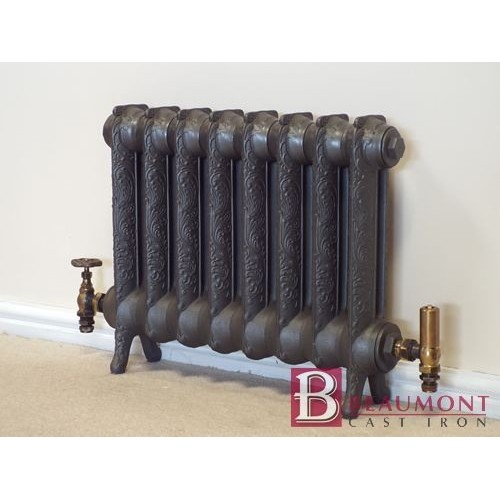
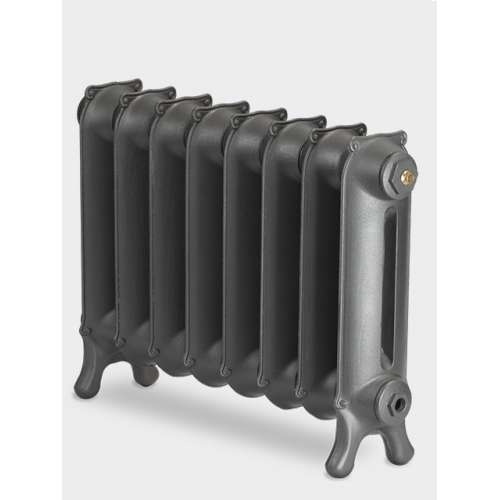
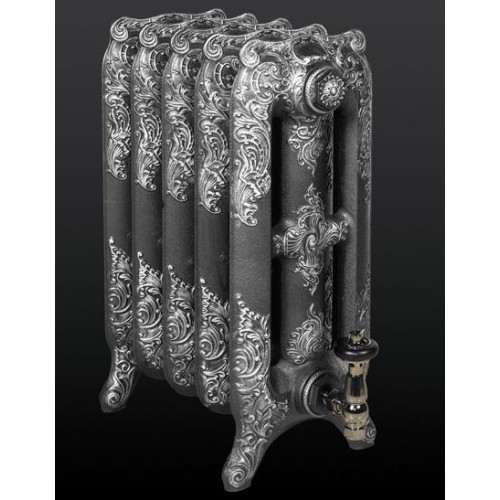
Frequently Asked Questions
How does the specific heat capacity of cast iron affect residential boiler cycling?
Cast iron possesses a much higher thermal mass compared to steel or aluminium. In technical terms, it acts as a thermal flywheel; while the initial heat-up phase requires a longer burner run-time from the boiler, the material stores this energy and releases it via steady radiation over an extended period. This reduces "short-cycling" of the boiler, as the system water temperature drops far more slowly, maintaining the thermostat’s set point without requiring the burner to re-engage frequently.
Can these radiators be integrated into low-flow temperature systems like Air Source Heat Pumps (ASHP)?
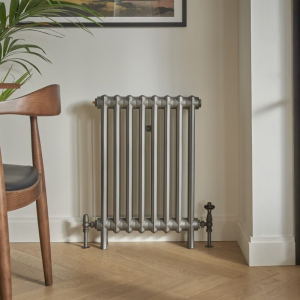
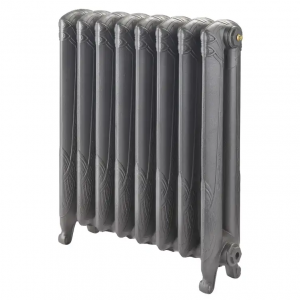
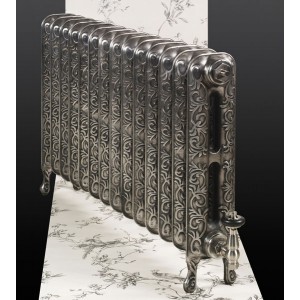
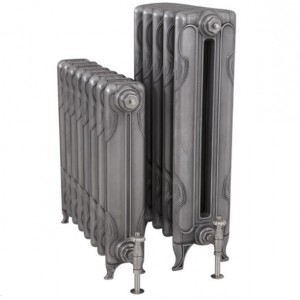
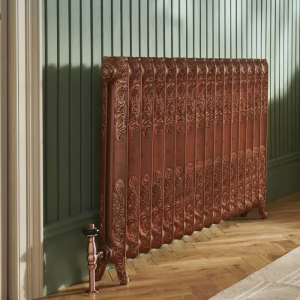
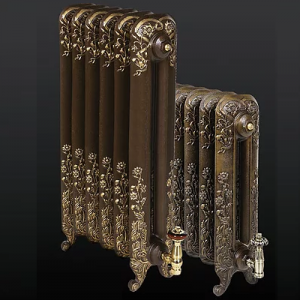
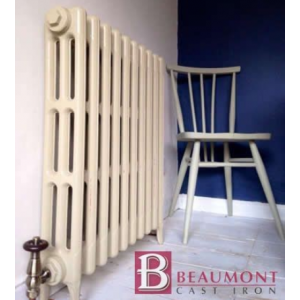
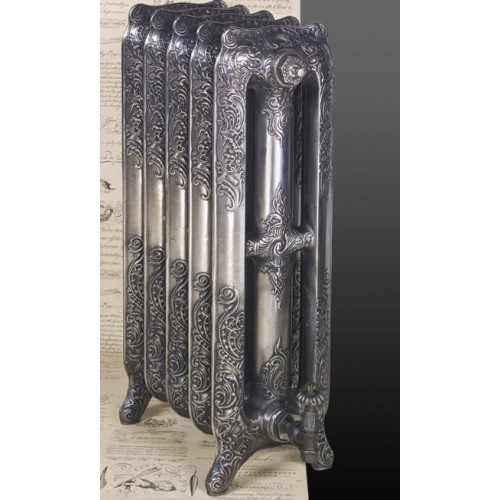
Yes, and they are often superior to modern panel radiators for this application. Because heat pumps operate most efficiently at lower flow temperatures (e.g., 45°C or 50°C), the significant surface area of a multi-column cast iron radiator—such as the Victoriana 4 Column—compensates for the lower water temperature. This ensures the required BTU output is met without needing to run the heat pump at high, inefficient temperatures.
What are the electrochemical considerations when mixing cast iron with modern copper or HEP2O piping?
Mixing dissimilar metals in a central heating system can lead to galvanic corrosion. When installing cast iron radiators, it is technically imperative to treat the system with a high-quality chemical inhibitor (e.g., Sentinel X100 or Fernox F1). This creates a protective film on the internal cathodic and anodic surfaces, preventing the formation of magnetite (black sludge) and hydrogen gas, which can otherwise cause cold spots and localized pitting.
How is the "Sectional Expansion" managed in long radiator runs?
Cast iron radiators are modular, joined by internal right-hand and left-hand threaded nipples and paper or fiber gaskets. For exceptionally long runs (e.g., over 20 sections), thermal expansion becomes a factor. The radiator should be installed with a slight "float" in the wall stays to allow for the lateral expansion of the iron as it reaches peak temperature ($75°C+$), preventing stress on the valve tails and pipework joints.
What is the Delta T Delta t significance when calculating BTU requirements?
A: Most UK BTU calculations are based on Delta t 50°C (assuming a mean water temperature of 70°C$ and a room temperature of 20°C). However, if you are using a modern condensing boiler or a renewable system, you may need to calculate for Delta t 30°C or Delta t 40°C. Because cast iron provides a high ratio of radiant heat to convective heat, it is vital to use the correct correction factor to ensure the radiator is sized correctly for the system's actual flow temperature.