
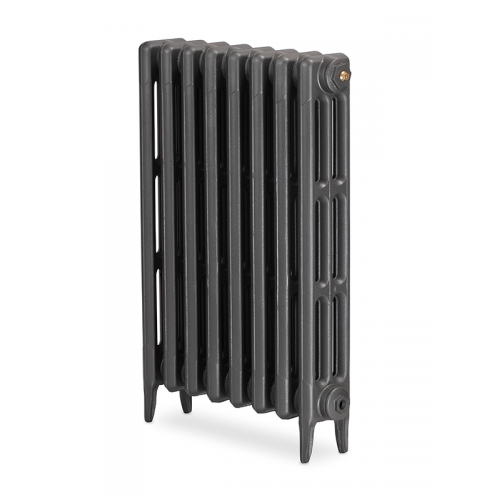
Victoriana 3 - 745mm Products
Frequently Asked Questions
How does the increased static pressure head of the 745mm high Victoriana 3 radiator affect the choice of joining gaskets compared to shorter models?
The 745mm height creates a higher internal hydrostatic pressure column at the bottom of the radiator compared to the 450mm version. While standard graphite gaskets are generally sufficient you must ensure that when joining sections on site specifically for this height the torque applied to the joining key is consistent. Any uneven compression on the bottom nipple gasket due to the increased leverage of the taller section can lead to weeping leaks under full system pressure so careful alignment of the taller vertical axis is critical during assembly.
What is the technical impact of heat stratification when using the Victoriana 3 745mm high radiator in a room with a ceiling height exceeding 3 meters?
The 745mm height provides a strong convective chimney effect which drives warm air rapidly towards the ceiling. In very high rooms this can lead to stratification where the heat pools above head height. To solve this problem technically you should position the radiator away from stairwells and potentially size the radiator 10 to 15 percent larger than the standard BTU calculation suggests. This ensures that the radiant heat component which travels horizontally reaches the occupants effectively before the convective heat rises out of range.
Why is the 3 column depth of 120mm on the 745mm high model particularly prone to cold spots if the system is not balanced correctly?
A 745mm high 3 column section contains a significant volume of water roughly 1.5 to 2 liters per section. If the flow rate is too low due to poor balancing the water will cool down significantly before it reaches the top of the tall columns or the end of a long bank. This results in the bottom being hot and the top being tepid. You must technically adjust the lockshield valve to ensure a brisk flow rate that refreshes the large water volume sufficiently fast to maintain a Delta T of no more than 10 to 12 degrees across the unit.
How do I accurately calculate the inhibitor dosage for a heating system containing multiple 745mm high 3 column cast iron radiators given their specific volume?
You cannot use standard estimates like 10 radiators equals 1 bottle of inhibitor because the Victoriana 3 745mm model holds roughly three times the water of a standard steel panel radiator. You must calculate the total system volume by multiplying the number of sections by the specific water content per section (approx 1.8 liters) plus pipework volume. Under dosing inhibitor in such a large volume system will lead to rapid hydrogen gas generation and corrosion so you will likely need 3 to 4 liters of chemical concentrate for a whole house installation.
What specific structural reinforcements are required for the floor joists when installing a 34 section Victoriana 3 radiator weighing 190kg with a small footprint?
A 34 section model places a concentrated load of nearly 200kg (plus water weight) onto a relatively narrow strip of floor (120mm depth). If running parallel to joists this point load can exceed the deflection limits of standard timber. You must technically lift the floorboards and install noggins or cross bracing between the joists directly beneath the radiator feet. This distributes the load across multiple structural members preventing the floor from bowing which would cause pipe stress and potential leaks.
Why might I experience water hammer specifically in the tall 745mm Victoriana 3 sections if the flow and return are connected incorrectly?
The Victoriana 3 is a sectional radiator with large internal waterways. If you connect the flow to the top and return to the bottom on the same side without an internal baffle or flow diverter the water may short circuit. However if you accidentally reverse the flow on a thermostatic valve connected to this large volume radiator the high velocity water closing against the valve seat can cause a resonance shockwave through the tall iron columns. You must ensure the TRV is on the flow pipe and is bi directional to dampen this hydraulic shock.
How does the surface area to volume ratio of the 745mm high 3 column radiator compare to a panel radiator regarding low temperature heat pump efficiency?
The Victoriana 3 745mm has a lower surface area to volume ratio than a corrugated steel panel with fins. This means it holds more heat energy but releases it slower. For a heat pump running at Delta T 30 this is actually beneficial for stability but requires a longer warm up time. You should technically set the weather compensation curve on your heat pump slightly higher to account for the slower release ensuring the core temperature of the heavy iron mass is maintained during setback periods.
Is it technically feasible to use a wall hung installation for the Victoriana 3 745mm high model to facilitate floor cleaning?
While possible using heavy duty cast iron wall brackets it is technically risky and generally ill advised for the 745mm height. The sheer weight of the 3 column iron filled with water creates a massive cantilever moment on the wall fixings. Unless you are fixing into solid masonry with chemical resin anchors standard rawl plugs will fail. The safest technical solution is to retain the floor standing feet and use the wall stays solely for tipping prevention rather than load bearing.
What is the correct procedure for painting the 745mm high Victoriana 3 radiator to ensure the finish cures without cracking due to the large surface expansion?
The 745mm height experiences significant linear expansion. If you paint the radiator cold and then immediately turn the heating up to 80 degrees the rapid expansion can crack the paint. You must technically cure the paint by bringing the radiator up to temperature in slow stages. Turn the heating on for 30 minutes at low heat then off. Repeat this over several days gradually increasing the temperature. This allows the paint elasticity to adjust to the movement of the large cast iron surface area without crazing.
How do I technically identify if a leak is coming from the inter section gasket or the casting itself on a refurbished 745mm Victoriana 3 radiator?
On a tall 745mm radiator a leak from a hairline crack in the casting will often appear as a weep in the middle of a column face whereas a gasket leak will always originate from the join between sections. You should dry the area thoroughly and dust it with talcum powder. Pressurize the system cold. If the damp spot appears on the smooth column surface it is a casting flaw requiring a replacement section. If it appears at the seam it is a gasket failure which can theoretically be repaired by rejoining with a new seal.