
Aluminium vs. Steel Radiators: The Ultimate 2026 Comparison for UK Homeowners
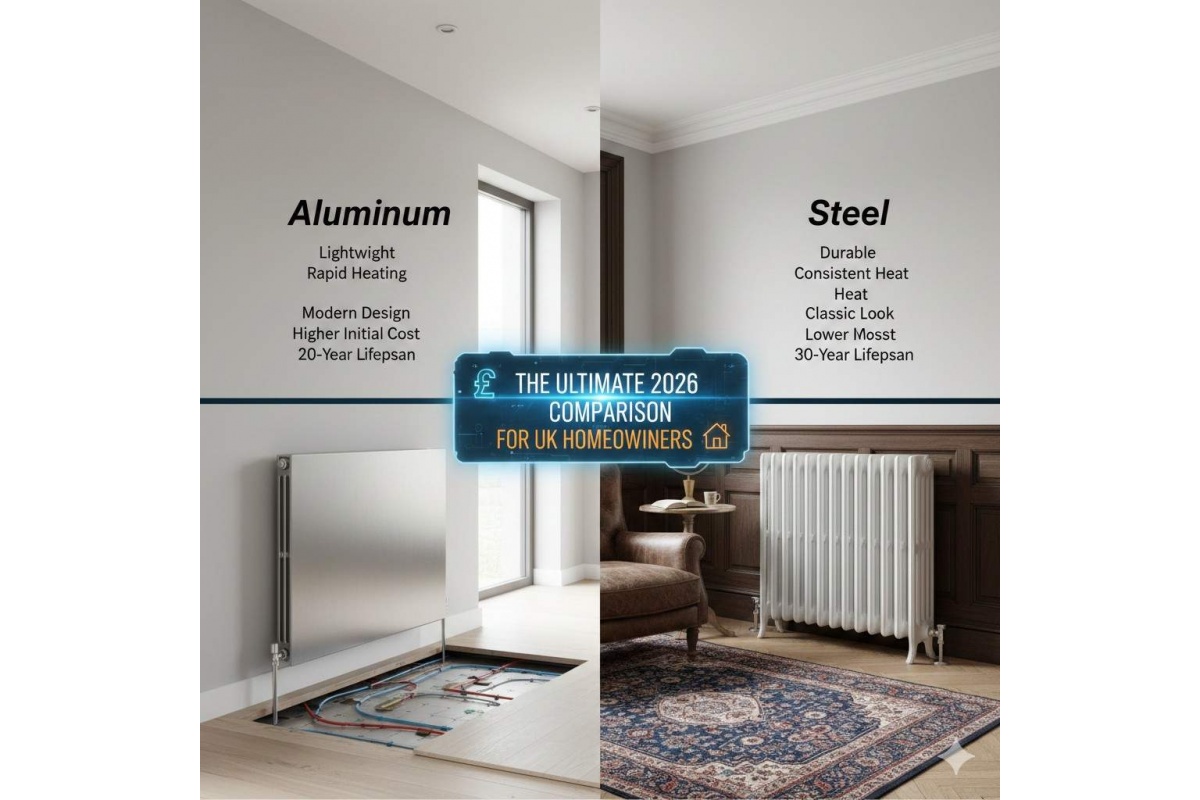
Published: February 2026 | Category: Home Improvement & Energy Saving
In the rapidly evolving landscape of UK home heating, homeowners are no longer just looking for a "box that gets hot." With energy prices remaining a top concern and the push toward "Net Zero" carbon targets, every component of the central heating system is under scrutiny. The debate between Aluminium and Steel radiators has reached a fever pitch.
For over fifty years, mild steel panel radiators were the "de facto" choice for British developers. They were cheap to mass-produce and reliable. However, as we move into 2026, the demand for high-efficiency, responsive, and designer-focused heating has turned the tide in favor of aluminium. In this comprehensive guide, we will dissect every factor from thermal physics to installation costs—to help you decide which material belongs in your home.
1. Thermal Conductivity: The Physics Behind the Warmth
The primary reason for the shift toward aluminium is its coefficient of thermal conductivity. To put it simply, thermal conductivity measures how quickly heat passes through a material. Let’s look at the numbers:
- Mild Steel: ~50 Watts per meter-Kelvin (W/m•K)
- Aluminium: ~205 Watts per meter-Kelvin (W/m•K)
Aluminium is roughly four times more conductive than steel. When your boiler or heat pump turns on, the heat from the water is transferred through the radiator walls and into your room four times faster than it would be with a steel unit. This "Low Thermal Inertia" means you don't have to wait 30 minutes for a room to feel comfortable. With a high-quality range of aluminium radiators, you can achieve a comfortable ambient temperature in a fraction of the time.
2. Energy Efficiency: Reducing Your Carbon Footprint and Bills
In 2026, energy efficiency isn't just a luxury it's a requirement. Aluminium radiators contribute to a more efficient home in two distinct ways:
Low Water Content Technology
Because aluminium is such an efficient conductor, the radiator doesn't need to hold as much water to emit the same amount of heat. A standard steel radiator might hold 5-8 liters of water, whereas a comparable aluminium model might only hold 1.5 to 2 liters. Your boiler uses significantly less gas or electricity to heat 2 liters of water than it does for 8. Over a full winter season, this cumulative saving can reduce your heating bills by up to 10-15%.
Compatibility with Low-Temperature Systems
As the UK transitions away from gas boilers toward Air Source Heat Pumps (ASHPs), radiator choice becomes critical. Heat pumps operate most efficiently at lower flow temperatures (around 35°C to 45°C). Because aluminium is so responsive, it performs better at these lower temperatures than traditional steel, which often requires much higher heat to radiate effectively.
3. Installation: The Hidden Costs and Benefits
One factor often overlooked by homeowners but never by plumbers is weight. Aluminium is approximately one-third the weight of steel. This leads to several practical advantages during a renovation:
Wall Integrity
Modern UK homes often feature internal "stud" walls made of timber frames and plasterboard. A large, double-panel steel radiator filled with water can weigh over 50kg, putting immense strain on the wall structure. Aluminium radiators are lightweight enough to be mounted safely on almost any wall surface, including partition walls, without the need for expensive floor-standing supports.
Labor Costs
Because they are easier to handle, installation is often faster. A single engineer can often install an aluminium unit that would traditionally require two people to lift and position if it were steel or cast iron. Faster installation directly translates to lower labor costs on your plumbing quote.
4. Designer Aesthetics: Heating as Art
Steel radiators are typically limited to "pressed" designs—the classic corrugated look we see in most 1990s homes. Aluminium, however, is extruded. This manufacturing process allows for incredibly intricate and modern shapes.
- Vertical Feature Radiators: High-reaching columns that turn a heating appliance into a piece of wall art.
- Slimline Profiles: Perfect for narrow hallways where every centimeter of space matters.
- Finish Variety: Aluminium takes powder-coating exceptionally well. Whether you want a matte anthracite, a textured black, or a classic gloss white, the finish on aluminium tends to be more durable and visually "crisp" than on steel.
5. Durability and Corrosion: The Long Game
There is a common misconception that aluminium radiators are "delicate." In reality, aluminium is naturally resistant to oxidation. When exposed to air, aluminium forms a microscopic layer of oxide that protects it from rusting—a problem that frequently plagues steel radiators, especially in damp environments like bathrooms.
However, we must discuss Internal Corrosion. In any "mixed-metal" system (where you have copper pipes and aluminium radiators), there is a risk of galvanic corrosion. To prevent this, you must use a high-quality corrosion inhibitor. In 2026, modern inhibitors like Fernox F1 are specifically designed for these systems, ensuring your radiators last 25 years or more.
6. Cost Analysis: Short-Term Investment vs. Long-Term Gain
| Feature | Mild Steel | Aluminium |
|---|---|---|
| Purchase Price | Lowest | Mid-High |
| Running Costs | Higher | Lower |
| Lifespan | 10-15 Years | 20-30 Years |
While the initial purchase price of an aluminium radiator is typically 20-30% higher than steel, the Total Cost of Ownership (TCO) is lower. When you factor in the energy savings over a decade and the increased lifespan of the unit, aluminium pays for itself several times over.
7. Frequently Asked Questions
Are aluminium radiators noisier?
Some older models had a reputation for "clicking" as they expanded. Modern designs use plastic-sleeved brackets that allow the metal to expand and contract silently. Correct installation is key.
Can I use them with my existing boiler?
Absolutely. You do not need a special boiler to use aluminium radiators. They work perfectly with Combi, System, and Heat-Only boilers.
Final Verdict: If you are looking for the most cost-effective, stylish, and future-proof way to heat your UK home in 2026, aluminium is the clear winner. Ready to make the switch? Explore our Free UK Delivery range at Budget Radiators today.