
Can You Put an Aluminium Radiator in Your Bathroom?
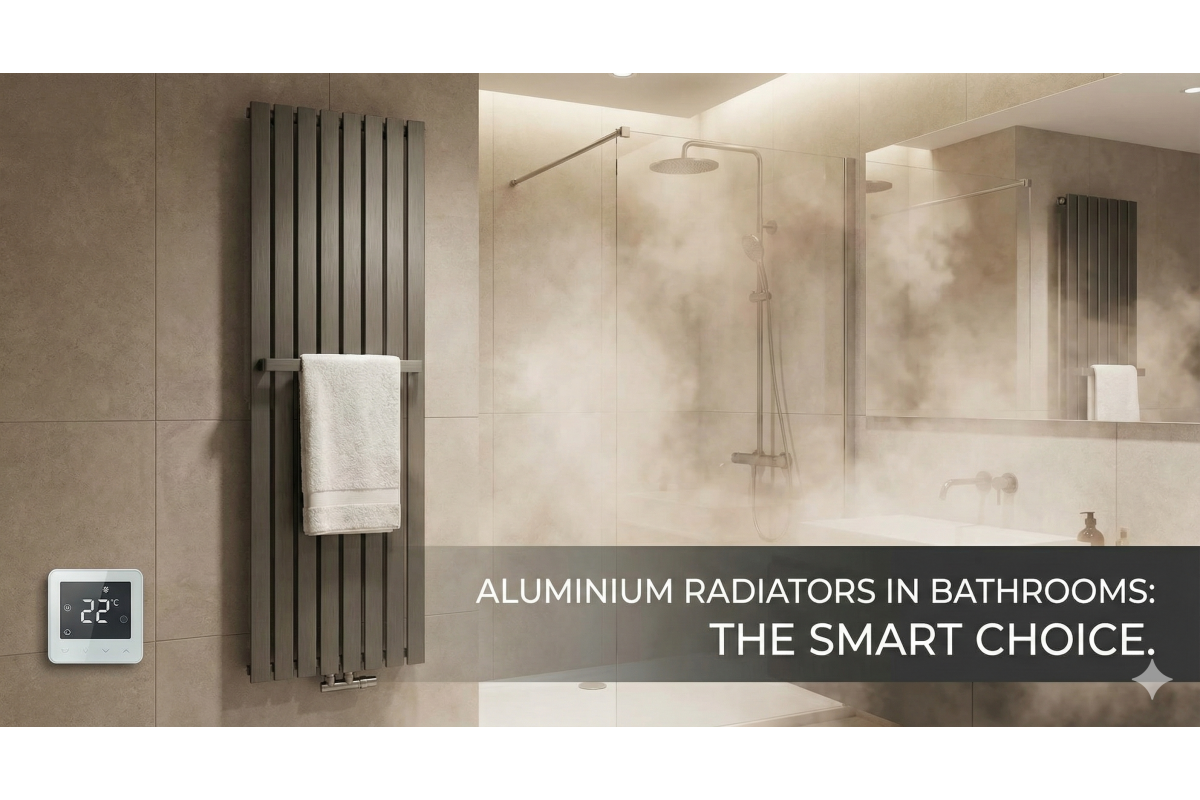
For decades, the bathroom has been the most functional, utilitarian room in the house. It was a place of white tiles, porcelain fixtures, and standard chrome plumbing. Heating was often an afterthought usually a small, rattling white panel radiator or, in later years, the ubiquitous chrome ladder rail. These heating choices were driven by convention and availability rather than performance or design. However, the modern bathroom has evolved. It is no longer just a utility space; it is a sanctuary, a home spa, a place of retreat. With this shift in function comes a necessary shift in infrastructure. The questions homeowners are asking have changed from "What is the cheapest option?" to "What is the most efficient, durable, and stylish option?"
One question, however, persists with surprising frequency: "Can you put an aluminium radiator in a bathroom?"
There is a lingering misconception that aluminium a material associated with high-tech electronics, aerospace engineering, and modern architecture is somehow too delicate or unsuitable for the damp, chaotic environment of a family bathroom. This could not be further from the truth. In reality, aluminium is arguably the only material that should be used in a modern bathroom.
This comprehensive guide will dismantle the myths surrounding bathroom heating. We will explore the physics of thermal conductivity, the chemistry of corrosion, the economics of energy efficiency, and the aesthetics of modern interior design. By the end of this article, you will understand why swapping your old steel rail for an aluminium model is the single most effective upgrade you can make for your bathroom's comfort and longevity.
1. The Chemistry of Resistance: Why Aluminium Defeats Rust
The bathroom is the most hostile environment in your home for any metal object. It is a torture chamber for materials. The humidity fluctuates wildly, condensation forms on cold surfaces, and water is frequently splashed directly onto fixtures. In this environment, the primary enemy is oxidation rust.
To understand why aluminium radiators are the superior choice for this setting, we must look at the atomic level. Standard radiators are typically made from mild steel. Steel is an alloy of iron and carbon. When iron is exposed to oxygen and moisture (both abundant in a bathroom), it undergoes a chemical reaction to form iron oxide commonly known as red rust. This rust is porous and flaky; it expands, cracking the paint or chrome plating, which exposes more fresh steel to the moisture, creating a cycle of destruction that eventually leads to leaks and failure.
Aluminium behaves differently. It is an active metal, meaning it reacts very quickly with oxygen. However, this reaction is its superpower. When raw aluminium meets oxygen, it instantly forms a microscopic, incredibly hard layer of "aluminium oxide" on its surface. Unlike iron oxide, aluminium oxide does not flake. It binds tightly to the parent metal, creating an impermeable ceramic-like shield that prevents oxygen from reaching the metal underneath. It effectively "heals" itself. If you scratch an aluminium radiator in a bathroom, the scratch instantly oxidizes and reseals itself. This natural passivation process means that aluminium is virtually immune to the external rust that plagues steel radiators in damp environments.
Furthermore, this corrosion resistance is not just about the outside; it applies to the inside too (provided the system is treated correctly). While we will discuss water treatment later, the fundamental chemical stability of aluminium makes it the gold standard for wet rooms, saunas, and ensuites.
2. Thermal Physics: The Need for Speed
The way we use heating in a bathroom differs fundamentally from how we use it in a living room. In a living room, you might want a steady, low-level heat that maintains a constant temperature all evening. In a bathroom, the usage is sporadic and demand-based. You wake up, you need the room warm for your shower, and then you leave. 12 hours later, you might need it warm again for a bath.
This usage pattern demands a material with low "thermal inertia" and high "thermal conductivity."
Conductivity Explained
Thermal conductivity is a measure of how easily heat moves through a material.
- Cast Iron: ~52 W/(m·K)
- Mild Steel: ~45 W/(m·K)
- Aluminium: ~235 W/(m·K)
As the numbers show, aluminium is nearly five times more conductive than steel or cast iron. When your central heating boiler sends hot water into a steel radiator, the steel takes time to absorb that energy and transmit it to the surface. It is a slow sponge. When hot water hits aluminium, the transfer is almost instantaneous. The entire body of the radiator reaches the water temperature within minutes.
The Morning Rush Solution
In a practical bathroom scenario, this physics translates to comfort. If you have a steel towel rail, you might need to program your heating to come on 45 minutes before your alarm to ensure the bathroom is warm when you step in. With an aluminium radiator, you might only need 10 or 15 minutes. This "rapid response" capability means you are not heating an empty room for 30 minutes every morning. Over a year, this reduction in boiler run-time accumulates into significant energy savings.
3. The Low H2O Revolution and Heat Pump Compatibility
As we look toward 2026 and beyond, the way we heat our homes is changing. Gas boilers are being phased out in favor of low-temperature systems like Air Source Heat Pumps (ASHPs). Heat pumps operate most efficiently at flow temperatures of around 45°C to 50°C, compared to the 70°C of traditional gas boilers.
This drop in water temperature is a problem for traditional steel radiators. At 45°C, a standard steel radiator struggles to output enough heat to warm a tiled bathroom. It simply doesn't have the conductivity or the surface area to transfer the energy effectively.
Aluminium radiators are the "missing link" for heat pump systems. They are often designed with "Low H2O" technology. Because aluminium is strong yet light, it can be extruded into thin channels. An aluminium radiator typically contains only 10% to 20% of the water volume of a comparable steel radiator. Less water means the boiler or heat pump has less work to do to bring that water up to temperature.
More importantly, because aluminium is so conductive, it can extract the maximum amount of heat from that cooler 45°C water and project it into the room. If you are planning a bathroom renovation with an eye on future-proofing for renewable energy, aluminium is not just an option; it is a necessity.
4. BTU Output vs. Wall Space: The Efficiency Ratio
Bathrooms are often the smallest rooms in the house, yet they have the highest heating demand per square meter. This is because ceramic tiles, porcelain toilets, and glass shower screens are cold surfaces that suck heat out of the air. Additionally, powerful extraction fans vent warm air outside.
This creates a conflict: you need a powerful radiator, but you have very little wall space to hang it. The traditional solution the chrome ladder rail is notoriously inefficient. Chrome plating traps heat inside the metal (it has low emissivity), meaning a large chrome rail might output very few BTUs (British Thermal Units).
Aluminium solves this space-vs-heat conflict. An aluminium radiator will typically output 20% to 30% more heat than a painted steel radiator of the same size, and up to 50% more heat than a chrome one. This high output allows you to downsize the physical unit. You can install a slim, vertical aluminium radiator that fits into a narrow gap behind the door, yet it will generate enough warmth to heat the entire room and dry your towels. This frees up valuable wall space for vanity units, shelving, or simply to make the room feel less cluttered.
5. Weight, Installation, and Wall Integrity
A hidden benefit of aluminium in bathroom design is its weight. Density plays a huge role here. Steel has a density of around 7.8 g/cm³, while aluminium is just 2.7 g/cm³. Aluminium is essentially one-third the weight of steel.
Why does this matter? Modern bathrooms, especially ensuites carved out of larger bedrooms, are often constructed using internal stud walls (timber frames covered with plasterboard). These walls have limits on how much load they can bear. A large, water-filled steel radiator can be incredibly heavy, requiring the wall to be reinforced with extra timber "noggins" or the use of heavy-duty specialized toggle bolts.
An aluminium radiator is featherlight by comparison. A large vertical model can often be lifted by one person. This puts significantly less shear force on the wall fixings and the plasterboard. It reduces the risk of the radiator sagging over time (which can cause pipe leaks) and makes the installation process faster, safer, and cheaper for your plumber.
6. Aesthetics: Anodizing and The End of Peeling Paint
We established earlier that standard paint and chrome can fail in humid bathrooms. But how are aluminium radiators finished?
While some are powder coated (a dry paint process that is very durable), the premium choice for bathrooms is Anodizing. Anodizing is not a coating. It is an electrochemical bath that thickens the natural oxide layer of the aluminium and allows it to absorb dye. The color becomes part of the metal's molecular structure.
This offers incredible design possibilities. You can have radiators in Satin Gold, Brushed Copper, Titanium Grey, or Deep Bronze. These finishes have a metallic depth that paint cannot achieve. They shimmer under bathroom lighting and look exceptionally high-end. More importantly, an anodized finish cannot peel. It cannot chip off. It is impervious to the damp. In a bathroom environment, an anodized aluminium radiator will look exactly the same in 10 years as it did on the day it was installed.
7. The Dual Fuel Advantage for Summer
One specific requirement for bathroom heating is year-round usage. In the summer, your central heating is off, but your towels still get wet. You need a way to dry them without heating the whole house.
This is achieved via "Dual Fuel" installation. The radiator is piped into the central heating for winter use, but also contains an electric heating element for summer use. Aluminium is the superior material for dual fuel for two reasons:
- Even Heat Distribution: In a steel rail, the electric element often creates a "hot spot" at the bottom, while the top bars remain cool. Aluminium's high conductivity wicks the heat away from the element and spreads it rapidly up the entire height of the rail, ensuring even drying for towels placed anywhere.
- Safety/Element Life: Because the heat is moved away from the element so quickly, the element itself is less likely to overheat and burn out, prolonging the lifespan of the electrical component.
8. Essential Maintenance: The Role of Inhibitors
If we are to write a truly expert guide, we must address the one "Achilles Heel" of aluminium. While it cannot rust from the outside, it is sensitive to the pH level of the water inside the system. Aluminium can react with other metals (like copper pipes) in a process called Galvanic Corrosion if the water acts as an electrolyte.
However, this is easily and completely preventable. Every modern heating system should be filled with a "Central Heating Inhibitor" chemical. This fluid balances the pH of the water and creates a protective film inside the pipes and radiators.
The Golden Rule: When installing an aluminium radiator in your bathroom (or anywhere), ensure your plumber adds a high-quality inhibitor (like Sentinel X100 or Fernox F1) that is specifically rated for "mixed metal" systems. As long as this standard maintenance step is taken, your aluminium radiator will last a lifetime.
9. Styling Your Aluminium Bathroom Radiator
Gone are the days of limited choice. The malleability of aluminium allows for extrusion into fascinating shapes. Here are the top styles for 2026:
The Asymmetric Towel Rail
Instead of the standard ladder where the bars are clamped between two vertical uprights, aluminium allows for "cantilevered" designs. The bars stick out from one side only. This is a game-changer for functionality—it allows you to slide towels on and off from the side, rather than having to stuff them through the gap.
The Flat Panel Minimalist
For modern, sleek bathrooms, flat panel aluminium radiators are king. They sit very close to the wall (low projection), maximizing floor space. They often come with add-on magnetic towel bars, giving you the clean look of a radiator with the functionality of a rail.
The Textured Column
For period properties or "Modern Cottage" bathrooms, aluminium column radiators offer the vintage look of cast iron but with modern efficiency and light weight. You can have the aesthetic of a Victorian bathroom without needing to reinforce the floor to hold a 100kg cast iron beast.
10. Conclusion: The Smartest Upgrade
So, can you put an aluminium radiator in your bathroom? The evidence is overwhelming. Not only can you, but you represent the future of home heating by doing so.
Aluminium radiators address every specific pain point of the bathroom environment. They are immune to external rust caused by steam. They heat up in minutes to match your morning routine. They output more heat per inch of wall space than steel, allowing for sleeker designs. They are lightweight, reducing strain on partition walls. And they are future-proofed for the era of heat pumps and eco-friendly low-temperature systems.
While they may cost slightly more upfront than a budget chrome rail, the difference in performance, longevity, and energy savings makes them the undisputed winner in value for money. If you are planning a bathroom renovation, look beyond the standard. Choose the material that is engineered for performance. Choose aluminium.