
Montpellier Cast Iron Radiator - 590mm High Products
Frequently Asked Questions
How does the substantial 175mm depth of the Montpellier 590mm radiator affect the selection and installation of Wall Stays compared to slimmer cast iron models?
The Montpellier 590mm is significantly deeper than standard radiators at 175mm. This pushes the center of gravity further away from the wall. Standard short wall stays may not reach the clamping position between the columns. You strictly require Luxury Wall Stays with cutable threaded rods that can accommodate a distance of at least 175mm plus the skirting gap. The stay must be anchored into the wall and clamped firmly to the rear column to prevent this heavy wide unit from pulling away from the masonry.
The Montpellier 590mm features a complex Scallop and Daisy relief pattern so what is the correct maintenance procedure to prevent dust buildup from reducing thermal efficiency?
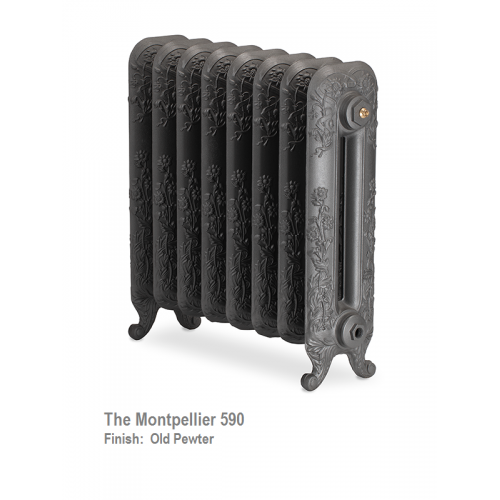
The ornate Scallop and Daisy motif creates deep pockets where dust can accumulate. Unlike smooth radiators a simple wipe is ineffective. Accumulated dust acts as an insulator shielding the hot iron from the air. To solve this you should use a pressurized air duster or a goat hair radiator brush to dislodge debris from the scallop shells monthly. Maintaining a dust free surface ensures the complex casting radiates heat effectively into the room rather than heating the dust layer.
Considering the Montpellier 590mm has a high water content due to its wide columns how does this impact the hydraulic balancing of a mixed heating circuit?
The Montpellier 590mm holds a large volume of water roughly 30 percent more than slimmer ornate models. This creates a high thermal mass meaning it takes longer to heat up but stays hot longer. On a system with fast response steel radiators you must solve the flow imbalance by restricting the lockshield valves on the steel units. This forces the hot water to prioritize the large capacity Montpellier radiator ensuring the entire house reaches the set temperature simultaneously.
How do I calculate the precise pipe centers for the Montpellier 590mm radiator given its wide footprint and potential casting tolerances?
To rough in your pipework you must account for the section width of approximately 71mm multiplied by the number of sections plus 25mm for the end bushes. However due to the 175mm depth the pipe centers are positioned roughly 87mm from the front face. If you have thick skirting boards the pipe pipes may need to be 120mm or more from the wall. You should ideally use adjustable radiator valve extensions to bridge the gap between your floor pipes and the radiator bush if the rough in measurement is slightly off.
Can the Montpellier 590mm Cast Iron Radiator be used effectively with a low temperature Air Source Heat Pump system given its high surface area?
Yes the Montpellier 590mm is technically one of the best candidates for Heat Pumps. Its 175mm depth and Scallop detailing provide a massive surface area relative to its height. This allows it to emit a substantial amount of heat even at low flow temperatures of 45 degrees Celsius. However you must still apply a correction factor of roughly 0.51 to the listed Delta T 50 output meaning a 1000 Watt radiator will provide roughly 510 Watts on a heat pump system.
What are the structural implications of installing a large bank of Montpellier 590mm radiators on a suspended timber floor given the wet weight per section?
The Montpellier 590mm is a heavy radiator with a dry weight of roughly 8kg per section plus a significant water weight due to the wide internal galleries. A 20 section assembly can exceed 200kg in operation. This point load on four legs can punch through old floorboards. You must technically lift the floorboards and install strengthening noggins between the joists directly under the feet or use a spreader plate to distribute the load safeley across a wider area of the floor structure.
When painting the Montpellier 590mm radiator in a Primer finish what technique ensures the Scallop and Daisy motif is covered without losing definition?
The Scallop and Daisy pattern is intricate and susceptible to being filled if paint is applied too thickly. Using a standard brush often leads to pooling in the scallop recesses. The correct technical solution is to use a spray application or a high quality aerosol metal paint. Apply multiple thin mist coats allowing each to tack dry. This builds up the color and protection while keeping the sharp definition of the floral casting visible which is the primary aesthetic feature of this model.
Does the wide 175mm profile of the Montpellier radiator require specific consideration when choosing radiator valves to avoid handle obstruction?
Yes the 175mm depth means the radiator body protrudes significantly into the room. If you install straight valves on a pipe run coming from the floor the valve head will stick out even further potentially becoming a trip hazard. The best technical solution is to use Corner Valves. These turn the valve head inward parallel to the radiator or upright parallel to the wall keeping the valve mechanism tucked within the 175mm footprint of the radiator body for a cleaner and safer installation.
Is it safe to assemble the Montpellier 590mm radiator on site using a standard radiator key or is a heavy duty tool required due to the column width?
Because the Montpellier has wide columns the torque required to compress the joining gasket is higher than on slim radiators. A standard light duty plastic handle key may snap. You strictly require a heavy duty steel Cast Iron Radiator Joining Key. When tightening the nipples you must alternate top and bottom frequently to ensure the wide mating faces come together parallel. Uneven tightening on such a deep radiator can easily crack the flange or pinch the gasket causing a leak.
Why is the Montpellier 590mm radiator not recommended for use on direct domestic hot water systems or open loop circuits?
The Montpellier 590mm is made of ferrous cast iron. Direct hot water systems or open loop circuits introduce fresh oxygenated water constantly. This oxygen reacts with the iron causing rapid internal corrosion and rust sludge black magnetite. This sludge will settle in the wide bottom gallery of the Montpellier radiator blocking flow and eventually eating through the wall. You must technically only install this on a closed loop central heating system treated with a chemical inhibitor.