
Sloane 750 Cast Iron Radiator Products
Frequently Asked Questions
How does the high water content and thermal mass of the Sloane 750mm cast iron radiator improve heating efficiency in older properties
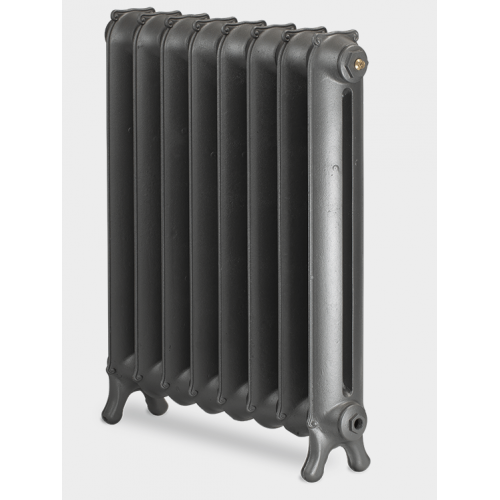
The Paladin Sloane 750mm features a substantial water capacity and dense cast iron structure which creates high thermal mass. This allows the radiator to absorb and store significant amounts of heat energy holding it for hours even after the central heating boiler has cycled off. In older properties with drafty rooms or high ceilings this residual heat provides a constant comfortable background temperature preventing the rapid cooling often experienced with modern steel panel radiators.
What is the correct technical method to calculate the total length and pipe centres for the Sloane 750mm radiator for installation roughing in
To determine the exact pipe centres you must first calculate the radiator length by multiplying the number of sections by the section width (approximately 76mm per section) and adding 26mm for the end bush assembly. Technically you must then add roughly 90mm to 100mm to this total length to account for the radiator valves. The pipe centres from the wall are calculated by taking the radiator depth of 145mm dividing it by two and adding the distance required for skirting board clearance usually resulting in a centre roughly 72.5mm plus clearance from the finished wall.
Why is it technically necessary to install wall stays or top retaining brackets on the floor standing Sloane 750mm radiator
Although the Sloane 750mm is a floor standing model with stable feet its 145mm depth combined with the 750mm height creates a high centre of gravity especially when filled with water. It is technically mandatory to install wall stays to anchor the radiator to the solid wall or stud partition. This prevents the heavy unit from accidentally tipping forward due to vibration or impact ensuring safety and preventing strain on the rigid pipework connections.
How should I adjust the BTU output requirements for the Sloane radiator if my heating system operates at Delta T 60 instead of Delta T 50
The stated BTU output for the Sloane radiator is typically calculated at Delta T 50 which assumes a flow temperature of roughly 75 degrees Celsius. If you have an older boiler system running hotter at Delta T 60 the radiator will technically output roughly 20 percent more heat than listed. Conversely if you are using a modern heat pump at Delta T 30 the output will be significantly lower so you must technically recalculate and oversize the radiator by adding more sections to meet the rooms heat loss requirements.
What are the structural load bearing considerations for installing a 30 section Sloane 750mm radiator on a suspended timber floor
A 30 section Sloane 750mm radiator weighs approximately 281kg when empty and over 300kg when filled with water. This constitutes a significant dead load that can exceed the safe working limit of standard timber floorboards. It is technically critical to inspect the subfloor and if necessary reinforce the joists or install a concrete plinth to distribute the weight evenly preventing floor sagging or structural failure over time.
What is the technical process for joining two separate batteries of the Sloane radiator if it is delivered in parts due to weight restrictions
For large configurations exceeding 15 to 20 sections the Sloane radiator is often delivered in two parts to facilitate safe handling. To join them technically you must use a cast iron radiator assembly tool to tighten the joining nipples located internally between the sections. You must ensure the graphite gaskets are correctly seated between the machined faces of the sections and tighten the nipples incrementally to apply even pressure creating a watertight seal before connecting to the system.
Can I install the Sloane 750mm cast iron radiator on a secondary hot water circuit or is it only for closed central heating systems
Cast iron radiators like the Sloane 750mm are technically designed for closed loop central heating systems where the water is treated with inhibitors to prevent corrosion. They should generally not be installed on secondary hot water circuits (domestic hot water) where fresh oxygenated water constantly flows through the system as this will cause rapid internal rusting and eventual failure of the cast iron body which is not covered under the guarantee.
How do thermostatic radiator valves technically function to control the heat output of the Sloane cast iron radiator
Thermostatic radiator valves or TRVs contain a wax or liquid sensor that expands as the ambient room air temperature rises. When the room reaches the set temperature the sensor expands pushing a pin that closes the valve aperture restricting hot water flow into the Sloane radiator. This technically modulates the heat output preventing the high heat retention of the cast iron from overheating the space and wasting energy essentially automating the temperature control.
What specific preparation is required for the Primer Black or Primer White finish before applying the final top coat to the radiator
The Primer Black and Primer White finishes are transit coats meant to protect the radiator temporarily. Before applying a final top coat you must technically prepare the surface by lightly sanding it with fine grit paper to create a key for the paint adhesion and wiping it down with a degreaser to remove any oils. You should then apply a high quality metal paint that is heat resistant ensuring it seals the cast iron completely to prevent atmospheric moisture from causing rust spots.
How does the 145mm depth of the Sloane radiator affect the convection versus radiation heating profile in a room
The 145mm depth of the Sloane 750mm provides a large surface area for both radiation and convection. While the outer surface radiates heat directly to objects the multiple columns create vertical channels that encourage air to rise through the radiator (convection). This technically creates a balanced heating profile where cold air is drawn from the floor heated between the columns and circulated upwards ensuring consistent warmth throughout the room rather than just localized hot spots.