
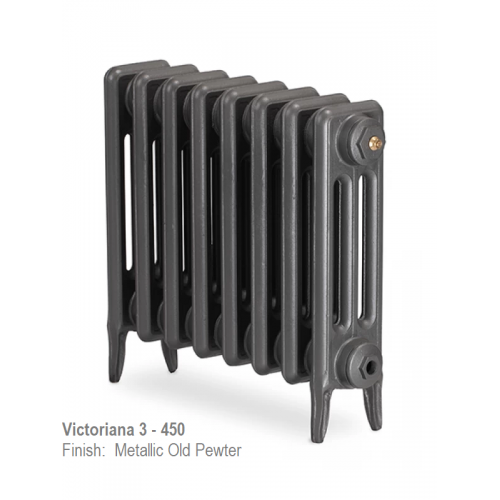
Victoriana 3 - 450mm Products
Frequently Asked Questions
Why do the end caps and bushes on the Victoriana 3 cast iron radiator have different thread directions and how do I identify which is left hand or right hand during installation?
This is a critical technical detail for assembly. Cast iron radiators use specific joining nipples with opposing threads to pull sections together. Consequently the bushes (the reducers where valves screw in) and end caps on one side of the radiator will have a left hand thread meaning you turn them counter clockwise to tighten them. The other side has standard right hand threads. You must check the markings on the bush often stamped with L or R before applying force otherwise you risk stripping the cast iron thread in the radiator section permanently.
What is the correct technical procedure for lifting and moving a pre assembled 450mm high Victoriana 3 radiator to prevent damaging the intersection seals before it is piped up?
You must never lift a long cast iron radiator by grabbing the two end sections and lifting it like a stretcher. This causes the middle sections to sag creating a bowing effect that exerts immense shear force on the graphite gaskets and nipples potentially breaking the water tight seal. You must technically carry it vertically ensuring the weight is supported evenly along the bottom or use a radiator lifting strap that cradles the center gravity point to keep the spine of the radiator perfectly straight during transport.
If I purchase the Victoriana 3 radiator in a primer finish why is it technically inadvisable to use water based emulsion paint directly onto the surface without specific preparation?
The primer provided on Paladin radiators is a protective transit coat. If you apply water based paint directly particularly on any areas where the primer has thinned or chipped the water content in the paint will react with the high carbon content of the cast iron. This causes a chemical reaction known as flash rusting where rust spots bleed through the new paint almost immediately. You should technically apply a solvent based undercoat or a specialized metal primer first to seal the iron before applying your top decorative layer.
How does the substantial thermal mass of the Victoriana 3 column radiator affect the accuracy of standard wax capsule thermostatic radiator valves TRVs attached directly to the unit?
The Victoriana 3 holds a large volume of hot water and the cast iron radiates heat intensely in all directions including towards the valve body. This can cause a standard TRV head attached directly to the bottom bush to sense that the room is hotter than it actually is triggering the valve to close prematurely. To solve this technical issue you should align the TRV head so it points into the room away from the radiator body or technically use a TRV with a remote sensor wired to a wall location to get an accurate room temperature reading.
What is the specific function of the graphite gasket compression when using a joining key to add sections to the Victoriana 3 Paladin radiator range?
The graphite gasket is not just a washer it is a compressible seal that must deform to fill the machined faces of the radiator hubs. When you use a joining key to tighten the internal nipple you are applying torque to crush this gasket. If you under tighten it the water pressure will bypass the seal. If you over tighten it you risk cracking the cast iron lug. You must technically tighten it until the sections meet metal to metal and then apply a final quarter turn to seat the gasket permanently.
Why is it technically recommended to leave the bleed valve slightly open during the initial filling of the system when installing the Victoriana 3 450mm high radiator?
The internal structure of the 3 column design has a curved top arch where air pockets can easily get trapped. If you fill the system rapidly with the bleed valve closed the rising water can compress the air into these arches creating a stubborn air lock that prevents the top of the radiator from heating. By leaving the bleed valve open while filling slowly from the bottom you allow the air to be displaced naturally by the incoming water ensuring the entire internal surface area is wetted and active for heat transfer.
How do I technically accommodate the expansion movement of the Victoriana 3 cast iron radiator when securing it to the wall using standard luxury wall stays?
A cast iron radiator moves as it heats and cools. If you bolt the wall stay rigidly to the radiator and the wall you create a fixed anchor point that fights this expansion. You must technically install the wall stay so that the clamping rod passes through the radiator columns but is not clamped immovably tight against the iron. You should leave a small tolerance or use a rubber washer that allows the radiator to expand linearly left and right by a few millimeters without ripping the wall plug out of the plaster.
What is the technical impact of using 10mm microbore pipework on a long 20 section Victoriana 3 radiator compared to using 15mm copper pipe?
A 20 section Victoriana 3 radiator has a high BTU output and requires a significant flow rate of water to maintain that heat. 10mm pipework has a much smaller cross sectional area which restricts flow and increases hydraulic resistance. This can technically result in a high temperature drop across the radiator meaning the first few sections get hot but the last few sections remain lukewarm because the water is cooling down faster than the narrow pipe can replenish it. 15mm pipe is required to deliver the necessary volume of hot water to the entire radiator length.
How do I technically protect the Victoriana 3 cast iron radiator from thermal shock if I have a very powerful biomass or oil boiler system?
Cast iron is brittle and susceptible to thermal shock if it goes from freezing cold to boiling hot in seconds. If you have a high output boiler you should technically install a blending valve or pump overrun that modulates the temperature increase gradually. When turning the heating on for the first time in winter you should open the valve slowly to allow the iron to warm up gently. Sudden rapid heating can cause unequal expansion stress fractures in the casting particularly near the bush connections.
Can I technically install the Victoriana 3 radiator on a one pipe steam system or is it strictly limited to two pipe hot water systems?
Most modern cast iron radiators including the Victoriana 3 are designed and tapped for two pipe pumped hot water systems with a flow and return. Installing them on a one pipe steam system requires specific modifications. You would technically need to ensure the steam vent is positioned correctly to prevent condensate water hammer and the joining gaskets must be steam rated as standard water gaskets may degrade under high temperature steam pressure. You should consult Paladin directly before attempting a steam installation.