
Liberty 645mm Products
Frequently Asked Questions
How does the Authentic Column Design and scroll detailing of the Liberty 645mm model impact the method required for painting if I purchase the Primer Grey option?
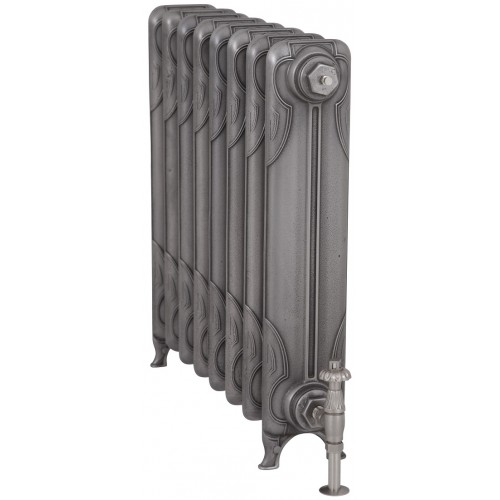
The Liberty range features intricate scroll work and floral motifs cast into the iron surface which makes brush painting difficult as paint can pool in the crevices and obscure the detail. If you purchase the radiator in Primer Grey or Primer Black we strongly recommend using a High Volume Low Pressure spray gun or high quality metal spray paint. This ensures an even coat that seals the metal without filling in the artistic casting details preserving the period aesthetic of the radiator.
Why is the section depth listed as varying between 145mm and 154mm for the Liberty 645mm radiator and how do I calculate the exact pipe centers for roughing in?
Cast iron radiators are manufactured using a traditional sand casting process which naturally results in minor dimensional tolerances between batches. Additionally as you add more sections to the Liberty 645mm assembly the total length and depth can fluctuate slightly due to the thickness of the inter section gaskets. To be technically accurate you should never install pipework until you have the physical radiator on site. If you must pre pipe allow for flexible tails or use adjustable radiator valve extensions to accommodate a variance of plus or minus 5mm.
The Liberty 645mm radiator produces approximately 300 BTUs per section so how does this affect the balancing of my heating system if mixed with lower output steel radiators?
The Liberty 645mm has a high thermal mass and holds a large volume of water roughly 300 BTUs per section means it is a powerful heat emitter. When installed on the same circuit as modern steel radiators which heat up and cool down quickly the Liberty will act as a heat sink. You must balance the system by restricting the lockshield valves on the steel radiators to force hot water flow to the Liberty cast iron unit ensuring it reaches optimum operating temperature simultaneously with the rest of the system.
What is the correct technical procedure for tightening the joining nipples if my large Liberty 645mm radiator is delivered in two separate batteries?
For large configurations (e.g. 20 sections or more) the radiator may be split for safety. To join them you need a specific Cast Iron Radiator Joining Key. You must insert the nipples and gaskets between the batteries and tighten them gradually. It is critical to alternate between the top and bottom nipple giving a few turns to each in sequence. Tightening one side fully before the other will cause the radiator to twist cracking the seal or even snapping the cast iron lug.
Does the 645mm height of the Liberty model allow for sufficient convective airflow when installed under a standard 700mm high window sill?
Yes the 645mm height is specifically designed to fit under standard window sills while leaving the necessary air gap. For efficient convection you technically require a minimum clearance of 50mm above the radiator top. A 700mm sill leaves a 55mm gap which is ideal. If the gap is smaller than 30mm the heat will become trapped causing a heat cushion that prevents cold air from being drawn up through the columns significantly reducing the total BTU output of the unit.
How do I safely lift and position the Liberty 645mm radiator which weighs over 7kg per section without damaging the ornate feet or valve bushes?
You should never lift the Liberty radiator by the end bushes or the valve tails as the weight of the unit (often exceeding 100kg) can strip the threads or crack the end section. The correct lifting technique involves using lifting straps passed between the central columns of the radiator body. If manual lifting is necessary ensure you lift from the main barrel of the sections and not the decorative feet as dragging or pivoting on the feet can snap them off due to the brittle nature of cast iron.
Can I install a thermostatic heating element into the Liberty 645mm Cast Iron Radiator for electric only use and how does the water volume affect the element sizing?
Yes the Liberty 645mm can be converted to electric but the element sizing is critical. Because this model holds a significant volume of water per section you cannot simply match the wattage to the physical size like a towel rail. You must calculate the heat loss and select an element that provides roughly 88 Watts per section. However you must also ensure the element rod is long enough to heat the water evenly across the full length of the radiator to avoid cold spots at the far end.
What type of wall stay is compatible with the Liberty 645mm radiator given its specific depth and column configuration?
The Liberty 645mm is a multi column radiator with a depth of roughly 145mm. Because of the column spacing you generally require a Luxury Brass Wall Stay or a standard Front Mounted stay that clamps between the radiator sections. You cannot use a simple hook style retainer intended for panel radiators. The stay must be anchored into solid masonry or timber stud work and adjusted so it clamps the radiator firmly to prevent tipping without pulling it off its feet.
Does the 10 Year Guarantee on the Liberty 645mm radiator cover leaks caused by the erosion of the paper gaskets between sections?
The 10 Year Guarantee typically covers the cast iron body against manufacturing defects and porosity. However the inter section gaskets are consumable components. While they are designed to last for decades their lifespan is heavily dependent on your water chemistry. You must add a suitable central heating inhibitor to the system water to prevent acidity which eats away at gaskets. If the system is drained and refilled without fresh inhibitor gasket failure may occur and is often considered a maintenance issue rather than a warranty defect.
How does the scroll design of the Liberty 645mm range affect dust accumulation and the cleaning maintenance schedule compared to smooth radiators?
The Authentic Column Design of the Liberty range includes deep relief casting patterns. These artistic recesses increase the surface area but also act as traps for dust and pet hair. Accumulated debris acts as an insulator reducing the radiative efficiency of the iron. To maintain the listed BTU output you should use a compressed air duster or a long bristled radiator brush to clean the internal scrolls at least once a month during the heating season to ensure unimpeded heat transfer.