
Louis 560mm Products
Frequently Asked Questions
How does the intricate French scroll detailing of the Louis 560mm radiator affect the surface temperature and radiant heat distribution compared to smooth column radiators?
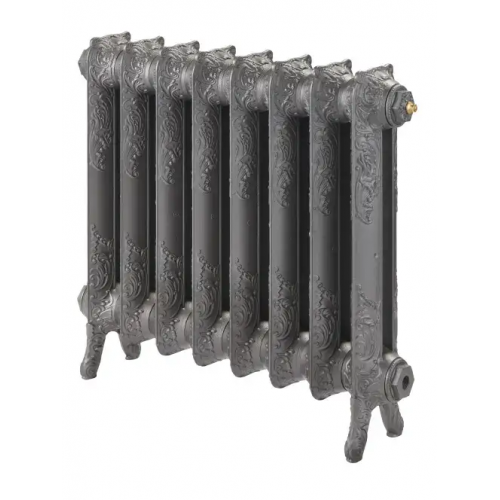
The Louis 560mm radiator features a highly decorative raised pattern with floral and butterfly motifs on every section. This significantly increases the physical surface area of the cast iron compared to a smooth radiator of the same 560mm height and 135mm depth. Technically this design allows for a higher level of radiant heat transfer into the room because there is more hot metal in contact with the air. However you must be aware that the uneven surface can create varying touch temperatures across the relief pattern which is excellent for radiating comfortable ambient warmth but requires regular dusting to maintain efficiency.
My Louis 560mm radiator has arrived in two parts so what is the correct torque and tightening sequence to ensure a watertight seal without cracking the ornate lugs?
When joining two batteries of the Louis 560mm radiator you must use the provided joining key and nipples. The critical technical instruction is to tighten the nipples gradually in an alternating sequence. Turn the top nipple two rotations then the bottom nipple two rotations and repeat. If you fully tighten one side first the pressure will cause the opposing side to flare out potentially cracking the cast iron lug or crossing the thread. You should apply roughly 40Nm to 60Nm of torque which is equivalent to a firm one handed pull on a standard 600mm breaker bar to compress the gasket to its optimal sealing thickness of 1.5mm.
The Louis 560mm model has a relatively slim depth of 135mm so can I install it on a narrow hallway wall without obstructing the passage if I use standard valves?
While the radiator depth is 135mm the total projection will be greater once installed. You need to leave a technical clearance of at least 25mm between the wall and the back of the radiator for air circulation. This brings the front face to approximately 160mm from the wall. If you use standard straight radiator valves they may protrude further into the room. To minimize the footprint in a narrow hall we recommend using corner valves which orient the valve head inward or vertically ensuring the total obstruction remains within the 160mm to 170mm zone.
How do I accurately calculate the wet weight load of a 20 section Louis 560mm radiator to determine if my suspended floor joists need reinforcement?
The dry weight of a Louis 560mm section is approximately 8kg. A 20 section radiator therefore weighs 160kg dry. However you must account for the water content which is roughly 1.8 liters or 1.8kg per section. This brings the total operating weight to practically 200kg concentrated on four small feet. For suspended timber floors this point load is significant. You technically must ensure the feet land directly on the joists or you must lift the floorboards and install noggins or a plywood subfloor to distribute this 200kg load across multiple joists to prevent sagging.
What is the recommended cleaning protocol for the deep relief patterns on the Louis radiator to prevent dust buildup from acting as an insulator?
The deep crevices of the Louis scroll work can trap substantial amounts of dust which acts as a thermal insulator reducing heat output. Do not use wet cloths on unsealed or polished finishes as this promotes rust. The correct technical method is to use a high pressure compressed air duster or a specialized goat hair radiator brush to dislodge debris from the ornate casting. This should be done monthly during the heating season to ensure the iron surface remains exposed to the air for maximum convection.
Can I use a chemical paint stripper to restore a Louis 560mm radiator if I want to change the color or will this damage the inter section gaskets?
You must be extremely cautious when using chemical strippers on cast iron radiators. While the iron itself is resistant aggressive caustic strippers can degrade the paper or silicone gaskets between the sections leading to leaks. The safest technical approach is to have the radiator bead blasted by a professional which removes the paint from the intricate Louis detailing without damaging the seals. If you must strip it manually use a gel based stripper and avoid saturating the joints where the sections meet.
How does the Delta T 50 rating of 293 BTUs per section change if I connect the Louis 560mm radiator to a modern condensing boiler running at lower flow temperatures?
The listed output of 293 BTUs is based on a boiler water temperature of roughly 75 degrees Celsius (Delta T 50). Modern condensing boilers often run more efficiently at lower temperatures like 60 degrees Celsius (Delta T 40) or even lower. At Delta T 40 the output of the Louis 560mm will drop by approximately 20 percent to around 235 BTUs per section. You must technically oversize the radiator by adding roughly 20 percent more sections to your order to compensate for this lower water temperature and ensure the room stays warm.
Why is it strictly recommended to install two Wall Stays for Louis radiators longer than 10 sections despite the 560mm height being relatively stable?
Although 560mm is not a tall height the Louis radiator has a narrow depth of 135mm relative to its height and weight. A long radiator of 10 plus sections creates a heavy moment arm. If a child were to climb on it or a heavy object bumped it the sheer mass could cause it to tip forward. A single wall stay in the center acts as a pivot point. Therefore strictly for safety you should install two wall stays positioned at the outer thirds of the radiator length to anchor it rigidly to the masonry preventing any lateral movement or tipping.
Is the Louis 560mm Cast Iron Radiator compatible with a one pipe steam heating system often found in older period properties?
Standard Louis 560mm radiators are supplied with half inch BSP connections suitable for modern two pipe pumped systems. If you have a one pipe steam system found in some very old buildings you face technical challenges. Steam systems require much larger diameters to allow steam to enter and condensate to leave simultaneously. You would technically need to special order the radiator with 1 inch or 1.25 inch tappings and ensure the specific gaskets used are steam rated as standard water gaskets may fail under high temperature steam pressure.
How do I paint the Louis 560mm radiator in a way that fully covers the intricate French detailing without causing paint runs or pooling?
Brush painting the Louis 560mm is notoriously difficult due to the complex floral casting. Paint tends to pool in the recesses of the pattern and run down the face. The professional technical solution is to spray paint the radiator. Using a High Volume Low Pressure spray gun allows you to apply thin even mist coats that cover the deep scroll work without flooding the detail. If you must use a brush use a round sash brush and apply the paint sparingly working it into the pattern first before laying off the high spots to prevent unsightly drips.