
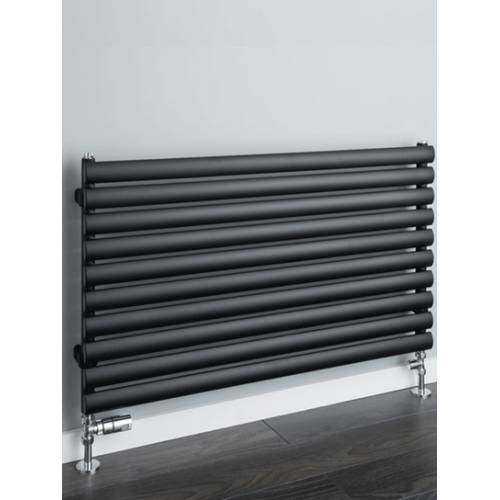
The Oval Single Horizontal - Made to Order Products
Frequently Asked Questions
If I order an Oval Single MTO radiator in a specific RAL colour like Anthracite Grey (RAL 7016), will it be an exact 100% colour match to my existing aluminium windows or doors of the same RAL code?
While the RAL system is a standardized European colour chart, technical variations can occur due to the substrate material and gloss levels. A RAL 7016 powder coat on mild steel (the radiator) may reflect light differently than a RAL 7016 finish on aluminium or uPVC (your windows) due to surface texture differences (matt, satin, or gloss). It is technically advisable to request a metal swatch if an absolute critical match is required, as "batch variation" is a known phenomenon in industrial painting.
What are the technical contractual implications regarding returns and cancellations for the Oval Single Horizontal MTO range if I miscalculate the pipe centers?
Because these radiators are classified as "bespoke" or "custom-made" goods under the Consumer Rights Act, they are technically exempt from standard distance selling return regulations. If you order the wrong size, the supplier is not legally obliged to accept a return, or may charge a significant restocking/cancellation fee (often up to 40-50%) to cover the cost of a unit that cannot be easily resold. You must triple-check your pipe center measurements before confirming the order.
Is the Oval Single Horizontal MTO radiator chemically compatible with a mixed-metal system containing copper pipes and aluminium heat exchangers?
The Oval Single is made from mild steel. Technically, mild steel is compatible with copper and aluminium provided the system water is chemically treated. If you have an aluminium boiler heat exchanger, you must use a pH-balanced corrosion inhibitor (checking the manufacturer's specific pH requirement, usually 7.0-8.0). Failure to do so can cause "galvanic corrosion" where the steel sacrifices itself to protect the copper/aluminium, leading to sludge build-up in the bottom of the oval tubes.