
Colona 2-Column Radiators Products
Frequently Asked Questions
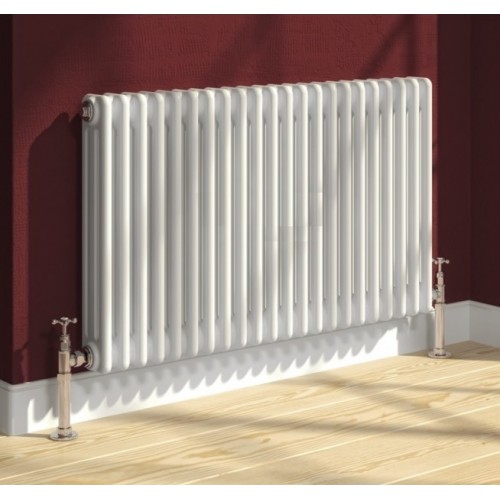
Why might the longer 1190mm wide horizontal Colona 2-column radiators suffer from cold spots in the middle and how can the flow configuration technically resolve this?
Long column radiators can sometimes experience short circuiting where hot water flows directly from the inlet to the outlet without circulating through the center columns. To solve this technically you should install the flow and return valves on opposite ends (Bottom Opposite Ends connection) which forces the water to travel the full length of the radiator ensuring an even surface temperature across all 26 sections.
How does the electrostatic powder coating process on the White and Anthracite Colona models differ from wet painting in terms of heat output and thermal efficiency?
The Colona range uses a dry powder coating that is cured under heat to form a skin. Unlike thick wet paints which can act as a thermal insulator and reduce output this technical coating is bonded to the metal at a molecular level ensuring minimal thermal resistance. This allows the radiator to transmit its full rated BTU output efficiently into the room without the finish acting as a barrier to heat transfer.
Can the Colona 2-column mild steel radiator be installed on a microbore pipework system or does the port size require standard 15mm copper piping?
The Colona radiators come with standard 1/2 inch BSP connection ports which are optimized for 15mm pipework to ensure adequate flow rates. While it is possible to use microbore (10mm or 8mm) adapters technically you must be aware that the high water volume of the column design requires a strong flow rate to heat up effectively so 15mm pipework is strongly recommended to prevent slow warm up times.
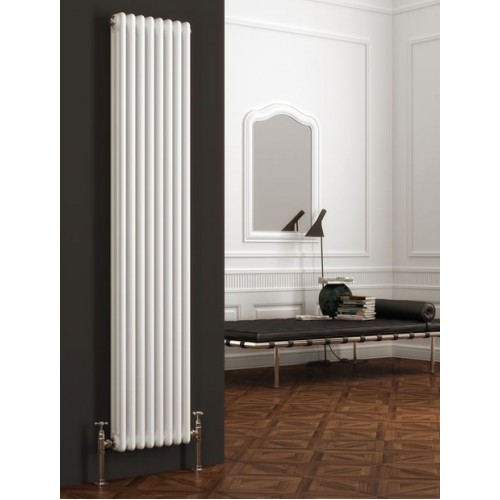
What are the structural requirements for mounting the heavy vertical 1800mm Colona 2-column radiator on a plasterboard stud wall to prevent fixture failure?
A water filled vertical steel radiator is extremely heavy and standard plasterboard fixings are not technically sufficient to hold the load. You must identify the location of the timber studs behind the plasterboard and anchor the brackets directly into the wood or technically install a horizontal timber noggin between the studs prior to plastering to provide a solid anchor point that can support the full wet weight of the unit.
Does the Reina Colona 2-column range support the use of electric heating elements for dual fuel conversion in bathrooms or kitchens?
Yes the standard horizontal Colona 2-column radiators can technically be converted to dual fuel operation by installing an electric heating element into one of the bottom tappings using a T-piece adapter. You must calculate the wattage of the element to match roughly 60 percent of the radiator's BTU output to allow for thermal expansion of the fluid without triggering the safety cut out limit of the element.
How does the thermal expansion of the mild steel construction affect the pipework connections during the heating and cooling cycles?
Mild steel expands and contracts as it heats and cools which can cause clicking noises if the pipework is too rigid. When installing the Colona radiator you should technically allow for a small amount of play in the pipe tails or use piping with expansion loops beneath the floor. This prevents stress on the valve unions and stops the annoying ticking sounds often associated with metal expansion in tight rigid pipe setups.
What is the correct procedure for balancing the Colona 2-column radiator to ensure it does not rob heat from other radiators further down the heating circuit?
Because column radiators have large waterways they offer very little resistance to water flow. To prevent them from taking all the hot water (short cycling) you must technically adjust the lockshield valve on the return side. Close the valve fully then open it only a quarter to a half turn just enough to achieve a 12 degree Celsius temperature drop between the flow pipe and return pipe which forces water to move on to the next radiator.
Why is the Colona 2-column design considered more suitable for low temperature renewable heating systems like heat pumps compared to standard compact radiators?
Heat pumps operate at lower water temperatures (around 35 to 45 degrees Celsius) which requires a large surface area to heat a room effectively. The 2-column design of the Colona technically provides a much larger surface area relative to its wall footprint compared to a flat panel allowing it to emit more radiant heat and convection even at these lower system temperatures making it an efficient choice for eco friendly upgrades.