
The Elisa - Black and Chrome Products
Showing 1 to 4 of 4 (1 Pages)
Frequently Asked Questions
How does the chrome finish of the Reina Elisa affect its heat output compared to the black version?
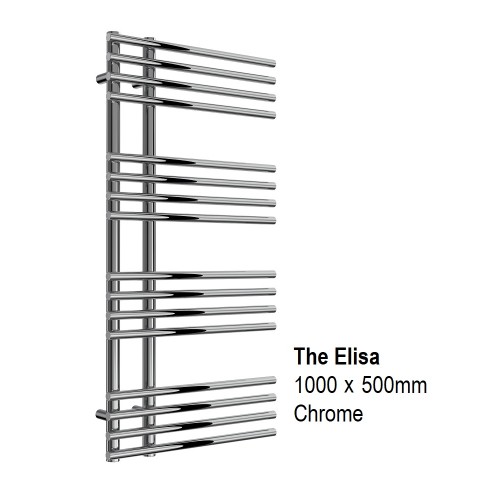
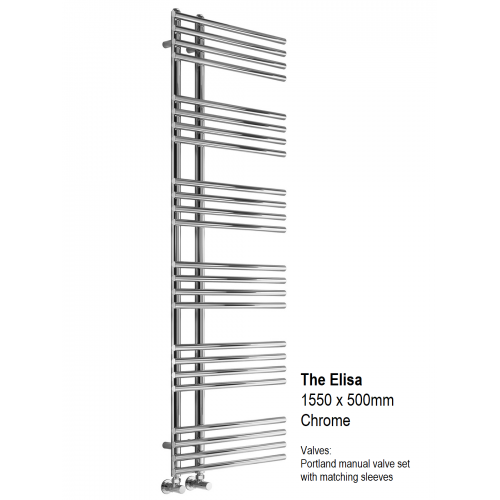
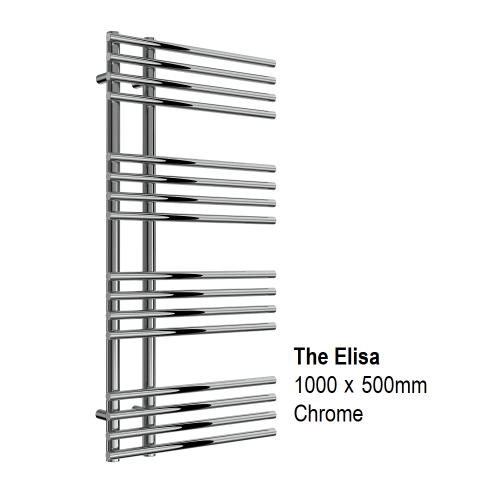
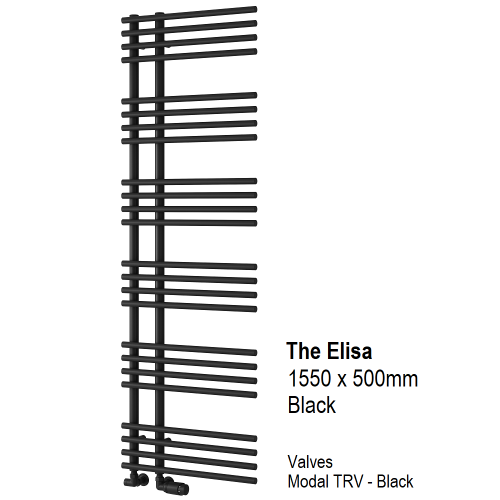
The chrome finish on the Reina Elisa acts as a thermal insulator which technically reduces the emissivity of the mild steel surface. For example the 1000mm Chrome Elisa outputs 1465 BTUs whereas the Black version of the exact same dimensions outputs 2153 BTUs. If your bathroom requires a high heat load to combat heat loss from windows or external walls you must solve this by either selecting the larger 1550mm Chrome model to gain more surface area or supplementing the chrome rail with underfloor heating to ensure the room reaches the desired temperature.
What are the specific electrical requirements for converting the Reina Elisa Chrome to a dual fuel system?
To convert the Reina Elisa Chrome to dual fuel you must install a heating element that matches the wattage rating of the rail without exceeding it. For the 1000mm model which is rated at 429 Watts you should use a 300W element. For the 1550mm model rated at 659 Watts a 400W or 600W element is appropriate depending on the thermostatic control used. You will also need a T-piece for the inlet valve to allow both the water pipe and the electric element to enter the radiator simultaneously.
How does the 120mm depth of the Reina Elisa impact installation in narrow bathrooms?
The Reina Elisa features a significant projection of 120mm from the wall to the front face which is deeper than many standard ladder rails. When planning installation in a narrow cloakroom or en-suite you must measure the swing radius of the bathroom door to ensuring it does not strike the radiator. This deep profile is beneficial for drying thick towels as it allows for better air circulation behind the bars but requires careful spatial planning to avoid obstructing walkways.
What is the correct procedure for bleeding air from the 24-section Reina Elisa 1550mm model?
Vertical rails with many horizontal sections like the 24-section Elisa are prone to trapping air at the very top which causes the upper bars to remain cold. To solve this you must turn off your central heating pump and allow the system to settle. Locate the bleed valve at the top of the vertical collector rail and open it slightly with a radiator key. You must wait until all the hissing air escapes and a steady stream of water flows before closing it to ensure the water level rises to the top for full heat distribution.
Can the Reina Elisa Chrome be installed on a plasterboard partition wall safely?
The Reina Elisa is constructed from mild steel and holds a significant volume of water especially the 1550mm model making it heavy. Installing this directly into plasterboard using standard wall plugs creates a risk of the fixings pulling out under the cantilevered load. To solve this structural issue you must locate the timber studs behind the plasterboard or install a timber noggin between the studs prior to tiling. The brackets should be screwed directly into this timber reinforcement to guarantee a safe and secure installation.
What type of valves are required for the Reina Elisa if my pipes emerge from the floor?
The inlet connections on the Reina Elisa are located at the bottom of the vertical uprights. If your central heating pipes come up from the floor you will technically require straight radiator valves to connect vertically into the rail. If you use angled valves the heads will point outwards into the room which can be a tripping hazard and looks untidy. Using straight valves ensures the pipework runs in a clean vertical line directly from the floor into the radiator maintaining the sleek designer aesthetic.
How do I maintain the chrome finish on the Reina Elisa to ensure the 10 Year Guarantee remains valid?
The 10 Year Guarantee covers manufacturing defects but can be voided by improper maintenance that damages the plating. To solve the problem of corrosion or peeling chrome you must never use abrasive scouring pads or acidic cleaning agents containing bleach. You should clean the rail using only a soft microfiber cloth and warm soapy water. Additionally you must ensure the bathroom is well ventilated to prevent condensation from sitting on the cool metal surface when the heating is off which can lead to surface pitting over time.
Why is the Delta T50 rating important when sizing the Reina Elisa for a heat pump system?
The heat output of 2247 BTUs for the 1550mm Elisa is calculated at Delta T50 which assumes a boiler flow temperature of around 75 degrees Celsius. If you are using a renewable heat pump system that operates at lower temperatures (Delta T30) the actual output will be significantly lower likely around 1100 BTUs. To solve this sizing problem you must apply a correction factor to the manufacturer's rating. You may need to install the largest available model or multiple rails to provide sufficient heat on a low temperature system.
Does the square tube design of the Reina Elisa require specific pipe center measurements?
Yes the Reina Elisa uses a square profile design which can affect the valve alignment compared to round tubes. For the 500mm wide model the pipe centers will be approximately 455mm to 460mm depending on your valve choice. You must not plumb the pipes exactly 500mm apart as this is the total outer width. We strictly recommend having the physical radiator on site to measure the exact centers before completing the first fix plumbing to avoid costly alterations to tiled floors or walls later.
What internal water treatment is necessary to protect the mild steel construction of the Reina Elisa?
The Reina Elisa is manufactured from mild steel which is susceptible to internal corrosion if the system water is not treated. When installing the rail you must add a high quality chemical inhibitor to the central heating system. This chemical creates a protective layer inside the radiator to prevent the steel from reacting with the oxygen in the water. Failure to add inhibitor will lead to the formation of black sludge (magnetite) which blocks the narrow waterways of the towel rail and eventually causes pinhole leaks.