
Electric-Only Towel Rails Products
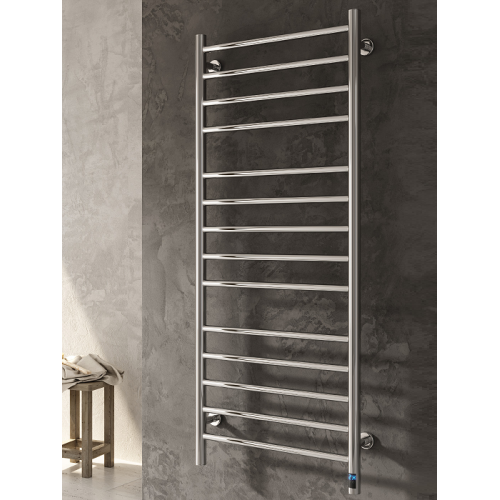
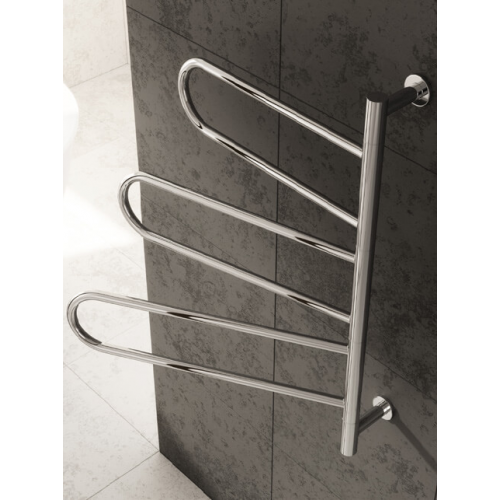
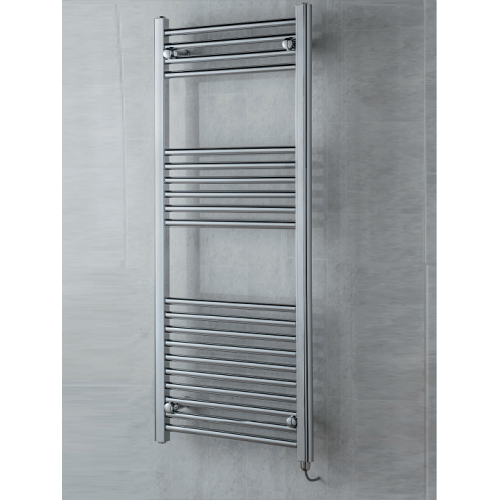
Showing 1 to 9 of 9 (1 Pages)
Frequently Asked Questions
How does the heating technology differ between a fluid filled electric towel rail like the Argyll and a dry electric model like the Reina Orne?
A fluid filled rail contains a thermodynamic liquid that is heated by an element at the bottom which circulates warmth through the tubes similar to a central heating radiator. This holds heat longer after being turned off. A dry electric rail has a wire heating element threaded directly through the bars. Dry rails heat up much faster and are lighter to install but they cool down quickly once switched off.
Why is the IP Rating important when installing an electric towel rail in a UK bathroom and what rating do I need for Zone 2?
The IP Rating or Ingress Protection Rating tells you how well the unit is sealed against water and dust. For a UK bathroom you typically need a minimum of IP44 which protects against water splashes from all directions. This allows safe installation in Zone 2 which is the area within 0.6 meters of your bath or shower basin. Always check the specific zone requirements with your electrician.
Can I install a standard electric towel rail with a plug into a regular wall socket inside my bathroom for easier use?
No you cannot strictly install a standard 3 pin plug socket in a bathroom unless it is 3 meters away from the bath or shower which is rare in most homes. For safety and to meet UK Building Regulations electric towel rails in bathrooms must be hardwired into a fused spur outlet by a qualified electrician. This prevents the risk of electric shock from moisture entering the socket connection.
How do I calculate the correct Wattage or BTU output required to heat my specific bathroom size effectively?
To heat the room effectively you must measure the Height Width and Length of your bathroom in meters. You can use our online BTU Calculator which uses these numbers to determine the heat loss. As a general technical rule for electric heating you often need about 100 Watts of power for every square meter of floor space if the house has standard insulation. If you only want to dry towels and not heat the air a lower wattage is sufficient.
What is the technical difference between a simple on off heating element and a thermostatic control unit for electric rails?
A simple on off element runs at full power continuously until you manually switch it off which can waste electricity. A thermostatic control unit monitors the room temperature or the internal fluid temperature. It cycles the power on and off automatically to maintain your set heat level. This technical feature makes thermostatic rails significantly more energy efficient and cheaper to run over time.
Why does my fluid filled electric towel rail feel cooler at the very top bars compared to the bottom section?
This is a normal technical characteristic and not a fault. Fluid filled rails like the Argyll require an expansion gap of air at the top usually about 10 percent of the volume. This air cushion prevents dangerous pressure buildup inside the sealed unit when the fluid gets hot and expands. Because air does not conduct heat as well as liquid the top bar will naturally feel cooler to the touch.
Is it possible to replace just the heating element if my electric towel rail stops working or do I need to buy a whole new unit?
In most fluid filled models the heating element is a separate component screwed into the bottom of the rail. If it fails you can unscrew it and replace it with a new element of the same wattage and thread size without removing the metal rail from the wall. However dry electric rails often have internal wires that cannot be replaced so a fault in a dry rail usually requires replacing the entire unit.
Does the finish of the towel rail such as Chrome or White Paint affect the heat output and technical efficiency?
Yes the surface finish changes the emissivity of the radiator which is its ability to radiate heat into the room. White painted or powder coated surfaces are technically more efficient and can emit up to 30 percent more heat than a shiny Chrome finish. If your bathroom is very cold and large you should choose a White or Anthracite finish rail rather than Chrome to get the maximum heat output for the same wattage.
Can I use a smart plug or external timer to control my electric towel rail if it does not have a built in timer?
You can use an external timer or a hardwired smart switch fused spur if your towel rail has a standard heating element. This allows you to schedule on and off times via an app or dial. However if your rail has a built in digital electronic thermostat you must check if it has a memory function. If it lacks memory cutting the power with an external timer might reset the settings every time it turns back on.
What are the specific electrical requirements for the fused spur when hardwiring a bathroom towel rail?
The fused spur must be located outside the bathroom or be a special IP rated switch if inside. Technically the connection usually requires a 3 Amp or 5 Amp fuse depending on the wattage of the element. The heating element cable normally has a live neutral and earth wire although some Class II double insulated products might not require the earth wire. A Part P certified electrician ensures the circuit is safe and grounded.
How does a dry electric towel rail like the Reina Rance achieve rapid heating compared to traditional models?
The Reina Rance uses a dry thermal technology where a resistive heating cable runs directly inside the metal tubes. Because there is no heavy liquid to heat up first the transfer of energy to the metal surface is almost instant. This makes dry electric rails excellent for short bursts of heating when you need a warm towel quickly but they do not retain heat well once the power is cut.
Why do I hear a slight clicking sound coming from my electric towel rail when it is operating?
A clicking sound is usually the mechanical relay inside the thermostatic controller switching the power supply to the element on and off. As the rail reaches your desired temperature the thermostat cuts the power to save energy. When the temperature drops it clicks back on. This is a sign that your thermostatic control is working correctly to regulate the temperature.
Can I install the electric heating element on either the left or right side of the towel rail?
For many fluid filled rails like the Argyll you can technically install the element on either the left or right side during assembly because the bottom tappings are standard sizing. However you must always install the element at the bottom of the rail never at the top. Installing it at the top would prevent the fluid from circulating by convection and could cause the element to overheat and burn out.
How much does it cost to run a 300 Watt electric towel rail if I leave it on for 5 hours a day?
To calculate this multiply the Wattage by the hours used and divide by 1000 to get Kilowatt Hours or kWh. A 300 Watt rail running for 5 hours uses 1.5 kWh of electricity. If your electricity tariff is 30 pence per kWh the cost would be roughly 45 pence per day. Using a thermostatic element reduces this cost because the heater will not actually draw power for the full 5 hours only when it needs to boost the heat.
What is the difference between a standard electric towel rail and a Dual Fuel towel rail setup?
An Electric Only rail is a sealed unit filled with fluid or wire and has no connection to your central heating pipes. It runs solely on electricity. A Dual Fuel rail is connected to your gas central heating pipes but also has an electric element inserted. This allows you to heat it with gas in winter and use electricity in summer. This page specifically features Electric Only rails which are easier to install as they need no plumbing.
Why is it recommended to have a qualified electrician install these products instead of doing it myself?
Bathrooms are considered high risk areas for electrical work due to the presence of water and steam. UK Building Regulations under Part P require that electrical installation in special locations like bathrooms be certified. A qualified electrician ensures the zone placement is correct the circuit is protected by an RCD device and the fused spur is safe. Doing it yourself could void your home insurance and endanger your family.
Does the size of the gaps between the horizontal bars affect the towel drying performance?
Yes technically the spacing affects performance. Rails with wider gaps allow you to hang thick fluffy towels more easily without bunching them up. Bunching up towels insulates the heat preventing it from drying the fabric effectively. Models with groups of bars usually offer a good balance of surface area for heating the room and gaps for sliding towels in and out easily.
How do I maintain and clean the surface of my electric towel rail to prevent corrosion or damage?
You should clean the rail only when it is cold. Use a soft microfibre cloth and warm soapy water. You must strictly avoid using abrasive scouring pads or strong chemical cleaners especially on Chrome or coloured finishes. Harsh chemicals can strip the protective lacquer coating leading to rust spots. Regular dusting ensures the heat radiates efficiently into the room without being blocked by a layer of dust.
What happens if the thermal fluid inside the rail expands too much due to a faulty thermostat?
High quality electric elements have a built in safety thermal cut out. If the thermostat fails and the fluid gets dangerously hot this safety mechanism will permanently cut the power to prevent the unit from bursting or leaking. If your rail stops working completely and feels cold it is possible this safety cut out has triggered to protect you meaning the element needs replacement.
Can I install an electric towel rail on a partition wall or does it require a solid brick wall?
You can install them on partition walls but you must ensure the technical fixings are secure. Electric rails filled with fluid can be heavy. You should try to screw the brackets into the wooden studs behind the plasterboard. If that is not possible you must use heavy duty plasterboard fixings. Dry electric rails like the Reina models are significantly lighter and put less stress on partition walls making them a safer choice for stud walls.