
The Newbury Products
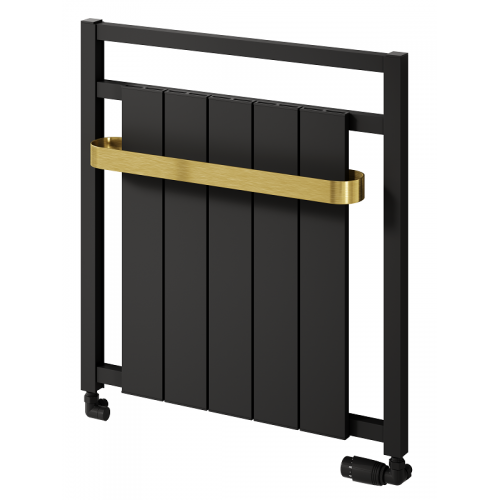
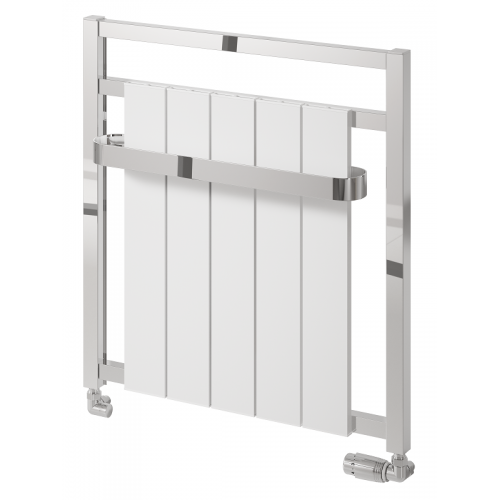
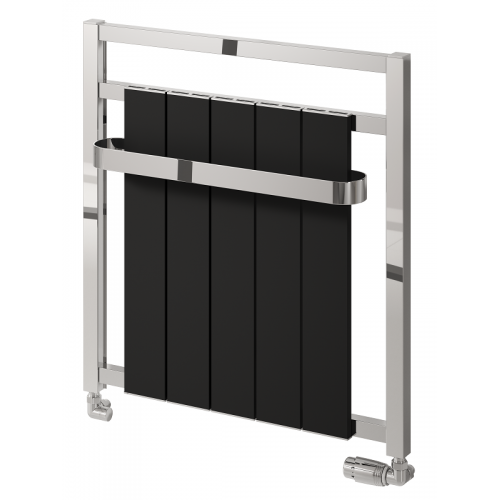
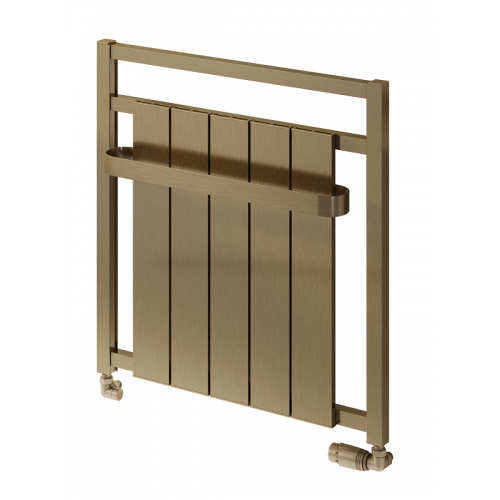
Showing 1 to 4 of 4 (1 Pages)
Frequently Asked Questions
Why is the Newbury Aluminium Towel Rail considered more efficient than a standard steel ladder rail?
The Newbury is manufactured from high-grade aluminium which has a significantly higher Thermal Conductivity than mild steel. This material allows heat to transfer from the water to the room roughly 3-4 times faster. Additionally, the Newbury features Low Water Content technology. Because it holds less fluid than a steel rail of the same size, the boiler or heat pump has less mass to heat up, resulting in a Rapid Heat Up time (low thermal inertia) and reduced energy consumption during the heating cycle.
Is the Newbury suitable for low temperature systems like Heat Pumps?
Yes, the Newbury is technically ideal for Heat Pumps. Heat pumps operate at lower flow temperatures (typically Delta T30 or 45
What are the installation benefits of the Newbury being made of aluminium?
The Newbury is exceptionally Lightweight compared to steel or cast iron. A steel radiator of this heat output could weigh 20kg+, whereas the Newbury is significantly lighter. This solves the problem of installing high-output heating on internal partition walls or drywall (plasterboard) where load-bearing capacity is limited. It reduces the strain on wall fixings and makes the physical installation process safer and easier for a single installer.
Does the Newbury require special chemical inhibitors to prevent corrosion?
Yes, this is a critical maintenance point. Aluminium reacts differently to water than steel. If mixed with copper pipes in the same system, Electrolytic Corrosion can occur if the water pH is not balanced. To solve this, you must use a dedicated central heating inhibitor (like Fernox F1 or Sentinel X100) that is specifically rated for "mixed metal" or aluminium systems. Failure to maintain the correct pH levels (usually between 6.5 and 8.5) can lead to internal pitting and hydrogen gas build-up, potentially voiding the 10 Year Guarantee.
What is the exact wall projection and why does it matter for the Newbury?
The Newbury has a depth of 113mm from the wall to the front face. This includes the mounting brackets. This projection is deeper than some flat panel rails. You must account for this 113mm depth when planning installation behind a door or in a narrow walkway to prevent obstruction. The brackets are generally fixed, so you cannot reduce this depth; however, this spacing allows for thicker towels to be hung easily behind the bars without touching the wall.
Why does the Newbury produce gas or require frequent bleeding initially?
In new aluminium radiator installations, a natural chemical reaction can occur between the aluminium and the water, producing small amounts of hydrogen gas. This is often mistaken for "air" in the system. This is a temporary issue known as "gassing." To solve this, you should bleed the radiator regularly during the first few weeks of operation. If the issue persists, it indicates that the inhibitor concentration in the system is too low, and you must add more chemical protection to stabilize the water chemistry.
Can the Newbury be converted to Dual Fuel for summer heating?
The Newbury is primarily designed for Central Heating connections. Converting aluminium rails to Dual Fuel is technically possible but complex. You must ensure the electric element is compatible with aluminium (to avoid galvanic corrosion) and that the element fits the specific thread size. Furthermore, because aluminium heats up so fast, a standard uncontrolled element can cause the rail to become dangerously hot very quickly. If you require summer heating, it is often safer to choose a dedicated electric rail or use a thermostatic element specifically approved for aluminium bodies.
How do I calculate if the 2648 BTU output is sufficient for my bathroom?
You must measure your bathroom Volume (Length x Width x Height) and apply a "U-value" calculation based on your insulation (windows, external walls). A typical modern bathroom requires approx. 300-400 BTUs per square meter. The Newbury provides 2648 BTUs at ?t50
What valve orientation is required for the Newbury 705mm x 675mm?
The Newbury typically has bottom pipe connections. The pipe centres will depend on the valve choice, but you should generally allow for the Width (675mm) plus approx. 80-90mm for the valves. This means your pipes should be roughly 755mm - 765mm apart. Unlike some vertical aluminium columns that have side connections, the Newbury is designed for standard bottom entry, meaning you can use Angled valves (pipes from wall) or Straight valves (pipes from floor).