
Faraday Eco: for Low-Temp Systems Products
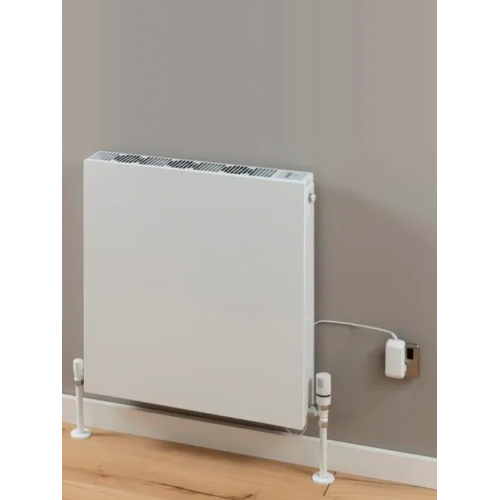
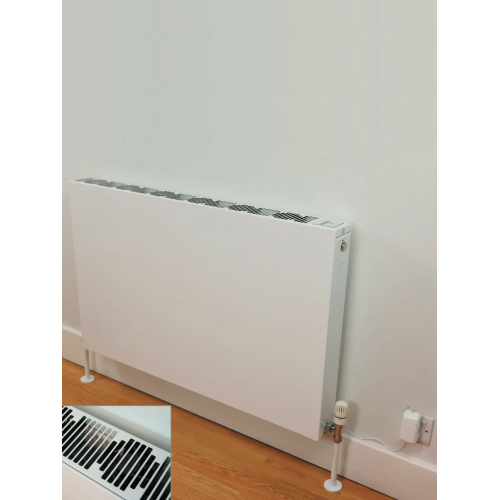
Showing 1 to 8 of 8 (1 Pages)
Frequently Asked Questions
What makes the Faraday Eco Radiator specifically suitable for Low Temperature Systems like heat pumps?
The Faraday Eco is technically engineered with a multi-panel construction and integrated convector fins that significantly increase the surface area compared to standard single-panel radiators. This enhanced design allows for effective heat transfer even at lower flow temperatures, typically between 35
How does the Type 22 configuration of the Faraday Eco differ from standard radiators in terms of heat output?
The Type 22 configuration refers to a "Double Panel, Double Convector" design. This means it has two steel panels filled with water and two sets of convector fins welded between them. This structure maximizes the radiant and convective heat output within a compact footprint. For the Faraday Eco, this high-density design allows it to deliver superior heat output even at low Delta T settings, compensating for the reduced water temperature of renewable heating systems compared to standard radiators.
Why is correct sizing critical when installing Faraday Eco radiators with a Heat Pump?
Correct sizing is crucial because Heat Pumps operate most efficiently at low flow temperatures. If a radiator is undersized, the heat pump may be forced to run at a higher temperature to heat the room, reducing its COP (Coefficient of Performance) and increasing energy bills. Conversely, significantly oversizing the radiator allows the system to run at the lowest possible flow temperature (e.g., 35-40
What is the significance of the Delta T rating when choosing a Faraday Eco radiator?
The Delta T (?t) rating represents the difference between the mean water temperature in the radiator and the desired room temperature. Standard gas boiler outputs are often quoted at Delta T 50
Do I need special valves for the Faraday Eco or are standard radiator valves compatible?
The Faraday Eco utilizes standard 1/2 inch BSP connections, making it compatible with standard radiator valves. However, to maximize the efficiency of a low-temperature system, it is highly recommended to use high-quality Thermostatic Radiator Valves (TRVs) or smart valves that can modulate flow accurately. While the radiator itself does not require proprietary valves, the choice of valve impacts the overall system efficiency, especially when balancing the lower flow rates associated with heat pumps.
Can the Faraday Eco Radiator be used with a standard gas condensing boiler?
Yes, the Faraday Eco is fully compatible with modern condensing gas boilers. In fact, using such a high-efficiency radiator with a gas boiler allows you to lower the boiler's flow temperature (e.g., to 50
How does the low water content of the Faraday Eco benefit the heating system's response time?
The Faraday Eco is designed with a low water content relative to its high surface area. This technical feature means there is less mass to heat up, allowing the radiator to reach its operating temperature much faster than traditional high-mass radiators (like cast iron). This rapid response time is particularly beneficial for systems with weather compensation controls, as the radiator can quickly adjust its output to match changing heat loss requirements, improving overall comfort and efficiency.
Does the Faraday Eco come with a warranty suitable for long-term renewable installations?
Yes, the Faraday Eco is backed by a 10 Year Guarantee. This long warranty period reflects the high build quality and durability of the steel construction. For homeowners investing in long-term renewable energy solutions like heat pumps, this guarantee provides peace of mind that the heat emitters (radiators) will match the lifespan and reliability of the rest of the heating system, protecting the investment against manufacturing defects or leaks.
Is the Faraday Eco effective in retrofitting older properties with poor insulation?
While the Faraday Eco is excellent for new builds, it is also a powerful problem-solving tool for retrofitting. In older properties where insulation improvements might be limited, the high heat output of the Faraday Eco (Type 22) allows you to replace standard radiators with units of similar physical dimensions but significantly higher power. This enables the transition to a lower temperature heat pump system without needing to install physically massive radiators that would dominate the room.