
How to Choose the Perfect Spot for a Radiator: The Ultimate Positioning Guide
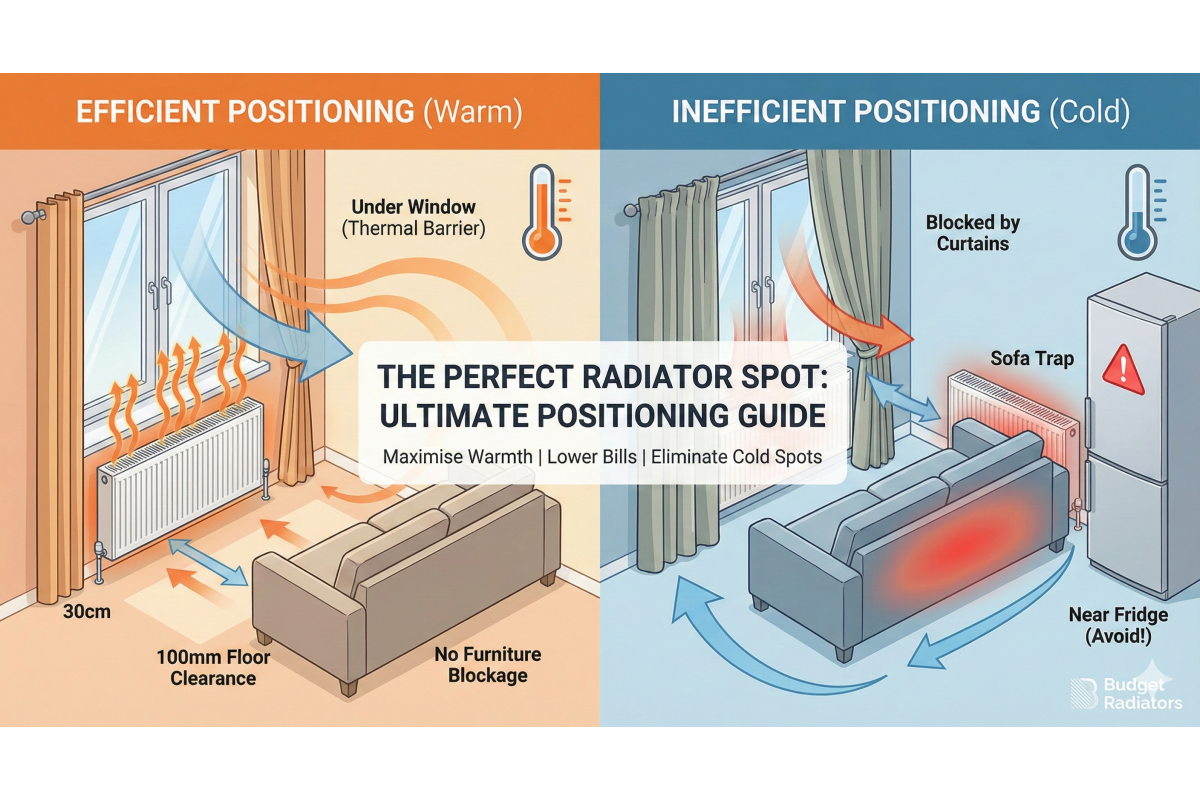
When renovating a room or upgrading a heating system, most people focus on the style of the radiator or its BTU output. While these are crucial, there is a third factor that often dictates how warm your room actually feels: positioning.
Finding the best place for a radiator isn’t just about interior design aesthetics; it is about physics and efficiency. Place it in the wrong spot, and you could be paying to heat the back of your sofa rather than the room itself.
In this in-depth guide for Budget Radiators, we combine expert plumbing advice with interior design tips to help you decide exactly where to put radiators to maximise warmth, eliminate cold spots, and lower your energy bills.
Table of Contents
- The "Under the Window" Rule: Fact or Myth?
- The Golden Rules: Clearance Distances
- Furniture and Curtains: Common Mistakes
- Large Rooms: One Radiator or Two?
- Room-by-Room Positioning Guide
- Where NOT to Put a Radiator
- Vertical vs Horizontal Options
1. Should You Put a Radiator Under a Window?
For decades, the standard advice from plumbers has been to install radiators underneath windows. But is this still relevant in modern UK homes?
The Science: Creating a Thermal Barrier
In older houses with single glazing, the glass was the coldest part of the room. Cold air would drop from the window, creating a draught across the floor. By placing a radiator there, the rising hot air counteracts the falling cold air, creating a thermal barrier that circulates warmth into the room.
The Modern Rule
With modern double glazing (and even triple glazing), windows are much better insulated. This means you are no longer strictly bound to the "under the window" rule. However, it is still often the best use of "dead space" where you wouldn't put furniture anyway.
Verdict: It is still the most efficient spot for preventing draughts. However, if your home is well-insulated, you have the freedom to place radiators on internal walls if it suits your layout better.
2. The Golden Rules: Clearance Distances
One specific detail many homeowners overlook is radiator clearance. Radiators heat a room using convection drawing cold air up from the bottom and pushing hot air out of the top. If you block this airflow, you kill the efficiency.
Follow these industry-standard measurements for optimal performance:
- Floor Clearance: Leave at least 100mm (10cm) usually, but strictly no less than 50mm, between the bottom of the radiator and the floor to allow cold air to enter the convection channel.
- Top Clearance: Leave at least 100mm (10cm) clear space above the radiator. Do not install a shelf directly on top unless there is a significant gap.
- Furniture Gap: If placing a sofa nearby, ensure there is a gap of at least 20–30cm to prevent the fabric from absorbing all the heat.
3. Furniture and Curtains: The Efficiency Killers
Blocking a radiator is the fastest way to increase your heating bills. Here is how to handle furniture and soft furnishings.
The Sofa Problem
Placing a sofa directly in front of a radiator traps heat. The warm air builds up behind the sofa, triggering the thermostat to shut off before the rest of the room is warm. If you have no choice, pull the sofa forward by 20cm or consider a console table behind it to force a gap.
The Curtain Trap
Full-length curtains over a radiator are a disaster for efficiency. They funnel heat towards the window glass, where it is lost to the outside. Studies suggest this can reduce heat output by up to 15–20%.
The Fix: Tuck curtains behind the radiator, or switch to Roman blinds or short curtains that finish 5cm above the radiator top.
4. Large Rooms: One Big Radiator or Two Small Ones?
If you have an open-plan living space or a room larger than 20m², rely on zoned heating rather than a single massive heat source.
Installing one giant radiator creates a "Sunspot vs. Iceberg" effect it will be roasting hot near the radiator but chilly on the other side of the room. It is far more efficient to install two smaller radiators at opposite ends of the room. This ensures even heat distribution and eliminates cold spots.
5. Room-by-Room Positioning Guide
The Living Room
Prioritise the coldest wall (usually the external wall). Avoid placing the radiator near the main room thermostat, as the direct heat will trick the thermostat into thinking the whole house is warm, shutting off the boiler prematurely.
The Bedroom
Warning: Do not place the radiator near the headboard of your bed. Sleeping too close to a heat source can cause headaches, dehydration, and an uncomfortable, stuffy night's sleep. Try to position it on the opposite wall or under the window.
The Kitchen
Kitchens are tricky due to cabinets. A vertical radiator is often the best choice here, fitting on the narrow strip of wall near the back door or entrance. Important: Never place a radiator next to a fridge or freezer. The heat will force the fridge motor to work overtime, potentially burning it out and wasting electricity.
The Bathroom
While heated towel rails are popular, remember that if they are covered in thick wet towels, they won't heat the room effectively. Ideally, position the rail as close to the shower or bath as possible for easy reach, but ensure it is far enough away from the toilet to avoid hygiene concerns (germs thrive in warm air currents).
6. Where NOT to Put a Radiator
To summarize, avoid these locations at all costs:
- Behind a door: If the door is left open, it blocks the heat. If it's closed, the handle may strike the radiator.
- Next to the thermostat: Causes "false positive" temperature readings.
- Inside a radiator cover (without vents): While they look nice, solid covers can reduce heat output by over 30%.
Top Tip for External Walls: If you must place a radiator on a poorly insulated external wall, install reflective radiator foil behind it. This bounces up to 95% of the heat back into the room rather than letting it escape through the bricks.
7. Vertical vs Horizontal: Solving Space Issues
If you are struggling to find wall space because of doors and windows, don't force a horizontal radiator into a bad spot.
Vertical radiators take up very little horizontal wall width but use the height of the room to generate massive heat output. They are perfect for placing behind doors (providing there is a door stop!) or on narrow pillars between windows.
Final Checklist
Before you commit to moving pipes and drilling holes, run through this checklist:
- Check the BTUs: Use our BTU Calculator to ensure the size is correct.
- Respect the Clearance: Do you have 100mm clear above and below?
- Avoid Obstructions: Is it away from the sofa and fridge?
- Think Zoning: Would two smaller radiators work better than one big one?
Found the perfect spot? Now find the perfect radiator. Browse the full range at Budget Radiators for the UK’s best deals on designer, column, and vertical heating.