
Oxford 470mm Products
Frequently Asked Questions
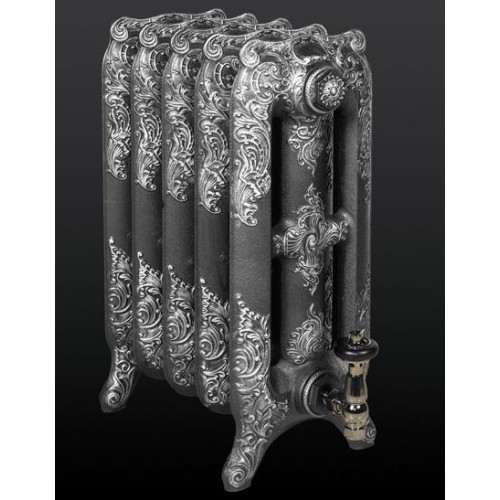
The Oxford 470mm radiator is 230mm deep; how does this impact the position of my pipework rough-in compared to standard radiators?
The 230mm depth is substantial. The pipe connections are typically centered within the section, meaning the pipe center is roughly 115mm from the front face. When you add a required air gap of at least 30mm behind the radiator, your pipe centers will likely need to be 145mm to 150mm away from the skirting board. If you rough in pipes at the standard 70mm position used for panel radiators, the valves will not align, and you will need to use unsightly offsets or rigid extensions.
Can I install the Oxford 470mm radiator under a window bench or seat, and what clearances are required for safety?
Yes, the 470mm height is ideal for window seats. However, because the Oxford produces high radiant heat (over 300 BTUs per section) and is very deep, you must ensure the bench seat above it has a clearance of at least 100mm. Furthermore, the bench should have vents or a grille to allow the hot air trapped by the wide 230mm body to escape upwards. Without venting, the heat will build up under the seat, potentially warping the timber and reducing the room temperature.
How do I select the correct Wall Stay for a radiator that is 230mm deep but only 470mm high?
This is a specific challenge. Standard wall stays are often too short to reach the rear column of a 230mm deep radiator. You must specify Extended Luxury Wall Stays with a long threaded rod (often cuttable from 200mm+). Additionally, because the radiator is short (470mm), you should position the stay as high as possible
Is the Oxford 470mm radiator suitable for gravity-fed heating systems often found in farmhouses?
Yes, excellent suitability. Gravity systems rely on low resistance and large water volumes to circulate. The Oxford 470mm has huge internal galleries (holding roughly 2+ liters per section) which offer very low hydraulic resistance. This makes it one of the best choices for older gravity circuits or solid fuel back-boiler systems where modern narrow-channel radiators would restrict flow.
How does the weight of 8.25kg per section affect installation on a first-floor timber structure?
A 20-section Oxford radiator weighs approx 165kg dry and nearly 200kg wet. While this is lighter than the tall 790mm models, the weight is concentrated in a short, dense footprint. On a timber floor, this creates a high "point load" per square meter. You must verify that your joists can support this concentrated load. It is almost always necessary to use a spreader plate or position the feet directly over the joists to prevent the floorboards from bowing under the dense weight.
Do I need to use 3/4 inch valves for the Oxford 470mm radiator given its large water volume?
For standard domestic pumped systems, 1/2 inch (15mm) valves are sufficient for radiators up to roughly 8000 BTUs (approx 24 sections of Oxford). However, if you are installing a very long bank (e.g., 30+ sections) on a low-pressure system, using 3/4 inch valves and adapters can technically improve the fill rate and balance, ensuring the radiator heats up uniformly from end to end without needing excessive pump pressure.
Can I mix the Oxford 470mm with the taller 765mm Oxford model on the same pipe run?
Yes, but you must align the pipework carefully. The "tapping centers" (height of the pipe hole from the floor) are generally consistent across the range, but the projection from the wall differs. The 470mm model is 230mm deep, while taller versions might have different depths. If you run pipework in a straight line along a wall, the valves will not line up. You will need to "dog-leg" the pipework into the wall or use adjustable extensions to compensate for the differing depths of the radiators.