
Elizabethan 650 Products
Frequently Asked Questions
How does the 650mm height of the Neo Georgian 2 Column radiator balance heat output with spatial efficiency?
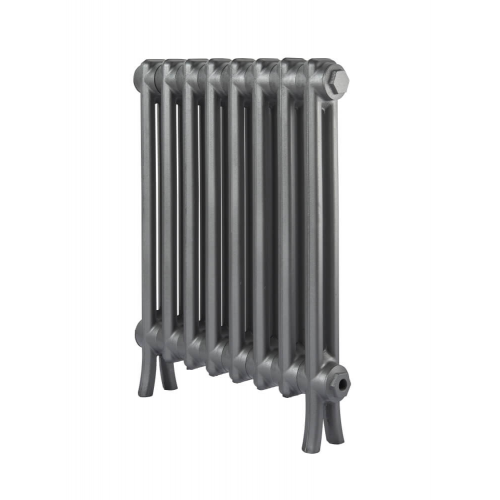
The 650mm height is a technical "mid-height" dimension. It offers significantly more surface area and heat output (approx 180 BTUs per section) than the lower 500mm model, making it suitable for medium-to-large rooms. However, it remains compact enough to fit beneath standard dado rails or higher window sills, providing a powerful heating solution that doesn't dominate the vertical wall space like a full-height radiator.
Why is the 90mm depth of this Neo Georgian model considered a unique technical advantage for hallways?
At just 90mm deep, the Neo Georgian (Elizabethan) 2 Column is exceptionally slim for a cast iron radiator. Most traditional cast iron units are 140mm-180mm deep. This slim profile reduces the total wall projection to approximately 110-120mm (including wall stays), effectively solving the problem of installing authentic period heating in narrow hallways, corridors, or behind doors where preserving walkway width is critical.
What is the exact heat output per section for the 650mm model and how do I calculate the correct size?
Each individual section of the 650mm Neo Georgian radiator delivers approximately 180 BTUs (53 Watts) at Delta T50. To size your radiator, divide your room's total heat loss requirement by 180. For example, a room requiring 3600 BTUs would technically need a 20-section assembly. This modular efficiency allows you to build a high-output radiator that fits usually tight horizontal spaces by simply adding more vertical sections.
What are the floor loading requirements given the weight of the Neo Georgian 650mm radiator?
While slimmer than other models, this is still solid cast iron. Each section weighs approximately 4 kg. A 20-section radiator weighs 80 kg empty and close to 95 kg when filled with water. Technically, you must ensure your floor structure can support this static load. For suspended timber floors, placing the feet over joists or adding structural noggins is mandatory to prevent floor deflection or creaking over time.
Does the narrow footprint of the Neo Georgian 2 Column require specific stabilization?
Yes, the height-to-depth ratio (650mm high vs 90mm deep) makes this radiator potentially unstable if freestanding. A Wall Stay is technically mandatory to anchor the top of the radiator to the wall. This prevents the unit from tipping forward if knocked. Due to the slim profile, standard wall stays are usually sufficient, but they must be clamped securely between the sections to ensure rigid stability.
Do I need a joining tool for the Neo Georgian 650mm radiator?
For manual handling safety, radiators exceeding a certain weight (typically 15-20 sections depending on site access) may be shipped in smaller blocks. To assemble them on-site, you require a Cast Iron Radiator Joining Tool and graphite gaskets. This technical process involves screwing the nipples into the internal threads of the sections and applying high torque to create a watertight seal. This allows for the installation of very long radiators (up to 40 sections) in locations with restricted access.
Are the 1/2 inch BSP connections compatible with modern valves?
The Neo Georgian 650mm features standard 1/2 inch BSP female connections at the bottom. This ensures full technical compatibility with all standard UK manual and Thermostatic Radiator Valves (TRVs). No reducers are required. Given the simple, clean lines of the radiator, it pairs equally well with modern minimalist valves or traditional "Bentley" style valves, offering versatile aesthetic integration.
How does the thermal mass of the Neo Georgian 650mm radiator improve energy efficiency?
The substantial iron content gives this radiator high thermal mass. Technically, this results in a high "thermal lag," meaning the radiator stays warm for over an hour after the central heating boiler cycles off. This radiant heat "flywheel effect" helps maintain a consistent ambient temperature in the room, reducing the frequency of boiler firing cycles and improving the overall comfort and efficiency of the heating system in period properties.