
Victoriana 4 - 660mm Products
Frequently Asked Questions
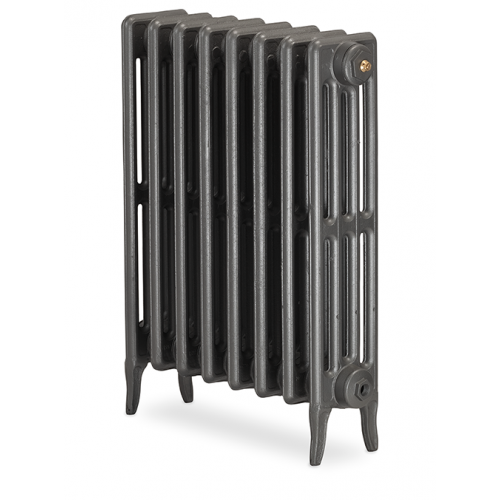
How does the substantial 143mm depth of the Victoriana 4 Column Cast Iron Radiator impact the roughing in dimensions for pipework compared to standard radiators
The 143mm depth of the Victoriana 4 requires a much larger standoff distance for pipework than standard steel or even 2 column cast iron radiators. To determine the technical pipe centre measurement from the wall you must take half the radiator depth which is 71.5mm and add the required wall clearance typically 50mm resulting in a pipe centre distance of approximately 121.5mm from the finished wall surface. This prevents the wide columns from fouling against the skirting board or wall while leaving sufficient access for the valve unions.
What are the specific thermodynamic advantages of selecting the Victoriana 4 Column model over the 3 Column version for rooms with limited wall width but high heat loss
The Victoriana 4 Column model offers a significantly higher heat density per linear meter of wall space because it packs four columns of heated surface area into the same vertical height. For example a 10 section Victoriana 4 provides a higher BTU output than a 10 section Victoriana 3 without increasing the width of the installation allowing you to generate the required thermal load for a large draughty room without occupying the entire length of the wall or obstructing furniture placement.
Considering the 33 section model weighs 145kg empty and holds a large volume of water what structural assessments are required before installation on suspended timber floors
A fully filled 33 section Victoriana 4 Cast Iron Radiator can easily exceed 200kg in total operational weight creating a massive point load on floorboards. Before installation you must technically assess the joist span and condition often requiring the addition of noggins or a spreader plate beneath the floorboards to distribute the weight across multiple joists. Failure to reinforce the floor can leads to sagging pipe stress and potential leaks at the valve connections due to movement.
Why is the Victoriana 4 Column Cast Iron Radiator particularly well suited for low temperature renewable heating systems such as Air Source Heat Pumps
Heat pumps operate at lower flow temperatures often around 35C to 45C compared to the 70C of gas boilers which significantly reduces the radiant output of standard radiators. The Victoriana 4 compensates for this temperature drop through its immense surface area and high water content allowing it to emit a substantial amount of heat even at lower Delta T settings. This makes it a technically superior choice for maintaining COP efficiency in renewable systems without needing active fan assistance.
How does the width of the 39 section model at 2444mm affect the hydraulic balancing of the system and what valve configuration is recommended to ensure even heating
With a length of nearly 2.5 meters the 39 section model faces significant hydraulic resistance and potential pressure drops across the bottom manifold. To prevent the furthest sections from remaining cold you must technically install the flow and return valves at opposite ends of the radiator known as a Top Bottom Opposite End or Bottom Opposite End configuration. This forces the hot water to traverse the entire 2444mm length ensuring the fourth column in every section receives adequate flow for uniform heat distribution.
What are the implications of purchasing the Victoriana 4 in its base Primer finish regarding long term corrosion resistance in high humidity environments
The base Primer Black or White finish is a temporary transit coating designed only to prevent flash rust during storage and shipping and it is not hermetically sealed against moisture. In high humidity environments like bathrooms or older damp properties leaving the radiator in primer will eventually lead to oxidation and rust spots. It is technically mandatory to apply a top coat of oil based metal paint or choose the factory applied Heritage Metallic Finish to seal the porous cast iron surface against atmospheric moisture.
Given the 4 column depth does the Victoriana 4 require specific Wall Stays that differ from those used on slimmer radiators to prevent toppling
Yes the 143mm depth shifts the center of gravity further from the wall making the radiator stable but still a crushing hazard if tipped. Standard short wall stays may not provide sufficient reach to clamp securely between the rear columns and the wall anchor point especially if you have thick skirting boards. You typically need extended luxury wall stays that can be cut to size ensuring the retaining disc sits firmly against the rear column profile to lock the 143mm deep unit rigidly in place.
How does the increased water volume of the 4 column design impact the expansion vessel sizing in a sealed central heating system
The Victoriana 4 holds significantly more water per section than steel panel radiators or slim cast iron models which increases the total system volume. In a sealed system this extra water volume expands by approximately 4% when heated requiring a larger expansion vessel to accommodate the pressure rise. If you replace multiple steel radiators with large 4 column cast iron units you must technically recalculate the expansion vessel size to prevent the pressure relief valve from discharging during heating cycles.
What is the best technical method for cleaning and maintaining the inner columns of the 143mm deep Victoriana 4 to ensure maximum convection efficiency
The deep 4 column structure creates narrow air channels between the sections that can trap dust and pet hair acting as an insulator and reducing convective airflow. To maintain the rated heat output you should technically use a specialized long flexible radiator brush or high pressure compressed air to dislodge debris from the central columns annually. Allowing dust to build up in the center of the 143mm depth blocks the chimney effect which is responsible for a significant portion of the radiator's heat distribution.
Why is it critical to use Angled Valves rather than Straight Valves for the Victoriana 4 when pipes emerge from the floor considering the 143mm depth
If pipes emerge from the floor using Straight Valves on a radiator with side connections and a 143mm depth would force the copper piping to run horizontally along the wall and bend 90 degrees into the radiator creating a trip hazard and visual clutter. Angled Valves are technically superior here as they allow the pipe to rise vertically from the floor and connect directly into the side bush keeping the pipework tight to the radiator footprint and minimizing the leverage and stress placed on the soldered joints below the floor.