
Victoriana 2 - 460mm Products
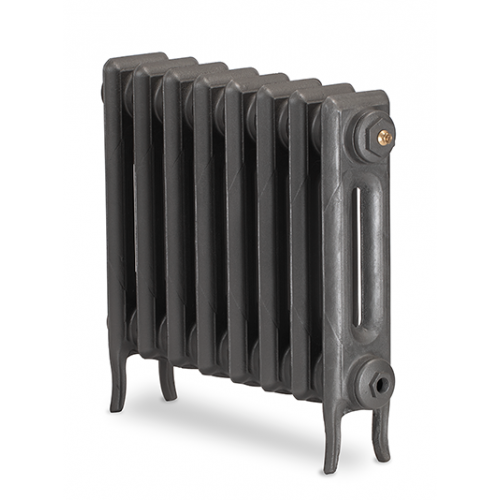
Showing 1 to 18 of 38 products
Frequently Asked Questions
total heat output required for my room to select the correct number of sections for the Victoriana 2 cast iron radiator 460mm high model?
To solve this you must first calculate the specific heat loss of your room in BTUs or Watts based on the room volume and insulation factors. Once you have your total requirement you should divide that number by the output per section of this radiator which is roughly 151 BTUs or 44 Watts per section at Delta T 50. For example if your room requires 3000 BTUs you would need approximately a 20 section configuration of the Pimlico model to effectively heat the space.
What are the precise structural considerations I need to account for regarding the weight of the Victoriana 2 cast iron radiator especially for larger configurations like the 37 section model?
The weight is a critical technical factor because cast iron is significantly heavier than steel. A 37 section model weighs approximately 113kg when empty and will be heavier when filled with water. You must verify that your subfloor or joists can support this static load. If placing on suspended timber floors you should place the radiator feet directly over joists or use a spreader board to distribute the weight and prevent sagging or damage to the flooring.
How does the Delta T 50 rating listed for the Victoriana 2 460mm high radiator affect performance if I am connecting it to a modern low temperature heating system like a heat pump?
The listed output of 1510 BTUs for a 10 section model is based on a Delta T of 50 degrees Celsius which is standard for gas boilers. If you use a heat pump with a lower flow temperature typically operating at Delta T 30 you must apply a correction factor to the output. This usually means the radiator will output significantly less heat so you will technically need to size up and order a radiator with more sections to achieve the same room temperature.
What are the specific technical measurements for pipe centers off the wall and pipe centers between valves for the Victoriana 2 Pimlico cast iron radiator to ensure my pipework is roughed in correctly?
For the Victoriana 2 the depth is 110mm so the pipe centers from the wall will generally be half of the depth plus the distance from the wall to the back of the radiator which often totals around 80mm to 90mm depending on your skirting board. For the width you must take the total radiator length (e.g. 640mm for 10 sections) and add approximately 90mm to accommodate the valve bodies. Always wait for the radiator to arrive before fixing pipe positions permanently to avoid misalignment.
If I purchase the Victoriana 2 radiator in the standard Primer Black or Primer White finish what technical preparation is required before I apply my own top coat paint?
The primer finish provided by Paladin is a base coat intended for transit protection and as a substrate for painting. You technically do not need to strip this. You should lightly sand the surface with fine grit sandpaper to create a mechanical key for adhesion wipe it down to remove dust and grease and then apply a high quality metal paint or radiator enamel that can withstand thermal expansion and contraction without cracking.
Is it technically mandatory to install wall stays with the free standing Victoriana 2 cast iron radiator 460mm high model or are the integrated feet sufficient for stability?
While the radiator is free standing and has substantial weight which provides stability wall stays are technically recommended for safety. The narrow depth of 110mm relative to the height makes it susceptible to tipping if knocked or pulled especially in high traffic areas or homes with children. Wall stays anchor the radiator to the masonry or stud work behind it preventing accidental movement without bearing the vertical weight of the unit.
How does the thermal mass of the cast iron material in the Victoriana 2 range impact the heating curve and energy efficiency compared to standard steel radiators?
Cast iron has a high thermal mass which means it takes longer to heat up but also retains heat for much longer after the central heating is turned off. Technically this creates a more consistent ambient temperature and reduces the rapid cycling of your boiler. While it may seem less responsive initially it provides a more comfortable radiant heat profile that is often preferred in older properties with higher heat loss.
What specific type of valves and pipe reducers are compatible with the half inch BSP connections on the Victoriana 2 cast iron radiator to ensure a watertight seal?
The radiator uses standard half inch BSP bush ends. You can use any standard thermostatic or manual radiator valve. However because cast iron radiators often have wider boss connections you might need to ensure your valve tails have enough thread engagement. Using PTFE tape or Loctite 55 sealing cord is technically required on the threads to prevent leaks. You generally do not need pipe reducers unless you are connecting to microbore pipework smaller than 15mm.
How do I properly bleed the Victoriana 2 460mm high radiator to remove air locks and ensure the entire surface area heats up evenly?
Air locks can prevent water from circulating to the top of the cast iron sections causing cold spots. You need to open the bleed valve located at the top of the end section using a bleed key while the heating is off and the pump is stopped. Wait until all hissing of escaping air stops and a steady stream of water flows out then close it tightly. You may need to repeat this process several times after installation as dissolved oxygen leaves the fresh water.
What are the warranty limitations regarding the water quality and inhibitor levels for the Victoriana 2 radiator to maintain the 10 year guarantee?
The 10 year guarantee protects against manufacturing defects but technically requires you to maintain the water quality in your heating system. You must flush the system to remove debris before installation and add a suitable corrosion inhibitor. Failure to treat the water can lead to internal corrosion or sludge build up which is not covered by the warranty. You should check inhibitor levels annually to ensure the cast iron remains protected from the inside out.