
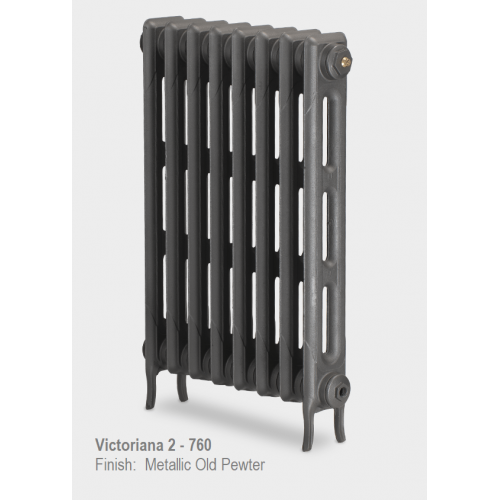
Victoriana 2 - 760mm Products
Frequently Asked Questions
If my large configuration of the Victoriana 2 Pimlico cast iron radiator 760mm high arrives in multiple parts due to the heavy weight how do I technically assemble the sections using a joining key and gaskets?
Large configurations often ship in manageable blocks to prevent transit damage as a full 37 section model weighs nearly 190kg. To join them you must arrange the blocks on a flat surface align the internal interconnecting nipples with the provided graphite gaskets and use a specific cast iron radiator joining key. You insert the tool through the end section to engage the internal lugs of the nipple and tighten incrementally alternating between the top and bottom nipple to ensure a parallel watertight compression seal without cracking the cast iron lugs.
Considering the high BTU output of the larger 37 section Victoriana 2 760mm model does the flow rate require 22mm pipework or is standard 15mm copper piping sufficient for efficient heat transfer?
The 37 section model generates over 9000 BTUs or roughly 2700 Watts. Standard 15mm copper pipework can typically handle up to 6000 Watts of heat transfer at a standard velocity without noise or excessive pressure drop so it is technically sufficient for this radiator. However you must ensure your microbore piping if used is not smaller than 10mm as the high water volume and flow rate required for this large cast iron emitter could cause flow restriction and reduced Delta T performance across the radiator surface.
How does the significantly increased water volume of the Victoriana 2 760mm high cast iron radiator impact the sizing of the expansion vessel in a sealed pressurized heating system?
Cast iron radiators hold significantly more water per kilowatt of output compared to pressed steel panels. The 760mm high sections have a large internal volume which increases the total system water content. When this water heats up to operating temperature it expands by approximately 4 percent. You must calculate the total system volume including these large radiators and verify that your existing expansion vessel capacity is adequate to accommodate this expansion without causing the pressure relief valve to discharge.
What is the correct vertical placement for wall stays on the Victoriana 2 cast iron radiator 760mm high model to ensure maximum stability against accidental tipping?
For a radiator of 760mm height the center of gravity is higher than on shorter models increasing the leverage force if knocked. You should technically position the wall stay clamp between the first and second rear columns at a height of approximately two thirds up the radiator or roughly 500mm to 600mm from the floor. This provides the best mechanical leverage to prevent the radiator from tipping forward while allowing for the natural thermal expansion movement of the metal during heating cycles.
If the primer black or white finish on the Paladin Victoriana 2 radiator sustains minor scuffs during the installation of the heavy 760mm sections what is the correct technical procedure to repair the coating?
The base primer is designed to be overpainted but if you are keeping the primer or have a top coat scuffs can lead to oxidation. You should use a fine grade steel wool to smooth the edges of the scuff until the bare metal is clean then apply a matching high temperature metal touch up paint. Do not use standard emulsion or water based paints directly on the bare iron as the water content will cause immediate rust spots to bloom through the finish before it dries.
What are the minimum vertical clearance requirements for the Victoriana 2 Pimlico 760mm high radiator if I am installing it below a shelf or window sill to maintain optimal air convection?
The Victoriana 2 relies on both radiant heat and convection currents where cold air is drawn from the floor and warm air rises from the top. For the 760mm model you must technically leave a clear gap of at least 100mm above the top of the radiator and the underside of any shelf or sill. Restricting this space traps the rising warm air reducing the overall heat transfer efficiency or BTU output and potentially causing heat damage to the shelf material over time.
Why is hydraulic balancing critical when installing a large bank of Victoriana 2 760mm cast iron radiators alongside smaller modern steel radiators in the same property?
Water follows the path of least resistance. The Victoriana 2 has large internal waterways offering very low resistance compared to narrow modern steel radiators. Without balancing the hot water will short circuit through the cast iron radiator leaving the rest of the system cold. You must adjust the lockshield valve on the return side of the cast iron radiator to restrict the flow slightly forcing the system pressure to push water evenly to all other radiators in the house.
To what specific bar pressure is the Paladin Victoriana 2 cast iron radiator tested and how does this compare to the standard operating pressure of a residential boiler system?
These radiators are typically pressure tested at the factory to roughly 6 to 10 bar to ensure the integrity of the casting and gasket seals. Standard UK residential boiler systems operate between 1.0 and 1.5 bar with a safety cut off around 3.0 bar. Therefore the radiator has a significant safety margin however you must ensure that during your initial system pressure test you do not exceed the manufacturers maximum test pressure to avoid invalidating the 10 year guarantee.
How should I adjust my heating timer schedules to account for the high thermal inertia of the Victoriana 2 760mm cast iron radiator compared to rapid response aluminium radiators?
The high mass of the 760mm cast iron sections means they take longer to reach operating temperature but continue emitting heat for over an hour after the boiler stops. Technically you should program your heating to come on 30 to 45 minutes earlier than required to pre heat the iron mass and set it to turn off 30 to 45 minutes before you leave the room or go to sleep. This utilizes the stored heat energy effectively and avoids wasting fuel heating an empty room.
What specific type of inter section seals are used when extending the length of the Victoriana 2 Pimlico radiator and are they reusable if I need to disassemble the radiator later?
The sections are sealed using high density graphite or fiber gaskets compressed between the machined faces of the radiator hubs. These gaskets deform under pressure to create a permanent seal. Technically they are not reusable. If you disassemble the radiator to move it or change the size you must scrape the mating surfaces clean and install brand new gaskets to ensure the reassembled unit remains watertight under the thermal expansion stresses of the Delta T 50 heating cycle.