
Chaucer Single Column Radiators Products
Showing 1 to 10 of 10 (1 Pages)
Frequently Asked Questions
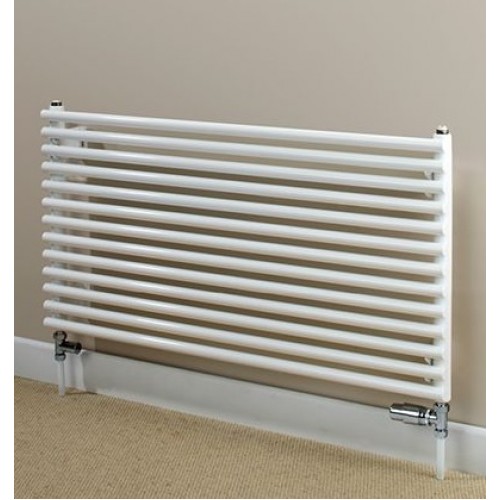
How does the 23mm round tube design of the S4H Chaucer Horizontal radiator technically enhance convective heat transfer compared to flat panel radiators?
The Chaucer utilizes individual 23mm diameter vertical steel tubes rather than a solid flat panel. This design creates multiple vertical air channels between the tubes. As the steel heats up it draws cool air from the floor level which accelerates upwards through these channels creating a strong chimney effect. Technically this results in a higher ratio of convective heat to radiant heat ensuring that warm air is circulated rapidly throughout the room rather than just radiating locally which is superior for heating large open plan spaces.
What are the precise rough in dimensions for the pipe centers from the wall when installing a Double Configuration Chaucer Horizontal radiator?
For the Double Chaucer model the total depth from the wall to the front face is adjustable between 114mm and 124mm depending on the bracket setting. The pipe centers (the distance from the wall to the center of the valve inlet) are positioned at approximately 79mm to 89mm. You must technically account for this adjustability when roughing in your copper pipework to ensure the valves align vertically without stress. For the Single model the pipe centers are closer at approximately 55mm from the wall.
Why is the mild steel construction of the Chaucer radiator technically better suited for modern programmable heating systems than cast iron equivalents?
Mild steel has a significantly lower thermal mass and higher thermal conductivity than cast iron. The S4H Chaucer will reach its operating temperature in approximately 15 to 20 minutes compared to over an hour for a cast iron equivalent. This rapid response time allows the radiator to react quickly to thermostat demands making it technically more efficient for modern homes where heating schedules are varied and zoned avoiding the energy wastage of heating a heavy thermal mass when the room is empty.
Can I technically install the S4H Chaucer Horizontal radiator on a dual fuel system using an electric element and if so which element type is required?
The Chaucer Horizontal is primarily designed for central heating systems. However converting it to dual fuel is technically possible if you use a T-piece installation at the valve inlet. You must calculate the internal water volume of the specific size (e.g. a 1520mm double holds significantly more water than a single) to size the element wattage correctly. You generally require a thermostatic element to prevent the water boiling within the sealed steel tubes when the central heating pump is off.
How does the Raw Metal Lacquered special finish on the Chaucer radiator technically differ in maintenance requirements compared to the standard RAL 9016 powder coat?
The Raw Metal Lacquered finish exposes the natural steel weld marks and industrial patina sealed with a clear gloss lacquer. Unlike the RAL 9016 powder coat which is a uniform opaque plasticized layer the lacquer is a clear coat over bare metal. Technically if this lacquer is scratched deep enough to expose the steel moisture in a bathroom environment can cause spiderweb oxidation (rust) under the lacquer. Therefore this finish is technically less forgiving in high humidity zones and requires immediate resealing if the surface is compromised.
What specific hydraulic balancing adjustments are required when installing a large 538mm x 1520mm Double Chaucer radiator on a circuit with smaller emitters?
The 538mm x 1520mm Double Chaucer has a high water content and low flow resistance due to its multiple 23mm tubes. Water will naturally take this path of least resistance potentially starving smaller radiators on the circuit. You must technically perform accurate hydraulic balancing by closing the lockshield valve on the Chaucer significantly (often by 60 to 70 percent) to create artificial back pressure. This ensures the system pump head is sufficient to force hot water to the furthest and smallest radiators in the loop.
How does the mounting bracket system for the Chaucer Horizontal accommodate uneven walls to prevent stress on the pipe connections?
The S4H Chaucer is supplied with clamp style wall brackets that fit between the tubes. These brackets usually feature a slot mechanism or adjustable depth screw allowing you to vary the distance from the wall by approximately 10mm. Technically this allows you to align the radiator parallel to the pipework even if the plaster wall is bowed. It is critical to adjust these brackets before tightening the valve nuts to ensuring the radiator is not pulling on the rigid copper tails which could cause a leak.
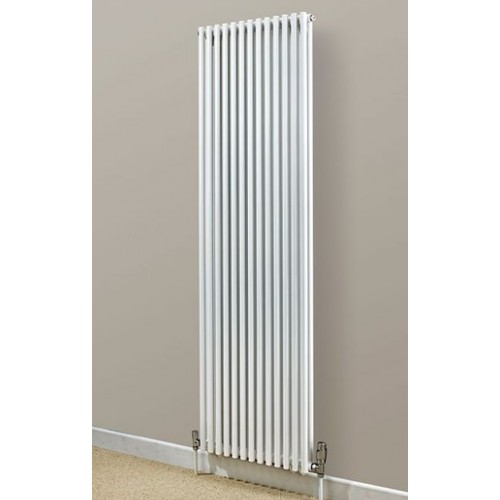
Is it technically feasible to mount the Chaucer Horizontal radiator vertically if I have limited horizontal wall space?
No you cannot simply rotate the Chaucer Horizontal to mount it vertically. The internal baffling and flow dynamics are designed for the horizontal orientation. Mounting it vertically would place the bleed valve and flow connections in the wrong positions leading to permanent air locks in the top of the tubes and poor water circulation. You must technically purchase the specific Vertical Chaucer model which has the internal diverters and bracket positions engineered for upright installation.
What is the impact of using a water softener on the longevity of the Chaucer mild steel radiator and the validity of the 10 year guarantee?
Ion exchange water softeners replace calcium with sodium. In some cases this increased sodium content can increase the conductivity of the water accelerating galvanic corrosion in mild steel radiators if the inhibitor levels are low. Technically to maintain the 10 year guarantee you must ensure the heating circuit is filled with a high quality corrosion inhibitor (like Sentinel X100) that is specifically formulated to handle softened water. Failing to do so can lead to pinhole leaks in the thin walled steel tubes within a few years.
How do I calculate the weight load for the largest Double Chaucer model to determine if I need solid wall anchors or stud fixings?
A Double Chaucer 538mm x 1520mm weighs approximately 45kg when empty. When filled with water (approx 15-20 liters) the total operating weight exceeds 65kg. This creates a significant shear load. You technically cannot use plasterboard toggles. You must locate the vertical timber studs which are usually 400mm or 600mm apart. Because the Chaucer brackets clamp between the tubes you have some lateral flexibility to align the brackets with the studs ensuring the load is transferred directly to the structural timber frame.