
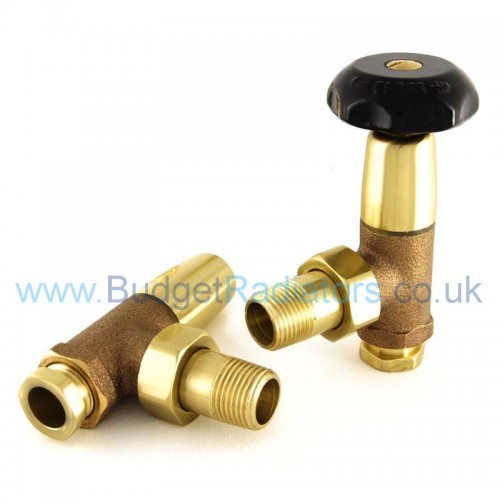
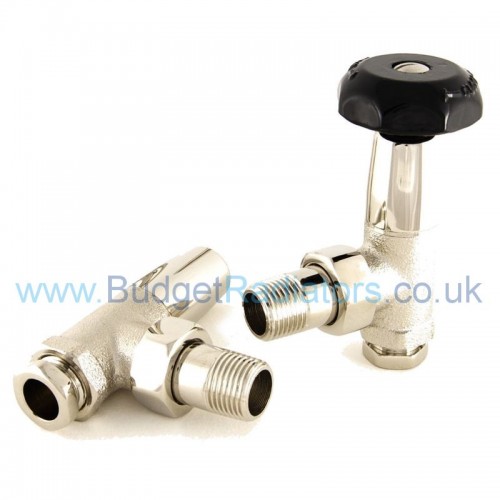
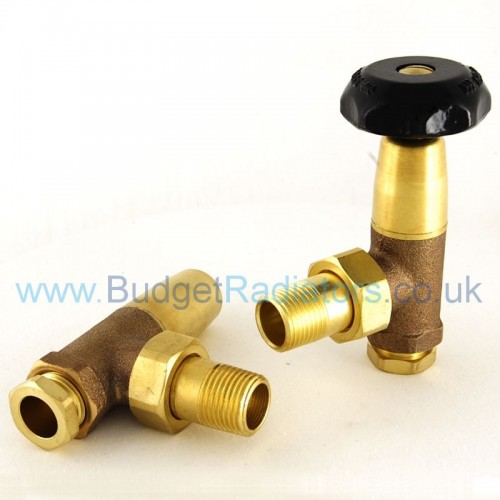
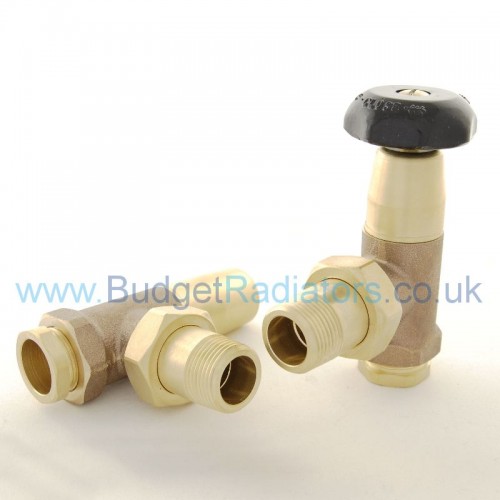
Stirling Manual Valve Range Products
Showing 1 to 6 of 6 (1 Pages)
Frequently Asked Questions
What is the technical advantage of the Bakelite-style head on the Stirling manual valve?
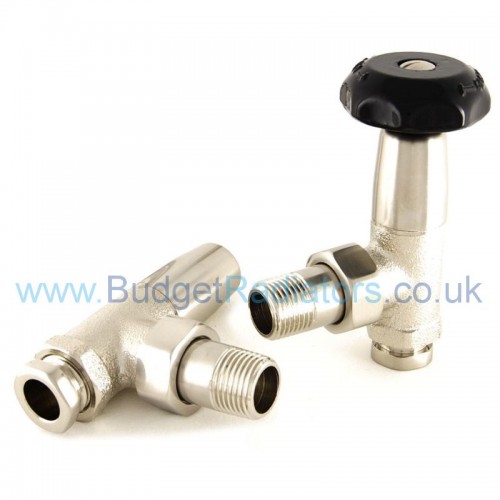
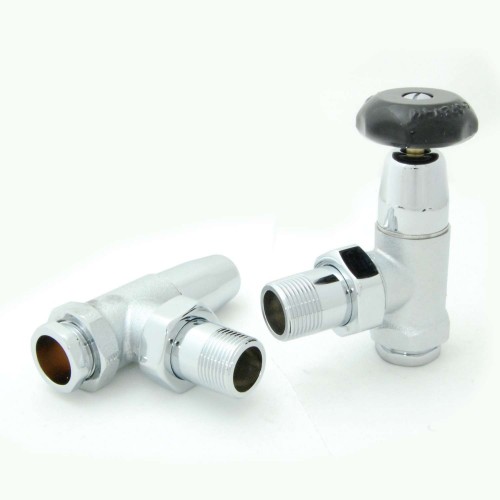
The Bakelite-style head on the Stirling valve is not just an aesthetic choice; it offers thermal insulation advantages. Unlike solid metal heads which can become extremely hot to the touch when the heating is active, the composite "Bakelite" material has low thermal conductivity. This ensures that the wheelhead remains cool enough to handle comfortably, allowing you to adjust the manual flow control without the risk of minor burns, even when the system is running at maximum temperature.
How do I maintain the Unlacquered Brass finish on my Stirling valves?
The Unlacquered Brass finish is technically classified as a "living finish." It is supplied in a raw, polished state without a protective clear coat. Over time, exposure to oxygen and humidity will cause the copper content in the brass to oxidise, developing a dark, antique patina. If you wish to maintain the bright, shiny factory look, you must problem solve this by regularly polishing the valve body with a proprietary metal cleaner like Brasso. If you prefer the aged look, simply leave the valve untouched after installation.
Can the Stirling Manual Valve set be used on a radiator with bottom-opposite-end connections?
Yes, the Stirling Manual Valve set is designed specifically for standard "BOE" (Bottom Opposite End) connections. The set includes one wheelhead and one lockshield. You install the wheelhead on the flow side (where hot water enters) and the lockshield on the return side (where water exits). The standard 1/2" BSP radiator couplers included in the package are universally compatible with the tapping points found on almost all cast iron and modern column radiators.
What is the procedure for balancing a heating system using the Stirling Lockshield valve?
Balancing ensures even heat distribution across your home. To balance using the Stirling Lockshield, first remove the protective cap to reveal the spindle. With the heating on, open all wheelhead valves fully. Then, starting from the radiator closest to the boiler, use a spanner to close the lockshield completely, then open it only a quarter to a half turn. This restricts the flow rate, forcing hot water to bypass the nearest radiators and travel to those further away. Adjust each lockshield incrementally until all radiators heat up at the same rate.
Is the Stirling Manual Valve compatible with 10mm microbore pipework?
The Stirling valve body is manufactured with a standard 15mm compression inlet. It is not directly compatible with 10mm microbore pipework out of the box. However, you can solve this technical mismatch by using a "reducing set." This involves removing the standard 15mm olive from the valve nut and inserting a specialized reducer that adapts the 15mm inlet down to clamp securely onto the 10mm copper pipe. This ensures a watertight seal without needing to solder new fittings.
Why would I choose a Stirling Manual Valve over a Thermostatic (TRV) model?
You should choose a Stirling Manual Valve for rooms where you do not want the radiator to shut off automatically. This is technically critical in the room where your main wall thermostat is located (usually the hall or living room). If you use a TRV in the same room as the wall thermostat, the two controls can "fight" each other
How do I fix a weeping packing gland on a Stirling Manual Valve?
If you notice water leaking from the stem under the Bakelite wheelhead, it is likely a weeping packing gland. This occurs when the packing material around the spindle loosens over time. To fix this, you do not need to drain the system. Simply remove the screw holding the wheelhead and lift the head off. You will see a small hexagonal nut at the base of the spindle. Using a wrench, tighten this nut slightly (usually 1/8th to 1/4 turn) to re-compress the packing material against the spindle, stopping the leak immediately.
What are the dimensional clearances required for the Stirling Angled valve?
The Stirling Angled valve has a height of 112mm and a width of 85mm. When installing, you must ensure sufficient clearance between the bottom of the radiator and the floorboards to accommodate the valve body and the copper pipe tail. Additionally, because the Bakelite head is 85mm wide, you must ensure the radiator is not positioned too close to the side wall. If the radiator bush is less than 45-50mm from the wall, the valve head may scrape against the plaster or skirting board, making it difficult to turn.
Are Stirling Manual Valves bi-directional?
While modern thermostatic valves are often bi-directional to prevent hammer, manual valves like the Stirling range are mechanically simpler and inherently bi-directional. A manual valve operates by moving a washer down onto a seat to stop flow. It can technically be installed on either the flow or return pipe without risk of the vibration or "chattering" noise often associated with incorrectly installed older TRVs. However, standard practice is to place the adjustable wheelhead on the flow side for ease of use.