
The Orne Products
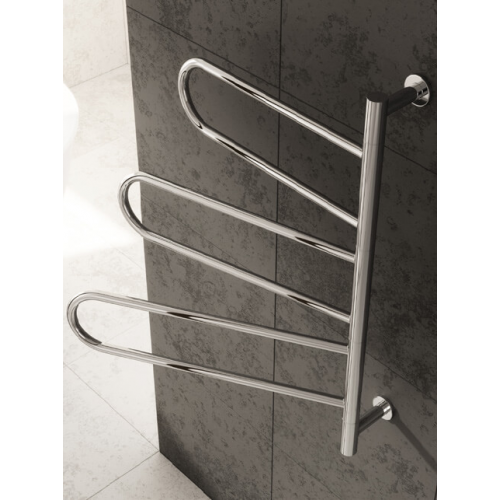
Showing 1 to 1 of 1 (1 Pages)
Frequently Asked Questions
Is the Reina Orne suitable for installation in Bathroom Zone 1 or Zone 2?
The Reina Orne typically carries an IP rating (often IP44 or higher for electric bathroom products, though you must check the specific data sheet on the box). It is generally suitable for Zone 2 (0.6m from the bath/shower). For installation in Zone 1 (directly above a bath), a hard-wired connection to a fused spur outside the zone is strictly required. The lack of liquid and valves makes it safer electrically in humid environments compared to converted central heating rails, provided it is installed by a qualified electrician in accordance with IEE Wiring Regulations.
Why is the 304 Stainless Steel construction important for an electric towel rail in a damp environment?
The Reina Orne is manufactured from high-grade 304 Stainless Steel with a polished finish. Technically, Grade 304 contains 18% chromium and 8% nickel, providing superior resistance to oxidation and rust compared to mild steel. In a bathroom environment where damp towels are constantly draped over the bars, this material choice solves the problem of surface corrosion and peeling chrome plating. It ensures the 10-Year Guarantee is valid even in high-humidity wet rooms.
How do I control the temperature of the Reina Orne Dry Electric Rail?
The Reina Orne is usually a "plug-and-play" or "switch-on" device with a fixed wattage output. It does not typically come with an integrated thermostatic dial on the rail itself. To solve the problem of temperature control and energy saving, you should wire it into an external wall timer or a fused spur with a time-clock. This allows you to schedule the rail to dry towels for 2-4 hours morning and evening, rather than running it 24/7, which would waste electricity.
Can the cable outlet position be adjusted on the Reina Orne?
The electrical cable on the Reina Orne usually exits from a fixed point, typically the bottom right or left upright (depending on the specific model orientation). Because it is a "Dry" element woven inside the tubes, you cannot simply unscrew the element and move it to the other side like you can with a liquid-filled rail. You must plan your electrical spur location based on the fixed cord outlet of the rail. Attempting to disassemble the rail to move the cord will destroy the internal wiring and void the warranty.
What is the heat output of the Orne 760 x 580mm model and will it heat my bathroom?
The Orne is designed primarily as a towel warmer, not a room heater. Its "Dry Electric" technology uses low-wattage elements (often significantly lower than a central heating equivalent, e.g., ~60-100 Watts depending on the wire density). It is designed to reach a surface temperature of roughly 50-60
Does the Orne require a specific orientation or can it be mounted upside down?
The Orne Dry Electric rail is designed for a specific orientation, usually with the cable exit at the bottom. Mounting it upside down (with the cable at the top) is technically prohibited for safety reasons. Moisture could run down the cable into the entry gland, or heat rising from the rail could damage the cable connection point over time. Always install it with the control/cable point at the bottom as per the manufacturer's template to maintain its safety rating.
How does the installation of the Orne differ from a standard central heating rail?
Installation is much simpler and "cleaner." Because it is liquid-free and lightweight (no heavy water weight), it places less stress on the wall brackets. There is no plumbing, no pipe centres to measure, and no valves to buy. You simply drill the four bracket holes, mount the rail, and have an electrician wire the spur. This solves the problem of retrofitting a rail on a tiled wall where you don't want to rip out tiles to run new copper pipes.
Is the Polished Stainless Steel finish harder to clean than Chrome?
No, technically Polished Stainless Steel is easier to maintain. Chrome is a plating layer that can chip or flake. Polished Stainless Steel is the solid material polished to a shine. If it gets scratched, it can often be buffed out. However, like all polished surfaces, it shows fingerprints. The solution is to use a microfiber cloth with a tiny amount of baby oil or specialized stainless steel cleaner to remove water marks and keep it gleaming without using abrasive scouring pads.