
Best Cast Iron Radiators uk: Budget Radiators Collection

Introduction: The Resurgence of the Iron Giant
In the world of interior design, trends are often cyclical, but some elements transcend the fleeting nature of fashion to become permanent fixtures of quality. The cast iron radiator is one such icon. Once relegated to scrapyards in the mid-20th century in favor of "modern" thin-panel steel radiators, the cast iron unit has staged a monumental comeback.
This guide serves as an exhaustive deep dive into why this 19th-century technology remains the pinnacle of 21st-century home heating. At Budget Radiators, we have seen a massive shift in consumer behavior; homeowners are no longer satisfied with functional white boxes that heat air they want sculptural pieces that heat the soul of a building. This compendium will explore the history, the intricate physics, the complex installation logistics, and the specific aesthetic choices that will allow you to transform your home into a sanctuary of warmth and style.
1. The Social History and Heritage of Heritage Heating
To understand the cast iron radiator is to understand the Industrial Revolution itself. In the early 1800s, central heating was a concept reserved for the global elite. The technology relied on steam often dangerous and unpredictable piped through massive, unsightly iron tubes. It wasn't until the 1840s that innovators began to refine the concept of a radiator designed specifically to maximize the surface area exposed to the air.
Throughout the Victorian and Edwardian eras, the radiator became a symbol of middle-class respectability. It signaled that a family had moved beyond the labor-intensive coal fires of the past. Foundries began competing to produce the most ornate castings, giving birth to the Rococo, the Daisy, and the Victoriana styles.
The Victorian Status Symbol
In the 1880s, having a radiator in your entrance hall was a visible display of wealth and technological advancement. These units were often the most expensive items in a house's construction budget. Today, Budget Radiators continues this legacy by sourcing radiators cast in traditional sand-molds, ensuring that every grain of texture and every scroll of iron remains faithful to the designs that warmed the world over a century ago.
2. Why Cast Iron Outperforms Modern Alternatives
The primary debate in the heating industry often pits speed against quality. Modern steel radiators are built for speed, constructed from thin sheets holding a small volume of water. While they heat up rapidly, they possess almost zero thermal mass. The moment your boiler clicks off, the room begins to cool.
Radiant Wave Technology vs. Convection
While steel radiators primarily heat the air via convection, cast iron radiators emit Radiant Heat. Radiant heat works like the sun; it travels through the air without heating it directly, instead warming the solid objects it strikes—the walls, the floor, the furniture, and the occupants.
This creates a 360-degree envelope of warmth. Furthermore, cast iron stays warm for up to 120 minutes after the system is turned off. For homeowners with smart thermostats or those using modern Heat Pumps, this slow-release mechanism is significantly more efficient, as it prevents the boiler from cycling constantly.
3. The Budget Radiators Collection: An In-Depth Style Guide
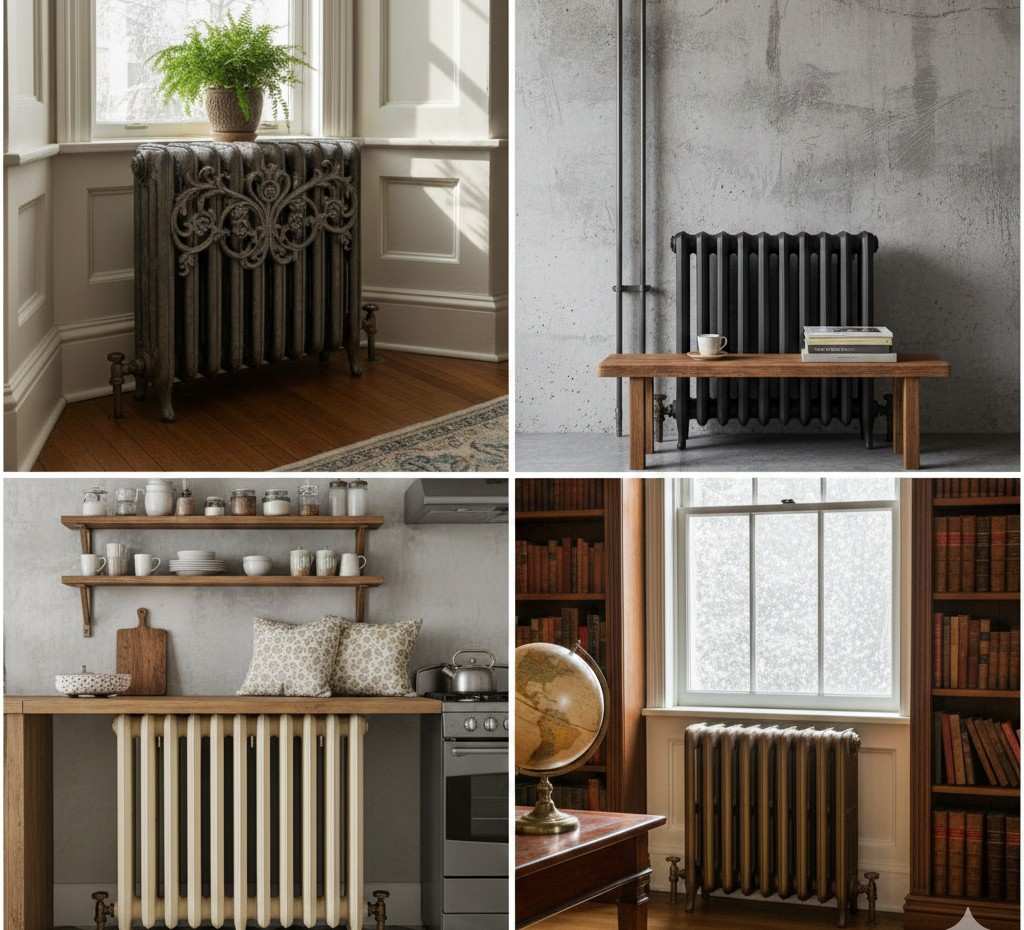
3.1 The Victoriana: The Minimalist Schoolhouse Legacy
The Victoriana range represents the pinnacle of Functional Heritage. Based on designs found in 19th-century institutional buildings, this radiator prioritizes clean lines and hygiene. Because there are no intricate floral motifs, it is extremely easy to clean and maintain, making it the perfect choice for high-traffic areas like hallways or kitchens.
The Victoriana is available in 2, 3, and 4-column configurations. The 4-column version is a beast of heat output, capable of warming even the draftiest of bay windows.
3.2 The Rococo and Daisy: The Ornate Statement Pieces
The Rococo and Daisy are the crown jewels of our collection. The Rococo is characterized by its scrolled ears and ornate top, which features sweeping, romantic curves. It is the ideal companion for a room with original cornicing or a marble fireplace.
The Daisy model is even more detailed, featuring a deeply etched floral vine that climbs the entire length of the radiator section. These radiators are best served by our Highlight Polish or Antique Bronze finishes to achieve a 3D depth that is simply breathtaking.
3.3 The Princess and The Duchess: Slimline Architectural Solutions
Our Princess and Duchess ranges prove that cast iron doesn't have to be bulky. Designed with a tapered top and a slimmer column profile, the Princess is specifically engineered for narrow spaces. The Duchess offers a similar slim profile but with more rounded, softer edges, making it a favorite for dining rooms.
4. The Electric Revolution: Cast Iron in the Age of Net Zero
As the UK transitions away from gas boilers, Budget Radiators has perfected the Electric Cast Iron Conversion process. We take an authentic cast iron casting and factory-fill it with a specialized thermodynamic mineral oil, inserting a high-grade electric element with built-in safety sensors.
The Efficiency of Zonal Heating
Electric cast iron radiators allow for Zonal Heating. You can keep your home office at a steady temperature while the rest of the house remains at a cost-saving lower setting. Because iron holds heat so well, the electric element only needs to sip power to maintain warmth once the target temperature is reached.
5. Technical Sizing: Mastering BTUs and Delta T
Purchasing a cast iron radiator without calculating your BTU (British Thermal Units) requirement is a recipe for disappointment. You must consider the room's volume and the heat loss variables of your specific property.
- North-facing rooms: Add 10% to your BTU total.
- French doors/Large windows: Add 15% to your BTU total.
The Delta T Difference
Most modern gas boilers are calculated at Delta T50. However, if you are installing an Air Source Heat Pump, you must size your radiators for Delta T30. Because heat pumps run cooler, you will need a larger radiator to provide the same amount of heat. Cast iron’s high surface area makes it the ideal companion for renewable energy.
6. Room-by-Room Architectural Planning
Each room in a home has a unique thermal profile:
- The Grand Hallway: Subject to constant drafts. We recommend the 4-Column Victoriana here to create a thermal anchor.
- The Bathroom Sanctuary: Moisture is the challenge. Our Daisy range is popular here as the floral patterns hide water spots better than flat panels.
- The Bedroom: Because cast iron sections are joined with high-quality gaskets and the metal is thicker, the expansion is silent—no clicking like steel. We recommend the Princess or Duchess.
7. The Art of the Finish: From Raw Metal to Hand-Polished Gold
The finish transforms a piece of iron into a piece of furniture. At Budget Radiators, we offer:
- Hand Polishing: Our craftsmen buff each individual section to a mirror-like shine.
- Antique Bronze: A base coat of bronze with a dark hand-wiped patina.
- Powder Coating: We offer 100+ RAL colors in a baked powder coat finish that won't peel or crack under heat.
8. Installation Logistics: Weight, Flooring, and Safety
A 10-section Victoriana radiator can weigh 100kg empty and significantly more when full of water. You must ensure your floor joists are capable of supporting the point load.
Every cast iron radiator must use Wall Stays. These tether the top of the radiator to the wall, preventing it from tipping forward. We also recommend Traditional Thermostatic Radiator Valves (TRVs) to allow for individual room temperature control.
9. The Engineering of the Sand-Casting Process
- The Pattern: A precision-engineered model is created for the mold.
- Greensand: A mixture of sand and clay is packed around the pattern to create the mold.
- The Pour: Molten pig iron is poured into the molds at 1500°C.
- Testing: Every section is pressure-tested at 10 Bar to ensure it is leak-proof for life.
10. Sustainability and Maintenance
Cast iron is 100% recyclable. Unlike steel radiators that end up in landfills after 10 years, a cast iron radiator is a 100-year investment. To protect this investment, use chemical inhibitors like Sentinel X100 to prevent internal rust and install magnetic filters to catch debris.
The Ultimate Cast Iron FAQ
Q: Are they safe for children?
A: Yes. Cast iron emits a gentler heat and is less likely to cause instant burns than thin, scalding steel panels.
Q: Can I use them with a Heat Pump?
A: Yes! Cast iron is actually better for heat pumps than steel because the high thermal mass compensates for lower water temperatures.
Ready to Start Your Restoration Journey?
Join thousands of happy UK customers who have transformed their homes with Budget Radiators.