
The Nola Products
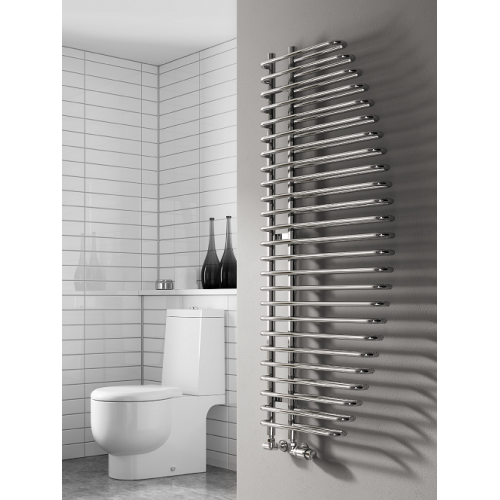
Showing 1 to 1 of 1 (1 Pages)
Frequently Asked Questions
How does the stainless steel construction of The Nola improve its lifespan in humid bathrooms?
The Nola is manufactured from high grade stainless steel which offers superior corrosion resistance compared to standard mild steel rails. This solves the common problem of rust developing in wet environments such as shower rooms or wet rooms. Because stainless steel is non porous and resistant to oxidation The Nola does not require a plating process that can peel or flake over time ensuring the finish remains pristine and the 10 Year Guarantee is upheld even in high humidity zones.
What are the implications of the 148mm depth of The Nola for installation planning?
The Nola features a prominent depth of 148mm from the wall to the front face which is significantly deeper than standard ladder rails. This design often incorporates a shelf like profile for extra storage. To solve potential obstruction issues you must measure the clearance of any adjacent opening doors or vanity units. You need to ensure there is adequate space in the walkway so that the projecting bars do not become a hazard especially in narrow cloakrooms or en suites.
Can The Nola be converted to dual fuel and what component wattage is required?
Yes The Nola is compatible with dual fuel conversion which solves the issue of unheated towels during the summer months when the central boiler is off. You technically need to install a T-piece at the inlet to accommodate both the radiator valve and an electric heating element. For the 1400mm x 600mm model which outputs 598 Watts you should select a heating element rated between 300W and 400W to ensure safe and efficient warming without over pressurizing the unit.
How does the high BTU output of The Nola affect my requirement for a secondary radiator?
The Nola 1400mm model delivers a substantial 2040 BTUs at Delta T50. This high output often solves the problem of a cold bathroom by acting as a primary heat source rather than just a towel warmer. Before purchasing you should use a BTU calculator to determine your room heat loss. If your requirement is around 2000 BTUs The Nola can replace your existing panel radiator entirely freeing up wall space while keeping your towels dry.
What type of valves are best suited for The Nola if my pipes emerge from the wall?
The inlet connections on The Nola are located at the bottom of the vertical collectors. If your pipework emerges from the wall you should technically use Corner or Angled valves to create the necessary 90 degree connection. Corner valves are the optimal problem solving choice as they align the valve heads horizontally with the bottom bar creating a neat compact finish that does not protrude excessively into the room which is critical given the already deep 148mm projection.
Is The Nola suitable for use on an open circuit heating system?
Yes one of the primary technical advantages of the stainless steel construction of The Nola is its compatibility with direct or open loop heating systems. Unlike mild steel radiators which corrode if used on domestic hot water circuits stainless steel is inert. This solves the compatibility problem for older homes or specific plumbing configurations where the towel rail is connected to the same water loop as the hot water taps.
How do I bleed air from The Nola to fix cold spots at the top of the rail?
Cold spots on the top rungs of The Nola indicate trapped air which prevents the hot water from circulating fully. To fix this you must turn off your central heating pump to stop the flow. Locate the air bleed screw at the top of the vertical upright. Use a radiator key to open the screw slightly until the hissing air escapes and a steady stream of water appears. Close the valve tightly to restore system pressure and ensure even heat distribution across all 25 sections.
What wall fixings are necessary to support the weight of The Nola on a stud wall?
The Nola is a heavy unit due to its stainless steel material and high water volume capacity. Installing it directly onto plasterboard using standard plugs is structurally unsafe. To solve this you must locate the timber studs behind the drywall and anchor the brackets directly into them. If the stud spacing does not align with the bracket width you are technically required to install a timber noggin or ply reinforcement behind the wall surface to provide a secure load bearing fixing point.
How does the Delta T50 rating impact sizing The Nola for a heat pump system?
The rated output of 2040 BTUs is calculated at Delta T50 which assumes a gas boiler flow temperature. If you are using a low temperature heat pump system running at Delta T30 or T40 the effective heat output will be approximately 40 to 50 percent lower. To solve this sizing discrepancy you must apply a correction factor. You may need to install multiple Nola rails or supplement the heating with underfloor loops to ensure the bathroom reaches the desired temperature.
What is the correct cleaning method to maintain the polished finish of The Nola?
Although stainless steel is durable the polished finish can be scratched by abrasive materials. To solve the problem of water marks or fingerprints without damaging the surface you should clean The Nola using only a soft microfiber cloth and warm soapy water or a dedicated stainless steel cleaner. You must avoid using steel wool scouring pads or chlorine based bleaches as these can cause surface pitting and dull the mirror like reflection over time.