
The Sori Products
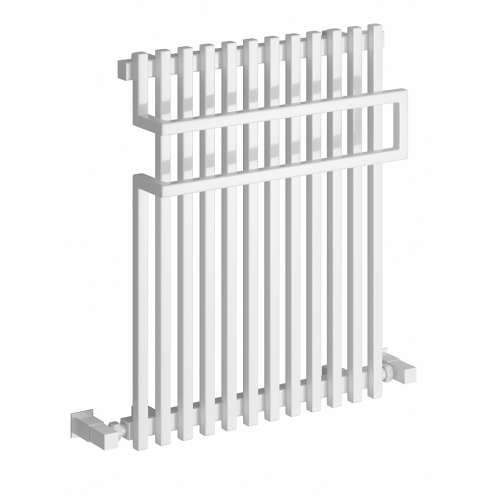
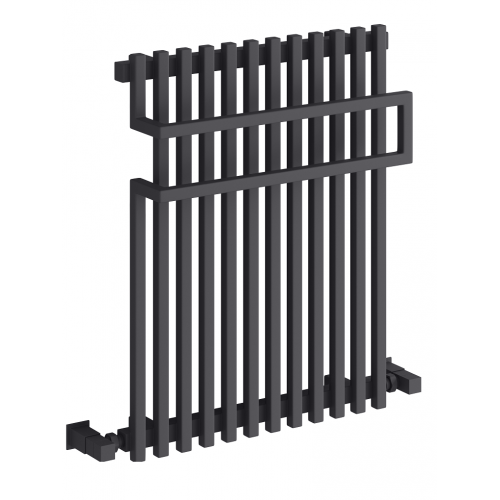
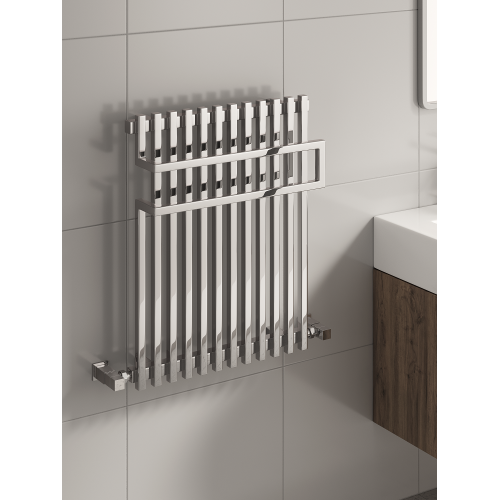
Showing 1 to 3 of 3 (1 Pages)
Frequently Asked Questions
Why does the Chrome Reina Sori Towel Rail have a lower BTU output than the White or Anthracite models?
The difference in heat output is due to the thermal properties of the surface finishing. The Chrome plating process acts as an insulator that traps heat inside the metal body and radiates it less efficiently than painted surfaces like White or Anthracite. Specifically, the Chrome Reina Sori outputs 1207 BTUs at Delta T50, whereas the White and Anthracite models output 1863 BTUs. If your primary goal is high heat output for a colder bathroom, the painted finishes are technically superior, while chrome is chosen primarily for aesthetic matching with other bathroom fittings.
How do I calculate if the Reina Sori 650 x 500mm provides enough heat for my specific bathroom size?
To determine if this rail is sufficient, you must calculate the required BTU for your room volume and compare it to the rail output. First, measure your room Height, Width, and Length in meters and calculate the volume. Use a heat loss calculator to find the Watts or BTU requirement based on factors like window glazing and external walls. The Reina Sori White and Anthracite provide 546 Watts (1863 BTU), while the Chrome provides 354 Watts (1207 BTU). If your room calculation exceeds these numbers, you will need to add a secondary heat source or use this rail strictly for towel drying rather than ambient room heating.
What are the exact pipe centres for the Reina Sori and how does this affect first fix plumbing?
For the Reina Sori, the pipe centres (the distance between the center of the two pipe inlets) generally match the width of the radiator because the inlets are located at the bottom vertical uprights. For this 500mm wide model, you should allow for approximately 450mm to 500mm pipe centres, but it is critical to account for the valves. Adding standard radiator valves typically adds about 80mm to 90mm to the overall width. Therefore, for first fix plumbing, you should not fix pipes rigidly until you have the physical unit and valves on site to measure the exact allowance required for your specific valve type.
Can the Reina Sori Designer Towel Rail be converted for Dual Fuel or Electric Only operation?
Yes, the Reina Sori is manufactured from Mild Steel and is suitable for Central Heating, Electric Only, or Dual Fuel conversion. For a Dual Fuel installation, you will need a T-piece and a compatible electric heating element inserted into one of the vertical legs. Because the Sori has a unique asymmetrical loop design, you must ensure the element wattage does not exceed the radiator capacity to prevent overheating. A 150W or 300W element is typically recommended for a rail of this size (546 Watts output), but you should consult a qualified electrician to match the element specifically to the liquid volume of this 12-section rail.
What type of radiator valves are required for the Reina Sori considering its connection position?
The Reina Sori typically features bottom connections. The type of valve you need depends on where your pipes are coming from. If your pipes come up from the floor, you will technically require Straight Valves. If your pipes come out of the wall, you will require Angled or Corner Valves. Because the Sori has a projection depth of 184mm, using Corner Valves can often result in a neater finish where the valve heads do not protrude into the room as much as standard angled valves would, keeping the installation tight against the wall.
How does the 10 Year Guarantee cover the Mild Steel construction against corrosion in a bathroom environment?
The 10 Year Guarantee covers manufacturing defects, including welding faults and leaks, but it assumes correct installation and maintenance. Mild Steel is susceptible to corrosion if the system is not treated with a chemical inhibitor. To ensure the guarantee remains valid, your installer must flush the system to remove flux residues and add a quality inhibitor (like Sentinel X100 or Fernox F1) to the central heating water. External corrosion caused by hanging wet towels directly on chipped paint or scratched chrome is generally not covered, so care should be taken to inspect the finish regularly.
What is the wall projection distance and why is it significant for the Reina Sori installation?
The Reina Sori has a depth specification of 184mm, which is the distance from the wall to the furthest front point of the rail. This is significantly deeper than standard flat ladder rails due to its designer loop structure. When planning the installation, you must ensure this projection does not obstruct door swings, shower enclosures, or walkways in small bathrooms or cloakrooms. The mounting brackets usually allow for some minor adjustment, but you must account for at least 184mm of clear space protruding from the wall surface.
Can I install the Reina Sori Towel Rail on a drywall or stud partition wall safely?
The Reina Sori is made of steel and, when filled with water, carries significant weight. While it is not as heavy as cast iron, installing it on a plasterboard or drywall surface requires structural reinforcement. You should ideally fix the brackets directly into the wooden studs or noggins behind the plasterboard. If the position does not align with studs, you must use high-load specialist toggle fixings or open the wall to install a timber batten. Relying solely on standard wall plugs in plasterboard will likely result in the rail pulling away from the wall over time due to the leverage of the 184mm projection.
Why is the liquid capacity and flow rate important for balancing the Reina Sori in a large system?
The Reina Sori has 12 sections which creates a specific internal flow resistance. When installed in a system with other larger radiators, the water may take the path of least resistance, bypassing the towel rail. To solve this, you must use the lockshield valve (the valve without the turning head) to balance the flow. By restricting the flow on the return side, you force the hot water to fill the Sori properly. If you find the rail is cold at the bottom or middle, it is often a hydraulic balancing issue rather than a product fault, requiring adjustment of the lockshield to match the system pressure.