
The Burton Products
Showing 1 to 1 of 1 (1 Pages)
Frequently Asked Questions
What is the heat output of The Burton 1180mm high model and is it sufficient for a main bathroom?
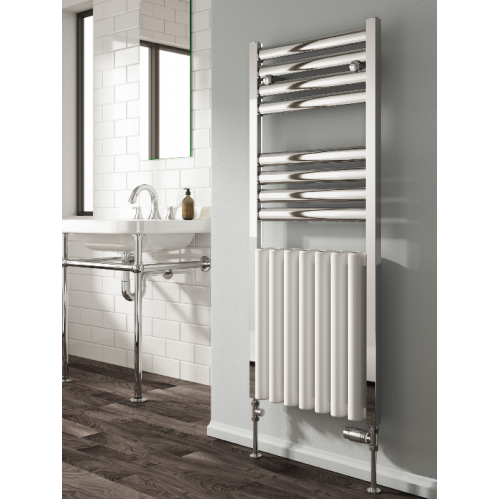
The Burton 1180mm x 485mm model delivers an impressive heat output of 3334 BTUs (978 Watts) at Delta T 50C. This is exceptionally high for a towel rail of this physical size often double the output of a chrome ladder rail of similar dimensions. This high output makes The Burton a genuine primary heat source capable of heating a medium to large family bathroom on its own without needing a secondary radiator.
How does the low water content of The Burton benefit my heating system?
The Burton is designed with low water volume channels. Because it holds less water than a conventional steel radiator it puts less strain on your central heating pump and allows the boiler to heat the entire circuit faster. This technical efficiency reduces the thermal lag in your system meaning you don't have to run the heating for long periods just to get the towel rail hot resulting in lower overall running costs.
Can The Burton be installed on a dual fuel system for summer use?
Yes The Burton is fully compatible with dual fuel installations. To achieve this you need to install a T-Piece on one of the bottom inlets along with a compatible electric heating element and your central heating valves. Because aluminium heats up so quickly you must ensure the electric element is thermostatically controlled to prevent overheating. This setup allows you to dry towels in summer using electricity while using the central boiler in winter.
What specific wall fixings are required given the lightweight nature of aluminium?
Although aluminium is much lighter than steel The Burton still requires secure fixing to solid masonry or structural timber studs to support the weight of the rail plus wet towels. However the lighter dry weight (approx 8-10kg) makes installation easier for a single person compared to heavy steel rails. The rail is supplied with matching wall brackets that accommodate the specific expansion properties of aluminium so you must use the provided hardware rather than generic steel brackets.
What are the pipe center requirements for installing The Burton?
The Burton features side collector bars with bottom connections. The pipe centers are typically the width of the radiator (485mm) plus the valve allowance. For standard valves this usually adds around 80-90mm to the width making the pipe centers approximately 565mm - 575mm. However due to the side panels it is critical to have the physical unit on site to measure the exact centers before roughing in pipework as the valve position can vary slightly depending on whether you use straight or angled valves.
Is The Burton suitable for use with low temperature heat pumps?
Yes The Burton is an excellent technical choice for heat pump systems. Heat pumps operate at lower water temperatures (Delta T 30C) which reduces the output of standard radiators significantly. Because The Burton has such a high starting output (3334 BTUs at Delta T 50C) it retains a substantial effective output even at lower temperatures ensuring your bathroom stays warm without needing an oversized radiator that takes up too much wall space.
How durable is the finish on The Burton aluminium rail in a damp bathroom?
Aluminium is naturally non-corrosive meaning it does not rust like steel. The Burton is finished with a robust powder coating or anodized layer that is highly resistant to moisture and peeling. This makes it ideal for wet rooms or high humidity bathrooms where steel rails might eventually show signs of surface rust. The product is backed by a 10 Year Guarantee which reflects the longevity of the aluminium material in damp environments.
What type of valves should I use with The Burton aluminium rail?
You must use standard 1/2 inch BSP radiator valves. However it is technically advisable to check if the valves are compatible with aluminium radiators to avoid galvanic corrosion (though this is rare with modern systems using inhibitors). Aesthetically Modern Angled Valves are usually the best choice if pipes come from the wall or Straight Valves if from the floor. Thermostatic valves (TRVs) are highly recommended to control the high heat output efficiently.