
The Boleyn Products
Showing 1 to 4 of 4 (1 Pages)
Frequently Asked Questions
Why does the column radiator insert generate higher BTU output than open ladder rails?
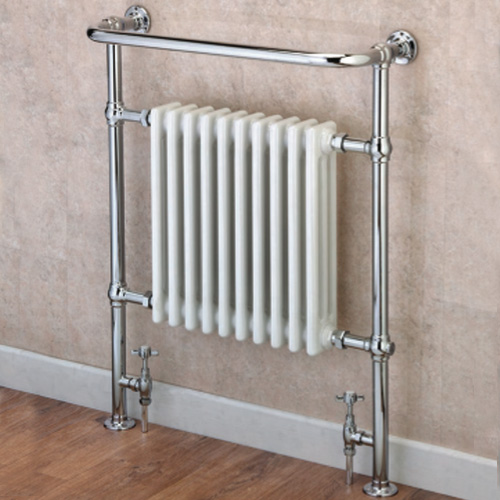
The central Cornel column insert drastically increases the metallic surface area compared to a standard hollow ladder rail. In thermodynamics, heat transfer is proportional to surface area. The multiple steel columns allow for a greater volume of hot water to circulate and radiate heat, meaning this unit can often heat a bathroom on its own without needing a secondary radiator, which is a common limitation of standard chrome towel rails.
How do I determine the correct pipe centers for the floor mounted Boleyn model?
For the floor mounted Boleyn, the pipe centers are not just the width of the rail. You must measure the distance between the two vertical upright tubes where the valves connect. Because the connections are low to the floor, accurate roughing in of pipework is critical before tiling. The pipe centers are typically the rail width minus a specific allowance for the valve width, so you should always have the physical unit or the exact technical data sheet on hand before drilling floor tiles.
What type of radiator valves are technically required for the floor mounted version?
If you are installing the floor mounted Boleyn and your heating pipes come directly out of the floor, you require Straight Radiator Valves. These connect the vertical water pipe directly up into the vertical inlet of the towel rail. If you used angled valves here, the valve heads would protrude into the room, creating a tripping hazard and looking aesthetically incorrect.
Can the Wall Mounted Boleyn be installed on stud partition walls?
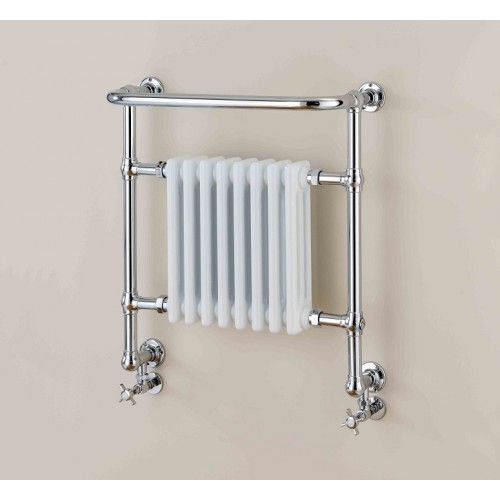
The Wall Mounted Boleyn is a heavy unit due to the steel column insert and water volume. Installing it on a standard plasterboard stud wall requires reinforcement. You must locate the timber studs and anchor the brackets directly into them, or install a timber noggin (cross-brace) behind the plasterboard during the first fix stage. Using simple hollow wall anchors is technically unsafe for a radiator of this weight once filled with water.
Does the chrome finish require specific cleaning to prevent corrosion on the steel base?
Yes, the chrome finish is a plating over mild steel. To prevent surface pitting or rust, you must avoid using acidic cleaners or abrasive scouring pads which can create microscopic scratches in the plating. Technical maintenance involves wiping the surface with a soft cloth and warm soapy water. This protects the barrier between the humid bathroom air and the steel underneath, ensuring the 10 year guarantee remains valid.
How do I bleed air from the central column insert separately from the frame?
The Boleyn acts as two connected hydraulic loops. Air can sometimes get trapped specifically in the top of the column insert section. There is usually a dedicated bleed screw located at the top of the column radiator section, separate from the main frame. You must open this specific valve with a radiator key when the system is cold and the pump is off to ensure the insert fills completely with water and provides full heat output.
Is this traditional rail compatible with modern pressurized combi boiler systems?
Yes, despite its vintage appearance, the Boleyn is manufactured to modern pressure standards. It is technically compatible with both traditional open vented systems (gravity fed) and modern sealed systems (combi boilers) operating up to standard domestic pressures (typically 1 to 3 bar). The steel construction is pressure tested to ensure it withstands the pump pressure of contemporary heating systems.
What is the projection depth difference between the floor and wall mounted models?
The projection depth is the distance from the wall to the furthest front point of the rail. The Wall Mounted model projects approximately 250mm, while the Floor Mounted model projects around 230mm. This 20mm difference is technical but important for small bathrooms where door clearance is tight. You must measure the swing of your bathroom door to ensure it does not hit the front of the radiator when fully open.
Why is a rust inhibitor chemical necessary for the central heating water?
Because the Boleyn is made of mild steel, it is susceptible to internal corrosion if the heating water is oxygenated. You must add a chemical inhibitor (like Fernox or Sentinel) to your central heating loop. This chemical coats the inside of the steel tubes, preventing the water from reacting with the metal. Failure to maintain inhibitor levels is a common cause of pinhole leaks and will technically void the manufacturer warranty.
How does the 10 year guarantee cover the joint between the frame and the column insert?
The 10 year guarantee covers the structural integrity of all brazed and welded joints, including where the tubular frame connects to the column insert. These joints are the most technically complex part of the radiator. The warranty assures that these connections will not crack or leak under thermal expansion and contraction cycles (heating up and cooling down) for the duration of the guarantee period.