
Portland Manual Valve Range Products
Showing 1 to 5 of 5 (1 Pages)
Frequently Asked Questions
How do I technically determine if the Reina Portland Manual Valve is compatible with my specific radiator brand?
To ensure technical compatibility, you need to check the thread size of your radiator's inlet ports. The Reina Portland Manual Valve uses a universal standard 1/2 inch BSP (British Standard Pipe) thread. This specific thread size is used by 99% of radiators and heated towel rails sold in the UK, regardless of the brand or manufacturer. Whether you have a steel panel radiator, a designer column radiator, or a ladder towel rail, as long as the tapping point is 1/2 inch, the Portland valve will screw in securely.
Why is the fluted column design of the Reina Portland valve technically beneficial for grip and operation?
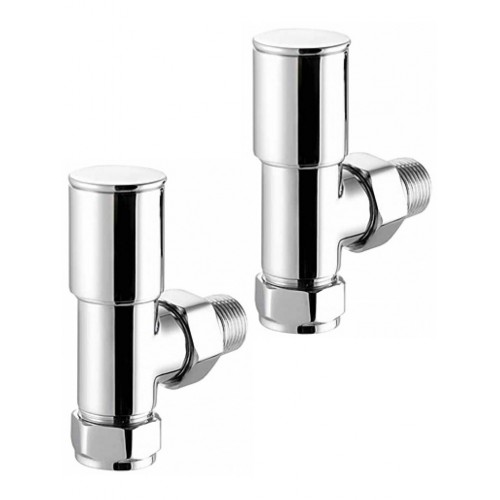
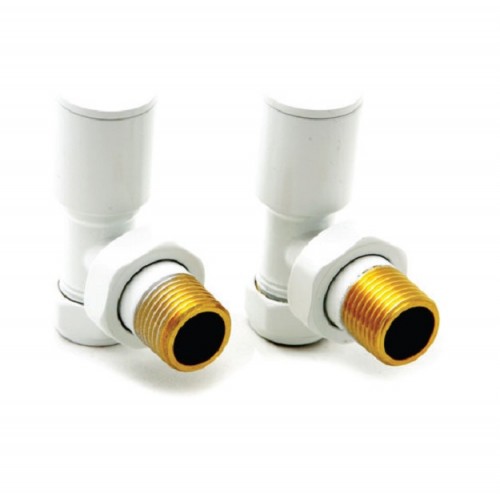
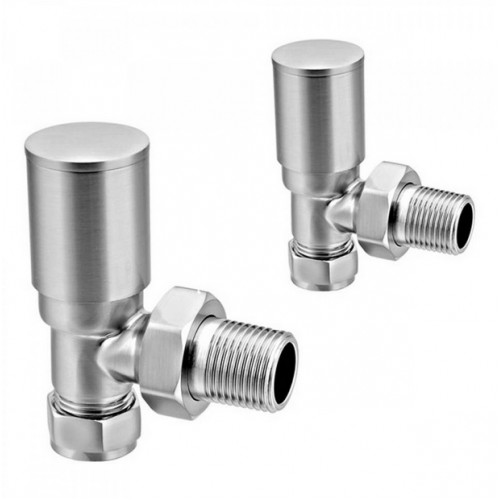
Beyond its architectural aesthetic, the vertical fluted (grooved) design of the Reina Portland valve head serves a practical technical purpose. The grooves act as a grip texture, allowing you to easily turn the valve head even if your hands are damp or if the valve has been set in one position for a long time. This makes manual adjustment of the flow rate smoother and more precise compared to completely smooth cylindrical valves which can be slippery to operate in humid bathroom environments.
What is the correct technical application for the Reina Portland Angled Valve versus the Straight Valve?
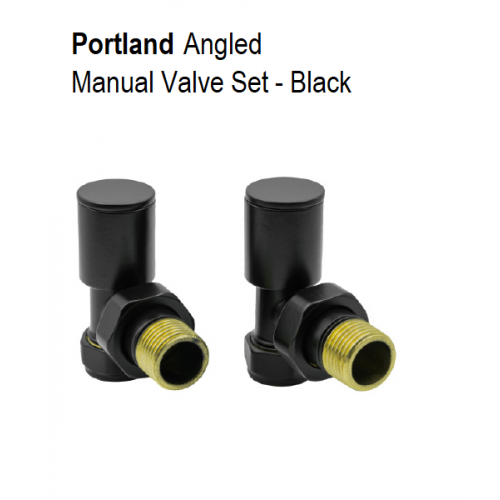
Choosing the correct configuration is a problem solving exercise based on your pipework geometry. Angled Valves: You must technically select these if your central heating pipes emerge vertically from the floor and the radiator connections are on the side. The valve creates a 90-degree bend to connect the two. Straight Valves: You must select these if your pipes run horizontally along the wall directly into the radiator side connections, or if your pipes come up from the floor and the radiator has underneath connections (like some ladder rails). This ensures a direct, low-stress connection without unnecessary pipe bends.
How does the manual operation of the Reina Portland valve differ from a thermostatic valve in terms of boiler control?
Technically, a manual valve like the Reina Portland does not shut off automatically when the room gets warm; it stays open at the fixed flow rate you set. This is critical for the room where your main wall thermostat is located. If you were to use a thermostatic valve in that room, it might shut off the radiator before the wall thermostat reaches its target temperature, causing the boiler to cycle incorrectly. The Reina Portland valve solves this conflict by keeping the radiator hot, allowing the wall thermostat to accurately control the boiler.
How do I install the Reina Portland Valve on 10mm microbore pipework instead of standard 15mm copper?
The Reina Portland valve is manufactured with a standard 15mm compression inlet. To install this on 10mm or 8mm microbore pipework, you do not need a different valve. The technical solution is to use a specific "reducing set." This involves removing the standard 15mm olive (the brass ring inside the nut) and replacing it with a specialized reducer that clamps down onto the smaller pipe. This allows you to use high-quality 15mm valves like the Portland range on older microbore systems without replacing the pipework.
What is the specific function of the Lockshield valve included in the Reina Portland set?
The Reina Portland set typically comes as a pair: one wheel-head (for you to turn) and one lockshield. Although they look similar for visual symmetry, the lockshield plays a vital technical role in "balancing" the system. It is installed on the return pipe and is adjusted during installation to restrict water flow. By tightening the lockshield, you increase hydraulic resistance, forcing more hot water to travel to radiators further away from the boiler pump. This ensures that every radiator in the house heats up at the same rate.
How do I maintain the finish of the Black or Anthracite Reina Portland valves to prevent chipping or peeling?
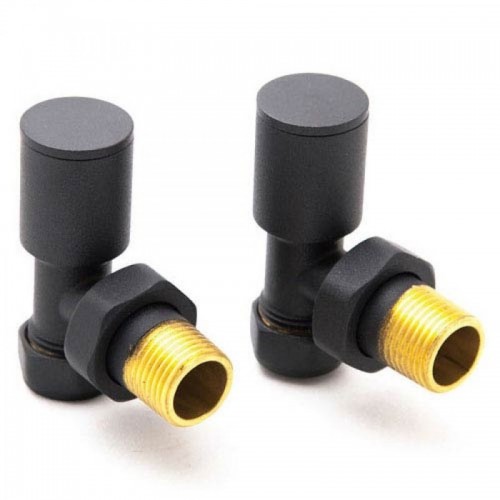
The Matt Black and Anthracite finishes on the Reina Portland range are durable coatings applied over solid brass. To maintain their technical integrity and appearance over the 10-year guarantee period, you must strictly avoid abrasive scouring pads or harsh chemical cleaners containing bleach or acids. These can chemically attack the coating or leave micro-scratches that lead to peeling. The correct maintenance protocol is to simply wipe the valve body with a soft, dry or slightly damp microfibre cloth to remove dust.
Can the Reina Portland Manual Valve be used on a dual fuel heated towel rail system?
Yes, the Reina Portland Manual Valve is the technically preferred choice for dual fuel systems (where a radiator is connected to central heating but also has an electric element for summer use). Because it is a manual valve, you can physically close it to isolate the radiator from the central heating system when using the electric element. This is often safer than using a thermostatic valve which might open unexpectedly if the room gets cold, potentially allowing heating water to circulate when you only want the electric element to heat the towel rail.
Why is the solid brass construction of the Reina Portland valve important for high pressure systems?
The Reina Portland valve is machined from solid brass, which offers superior tensile strength compared to hollow or zinc-alloy alternatives. This makes it capable of withstanding the higher operating pressures found in modern unvented (pressurized) heating systems. While standard combi boilers operate at 1-2 bar, the solid brass body of the Portland valve ensures it will not crack or suffer from fatigue failures even if system pressure spikes, ensuring a leak-free installation for years.
Does the Reina Portland Valve range include a frost protection setting like thermostatic valves?
No, technically the Reina Portland is a manual valve and does not have an automatic sensor to detect low temperatures. It acts purely as a tap. If you are installing this in a room that is prone to freezing (like a conservatory or garage) and you plan to turn the heating off in that room, you must ensure the valve is left slightly cracked open to allow a trickle of water flow. Unlike a thermostatic valve which opens automatically at 7