
Victoriana 4 - 460mm Products
Frequently Asked Questions
How does the substantial 143mm depth of the Victoriana 4 column cast iron radiator technically impact the roughing in distance for the pipework coming from the floor?
The depth of 143mm means the central axis of the radiator bush is situated at approximately 71.5mm from the back face. When you add the standard clearance distance required between the skirting board and the radiator usually around 25mm to 30mm for air circulation the pipe centers must technically be roughed in at approximately 100mm to 105mm from the finished wall surface. Failing to account for this extra depth compared to the thinner 2 column models will result in the pipes leaning outwards putting severe stress on the valve union nuts.
Why is the Victoriana 4 460mm high model considered technically superior for high heat loss rooms with limited linear wall space under windows?
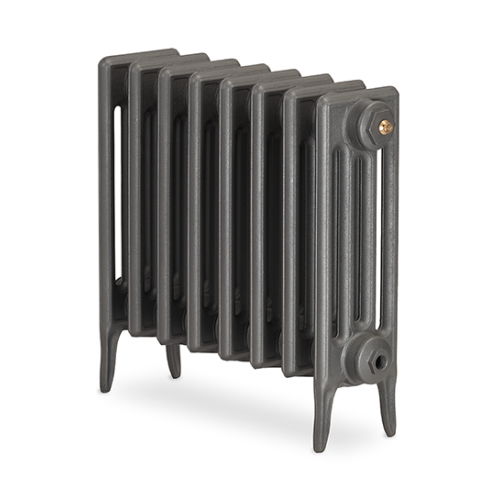
The Victoriana 4 utilizes a four column depth configuration which creates a very dense heat exchanger matrix. For every linear meter of wall space utilized this model generates approximately 3000 BTUs whereas a 2 column model of the same height would generate significantly less. This allows you to technically install a high output emitter in a narrow bay or alcove under a window where width is restricted but the 143mm depth can be accommodated by the overhang of a deep window sill.
What are the specific cleaning and maintenance challenges associated with the internal columns of the Victoriana 4 Paladin radiator and how are they resolved?
The 4 column structure creates a dense block of iron with three internal air channels that are difficult to access by hand. Over time dust accumulates in the center two columns insulating the iron and reducing convective efficiency. You technically cannot reach these areas with a cloth. The problem solving solution is to use a high pressure air duster or a specialized goat hair radiator brush with a long flexible shaft that can navigate between the 143mm deep columns to dislodge debris without scratching the paint finish.
Does the high water content of the 4 column sections require a different pump head setting compared to standard panel radiators?
Yes the Victoriana 4 sections hold a larger volume of water to heat up the increased surface area. A large bank of these radiators creates a significant thermal mass. While the flow resistance is low due to wide waterways the sheer mass of water moving through the system can require a higher pump velocity to ensure the Delta T 50 is achieved across the entire circuit. You should technically verify that your central heating pump is set to a variable pressure constant curve suitable for high volume systems to prevent flow stagnation in the end sections.
How do I technically secure the 40 section Victoriana 4 radiator weighing 131kg to a suspended timber floor without causing joist deflection?
A 40 section model has a small footprint relative to its 131kg weight creating a high point load. If the feet land between joists on chipboard flooring the floor may sag over time causing pipe leaks. You must technically locate the joists and ensure the feet sit directly above them. If this is not possible due to the required position you must lift the floorboards and install noggins (cross bracing) or a ply strengthening plate between the joists to distribute the load broadly ensuring the static deflection does not exceed structural limits.
Is the thermal response time of the Victoriana 4 cast iron radiator significantly slower than the 2 column version and how should I adjust my programmer?
The Victoriana 4 has a much higher thermal mass due to the extra iron and water content in the 143mm deep sections. This results in a longer hysteresis loop meaning it takes longer to heat up but holds heat much longer. You should technically advance your start time by approximately 45 to 60 minutes to allow the core temperature to rise and conversely turn the heating off 45 to 60 minutes earlier than usual as the radiator will continue to emit useful heat well after the boiler has stopped firing.
Can I install the Victoriana 4 460mm high radiator freely in the middle of a room or does the 143mm depth require wall support for safety?
While the 460mm height combined with the 143mm depth gives this model a very low center of gravity making it inherently stable against tipping compared to taller models it is still technically a heavy free standing object. If installed in a walkway or a home with children accidental impact could shift it. Therefore you should technically use luxury wall stays anchored to the floor or a nearby solid structure to prevent any lateral movement that could fracture the rigid copper pipe connections.
What is the correct technical method for applying a touch up finish to the inaccessible central columns of the Victoriana 4 radiator if the paint is chipped?
If the paint chips on the inner columns of the 143mm deep block you cannot reach them with a brush without bridging the wet paint onto adjacent columns. The technical solution is to use a small artist sponge on a long stick or a spray aerosol of the matching RAL color. You must mask off the front and back columns precisely to avoid overspray. Spraying allows the paint to penetrate the deep recesses of the 4 column design where a brush physically cannot fit.
How does the radiant heat profile of the Victoriana 4 differ from the 2 column model regarding furniture placement?
The Victoriana 4 emits a higher intensity of radiant heat per square inch of frontal area because the rear columns heat the air which then warms the front columns further. This creates a dense heat field. You technically need to leave a larger clearance gap between the front of the radiator and any leather or wood furniture approximately 200mm to 300mm to prevent the intense radiant heat from drying out or warping delicate materials which is less of a concern with the lower output 2 column models.
If I am joining two blocks of Victoriana 4 radiators on site does the 143mm depth require a specific torque sequence for the joining nipples?
Yes the 143mm depth means the joining nipples are under significant tension to hold the heavy 4 column sections together. When using the joining key you must technically alternate between the top and bottom nipple in small increments. If you fully tighten the top nipple while the bottom is loose the wide 4 column section will pivot and potentially crack the casting lugs due to the leverage of the 143mm depth. You must keep the faces perfectly parallel throughout the tightening process to compress the gaskets evenly.