
Standard Immersion Elements Products
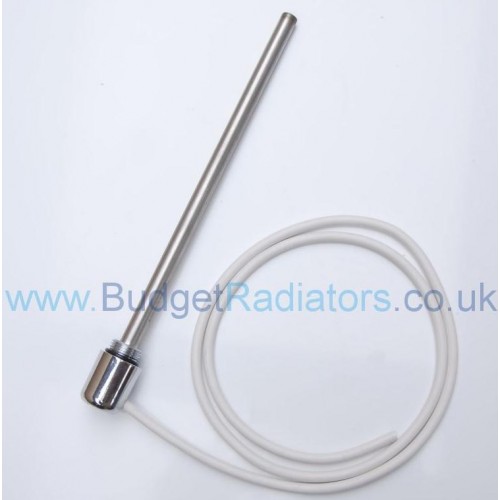
Showing 1 to 5 of 5 (1 Pages)
Frequently Asked Questions
What is the primary difference between Copper and Incoloy immersion elements and which one should I choose for my water type?
The main difference lies in their resistance to corrosion and limescale. Copper immersion elements are excellent thermal conductors and are typically cheaper, making them the ideal choice for soft water areas where limescale is not a significant issue. However, in hard water areas, copper can fail prematurely due to galvanic corrosion or heavy scale buildup. Incoloy elements, made from a high-grade stainless steel alloy, are designed specifically for hard water areas. They resist limescale adhesion and corrosion much better than copper, ensuring a longer lifespan despite the harsher water conditions.
How do I determine the correct length of the standard immersion element needed for my hot water cylinder?
You must measure the length of your existing element to ensure the replacement fits correctly without touching the internal cylinder walls or heating coils. The most common standard lengths for domestic cylinders are 11 inches (27cm) and 14 inches (35.5cm). This measurement is taken from the underside of the mounting head (the flange) to the tip of the heating element. It is crucial to match this length to your current unit because installing an element that is too long may damage the cylinder lining, while one that is too short may not heat the water volume efficiently.
Why is my immersion heater making a loud rumbling or kettling noise during operation?
A rumbling or kettling noise often indicates a buildup of limescale deposits on the heating element surface. As the element heats up, water trapped under the scale boils instantly, causing small explosions of steam that create the noise. This prevents efficient heat transfer and can lead to the element overheating and burning out. If you experience this in a hard water area, it is a sign that you should replace your current unit with an Incoloy immersion element, which is more resistant to scale accumulation, to solve the noise and efficiency problem.
Can I use the lower wattage electric elements listed on this page for a main domestic hot water cylinder?
No, the 200W, 300W, and 600W electric elements listed (such as the EL-PTC models) are designed for heating individual radiators or towel rails, not large hot water cylinders. A standard domestic hot water cylinder typically requires a much higher wattage, usually 3kW (3000 Watts), to heat the large volume of water in a reasonable time. Using a low-wattage radiator element in a cylinder would fail to provide adequate hot water and could be dangerous if not matched to the correct flange and safety requirements. Always check the wattage rating stamped on the head of your old unit before purchasing a replacement.
What thread size is standard for these immersion heaters and how can I verify it fits my cylinder?
Most standard domestic immersion heaters in the UK utilize a 2.25 inch BSP (British Standard Pipe) thread. It is important to note that BSP sizes do not match the physical ruler measurement of the thread diameter; a 2.25 inch BSP thread actually measures approximately 65.5mm across the diameter of the male thread. Before ordering, you should verify this size on your cylinder boss. While the page mentions standard sizing, ensuring your cylinder does not have a non-standard or commercial flange size is a critical step in problem solving installation issues before they occur.
Do the standard immersion elements come with a built in thermostat or do I need to buy one separately?
Standard immersion elements generally require a thermostat to regulate the water temperature and prevent overheating. Some modern elements come with a rod thermostat included, while others require you to transfer your existing rod thermostat or purchase a new one. The thermostat slides into a small tube usually located alongside the main heating loops. For safety and compliance with current regulations, the thermostat must have a secondary safety cut-out to stop the power if the primary control fails. Always check the product specifications to see if the thermostat is included or needs to be added to your order.
What are the safety risks of installing a standard immersion element without a qualified electrician?
Installing an immersion element involves working with both high-current electricity and water, creating a significant safety risk if done incorrectly. Poor electrical connections can cause overheating, melted wiring, or fire, while improper sealing can lead to leaks that damage your property. Furthermore, failing to ensure the cylinder is properly vented or that the safety cut-out is operational can lead to dangerous pressure buildup. We strongly recommend employing a qualified electrician who can certify the work, ensuring the cabling is suitable for the 3kW load and that the installation complies with IEE Wiring Regulations.
How does a PTC electric element function differently from a standard resistance wire element?
Some of the radiator elements listed (EL-PTC) use Positive Temperature Coefficient technology. Unlike a standard fixed-resistance wire that gets hotter the longer it is on, a PTC element is self-regulating. As the temperature of the element increases, its electrical resistance rises, automatically reducing the current and power output. This means the element runs at full power to heat up quickly but consumes less energy once it reaches its operating temperature. This technology prevents the element from overheating and eliminates the need for complex external switching in simple towel rail applications.
What should I do if my immersion heater stops working but the fuse has not blown?
If the heater is not working but the fuse is intact, the issue is often the safety cut-out on the thermostat. Modern thermostats have a reset button that pops out if the water temperature exceeds a safe limit. You can try pressing this reset button after the unit has cooled down. However, if it trips again or the element shows an open circuit when tested with a multimeter, the internal heating wire has likely snapped due to thermal stress or corrosion. In this case, the only technical solution is to drain the cylinder and replace the entire immersion element with a new Copper or Incoloy unit.
Is it necessary to drain the entire hot water cylinder to replace the immersion element?
Yes, replacing a standard immersion element normally requires draining the hot water cylinder to a level below the element boss. Since immersion heaters are typically installed at the bottom or side of the cylinder to heat the full volume of water, removing the element without draining would result in a massive uncontrollable flood. You should turn off the cold water feed to the cylinder, attach a hose to the drain valve, and let the water run out until the level is safe. This is also a good opportunity to flush out any sludge or limescale sediment from the bottom of the tank to improve the efficiency of the new element.