
Arbori - Chrome Products
Showing 1 to 3 of 3 (1 Pages)
Frequently Asked Questions
How does the chrome finish on the Arbori Chrome Towel Rail affect the thermal output compared to white or anthracite models?
Chrome plating has a significantly lower emissivity rate than painted finishes. Technically, this means the shiny surface traps more heat inside the metal body rather than radiating it out into the room. For the Arbori Chrome series, you can expect a heat output reduction of approximately 20 to 30 percent compared to the same sized anthracite model. When performing your room heating calculations, you must account for this reduction. If your bathroom requires 2000 BTUs, you may need a larger chrome rail or a supplemental heat source, whereas a smaller painted rail might suffice.
What is the correct wattage calculation method for selecting an electric element for the Arbori Chrome 1130mm model?
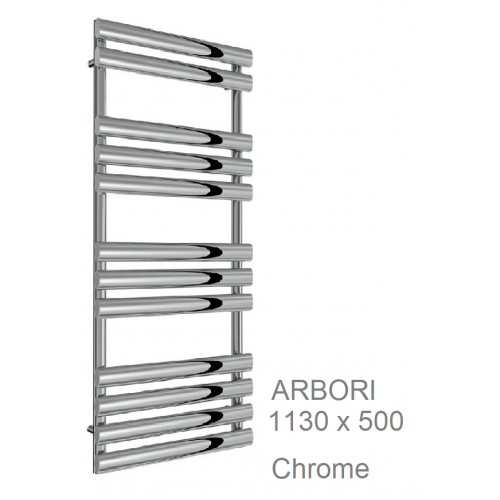
To ensure safety and efficiency, you must match the electric element wattage to the specific output of the chrome rail, not the generic range output. The Arbori Chrome 1130mm model outputs approximately 383 Watts. For a correct wattage calculation, you should choose an element that provides roughly 90 percent of this capacity to allow for thermal expansion without over pressurizing the unit. A 300W element is the technically correct choice. Using a higher wattage element without a high precision thermostatic control could cause the fluid to boil and the pressure valve to blow.
Can I install a dual fuel kit on the Arbori Chrome Towel Rail without ruining the aesthetic?
Yes, the Arbori Chrome is fully compatible with dual fuel installations. To maintain the sleek, reflective aesthetic, you should use a chrome plated T-piece and matching chrome valves. Technically, the T-piece screws into the bottom BSP inlet, allowing both the central heating valve and the electric element (such as the MEG-1.0) to enter the same port. This setup ensures you can heat the rail via the boiler in winter and electricity in summer, providing year round utility without compromising the visual design of the bathroom.
Why is the MEG-1.0 thermostatic element recommended for chrome towel rails specifically?
Chrome rails can become extremely hot to the touch very quickly due to the nature of the metal finish. The MEG-1.0 thermostatic element is recommended because it allows you to set a specific surface temperature rather than just running at full power. This is a critical safety feature for chrome products in family bathrooms, as it prevents accidental burns. Additionally, the microprocessor control ensures energy efficiency by cycling the power only when needed to maintain the set temperature, rather than wasting electricity on constant heating.
Does the Arbori Chrome range require special cleaning to maintain the finish and guarantee?
Yes, the chrome finish requires specific maintenance to prevent pitting and corrosion which could void the 10 year guarantee. You should clean the rail using a soft microfiber cloth and warm water with a mild, neutral detergent. Technically, you must avoid any acidic or abrasive cleaners, as the chemical reaction can strip the chrome plating, exposing the steel underneath to oxidation. Regular polishing with a dry cloth prevents water spots and lime scale buildup, ensuring the reflective surface remains pristine and the heat transfer efficiency is not compromised.
Are the connection threads on the Arbori Chrome standard or do I need specific chrome adapters?
The Arbori Chrome utilizes standard half inch BSP threading (British Standard Pipe) for all its inlet connections. This is the universal standard for UK plumbing. You do not need special adapters for the thread itself, but for a professional finish, you should use chrome radiator valves and chrome sleeving kits to cover the copper pipework coming from the wall or floor. This ensures the entire installation looks seamless and reflects the high quality design of the Arbori rail.
Is the Arbori Chrome compatible with a Touch Control Element for modern smart bathrooms?
Yes, the Arbori Chrome is fully compatible with a Touch Control Element. These units feature a capacitive glass or plastic interface that screws directly into the bottom of the rail. The Touch Control system offers superior energy efficiency by allowing you to program heating schedules and precise temperatures. Unlike manual knobs, the smooth face of the touch controller is easy to wipe clean and resists moisture ingress, making it an ideal technical and aesthetic match for the polished chrome surface of the Arbori.
How do I prevent the Arbori Chrome rail from freezing if installed in a conservatory or cold bathroom?
If your Arbori Chrome rail is installed in a room prone to low temperatures, you should ensure your heating element features a freeze protection mode. The MEG-1.0 element, for example, has a built in sensor that detects when the fluid temperature drops below 7 degrees Celsius. It will automatically pulse the heating coil to keep the fluid liquid, preventing it from freezing and expanding. This technical feature is vital for chrome rails, as the rigid plating can crack if the underlying steel expands due to ice formation.
What are the wall mounting requirements for the Arbori Chrome to ensure it supports the weight of wet towels?
The Arbori Chrome is a heavy unit due to its steel construction and multi layer plating. The mounting brackets provided must be secured into solid masonry or timber studs using appropriate heavy duty wall plugs. You cannot rely on plasterboard fixings alone. The rail has a wall projection of 102mm. You must ensure the bracket positions are measured precisely so the weight is distributed evenly. Incorrect installation can lead to stress on the pipe connections, potentially causing leaks at the BSP thread joints over time.
How does the vertical branch design of the Arbori Chrome improve towel drying efficiency?
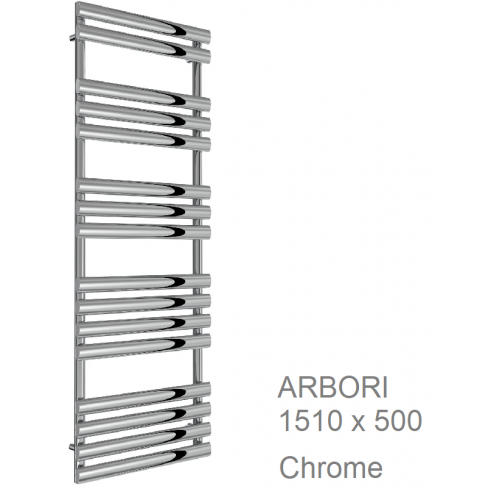
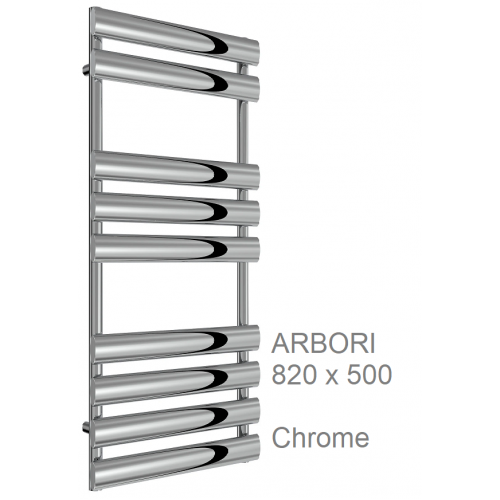
The unique branch design of the Arbori Chrome allows you to slide towels onto the open ended sections easily. Technically, this separation promotes better air circulation around the fabric compared to a standard ladder where towels are often bunched together. The chrome surface facilitates rapid heat transfer to the towel on contact. By spreading towels out across the branches, you maximize the surface area exposed to the heat source, resulting in faster drying times and reduced bacterial growth on damp towels.