
Chisa - Chrome Products
Showing 1 to 2 of 2 (1 Pages)
Frequently Asked Questions
Why does the Chisa Chrome model have a lower heat output than the white or anthracite versions and how do I compensate for this?
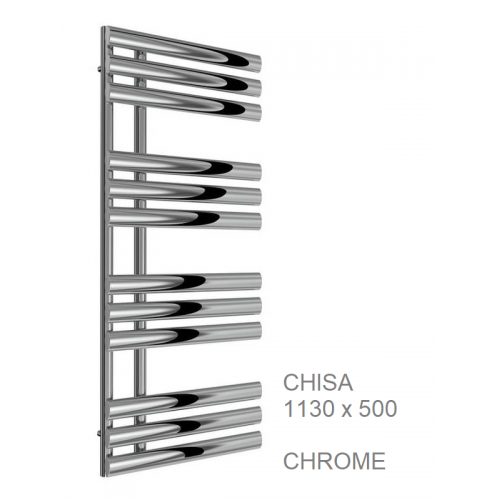
Chrome plating acts as a thermal insulator which reduces the emissivity of the steel surface by approximately 20 to 30 percent compared to powder coated finishes. For example the Chisa Chrome 1130mm outputs 1305 BTUs while the painted version outputs higher. To solve this heating deficit you must perform a strict BTU calculation for your bathroom. If the Chrome Chisa does not meet the total heat requirement alone you should install a slightly larger model than originally planned or supplement the heat with underfloor heating to ensure the room reaches a comfortable temperature.
What specific maintenance is required to prevent the Chisa Chrome finish from peeling or corroding in a humid bathroom?
Chrome finishes can degrade if exposed to harsh chemicals. To solve the problem of pitting or peeling you must never use abrasive scourers or acidic cleaning agents like bleach on the Chisa Chrome rail. Instead clean the surface using only a soft microfiber cloth and warm soapy water. You should also regularly wipe away standing condensation droplets to prevent limescale buildup which can attack the plating over time ensuring the 10 Year Guarantee remains valid.
How do I correctly size an electric heating element for the Chisa Chrome to avoid overheating the fluid?
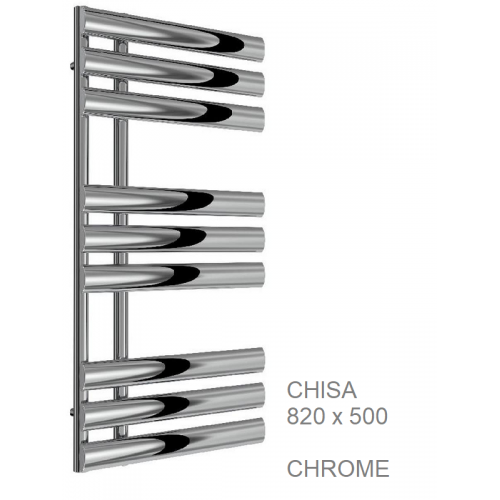
When converting the Chisa Chrome to dual fuel you must select an element that aligns with the lower wattage output of the chrome finish. For the 820mm model which outputs 269 Watts you should use a 150W or 200W element. For the 1130mm model rated at 383 Watts a 300W element is appropriate. Using an oversized element can cause internal pressure buildup and dangerous overheating because the chrome surface cannot radiate the heat away fast enough.
What valve style should I select to maintain the aesthetic continuity of the Chisa Chrome installation?
To solve the aesthetic problem of unmatched pipework you should pair the Chisa Chrome with chrome finished valves and pipe sleeeving kits. If your pipes emerge from the wall use chrome corner valves to create a neat 90 degree turn into the bottom inlets. If pipes come from the floor use straight chrome valves. This ensures that the reflective finish flows seamlessly from the floor or wall into the radiator creating a high end designer look.
Does the 102mm depth of the Chisa Chrome cause obstruction issues in small en suites?
The Chisa Chrome has a projection of 102mm which is deeper than standard flat rails. In very small en suites or cloakrooms this can cause obstruction if placed behind a door. To solve this layout problem measure the distance from the wall to the edge of the fully open door. If it is less than 110mm the door handle may strike the chrome surface causing dents. You must ensure adequate clearance or install a door stop to protect the radiator finish.
How do I eliminate cold spots at the top of the Chisa Chrome vertical bars?
Cold spots on the upper rungs of the Chisa Chrome indicate an air lock which prevents hot water from rising. Because the chrome surface makes it difficult to feel temperature gradients by hand you should rely on the system pressure gauge. To fix this turn off the pump and open the bleed valve located at the top of the upright. Allow the air to hiss out until a steady stream of water appears then close it tight. This restores full circulation and ensures the top bar is hot enough to dry towels.
Is the Chisa Chrome suitable for use on a low temperature heat pump system?
The Chisa Chrome is rated at Delta T50. On a heat pump system running at Delta T30 the output will drop significantly potentially below 500 BTUs for the smaller model. To solve this performance drop you would need to use the Chisa Chrome strictly as a towel warmer rather than a room heater. You must verify that the rest of the bathroom has a primary heat source like a large radiator or underfloor loop to maintain ambient warmth.
Can I install the Chisa Chrome on a stud wall considering the weight of the steel and fluid?
Yes but you must reinforce the wall. The Chisa Chrome is made of mild steel and is heavy when filled. Standard plasterboard fixings are liable to fail under the leverage. To solve this you should locate the vertical timber studs and align the brackets with them. If the width of the radiator (500mm) does not match the stud spacing you must open the wall and install a timber noggin between the studs to provide a solid anchor point for the chrome brackets.
How does the vertical ladder design of the Chisa Chrome improve towel drying efficiency?
The vertical ladder design solves the problem of damp towels by utilizing convection. As the Chisa Chrome heats up air is drawn from the floor and rises through the horizontal bars. By spacing out your towels across the 9 or 12 sections you allow this warm air current to pass between the fabric layers. This dries towels faster and reduces the risk of damp odors compared to crowding them onto a single hook or ring.