
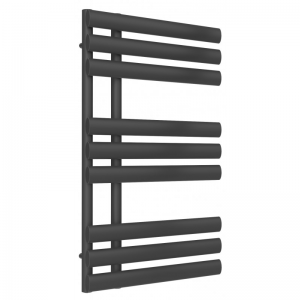
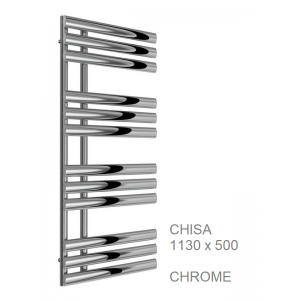
The Chisa Products
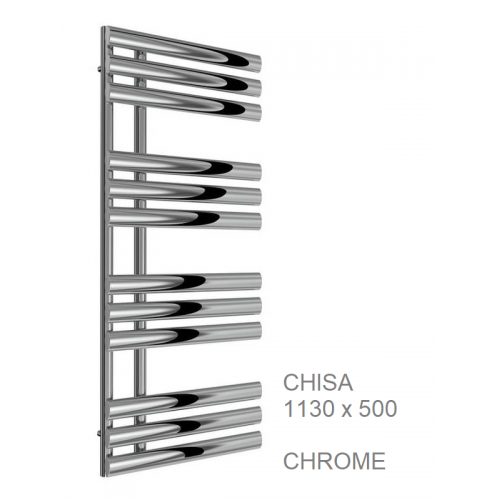
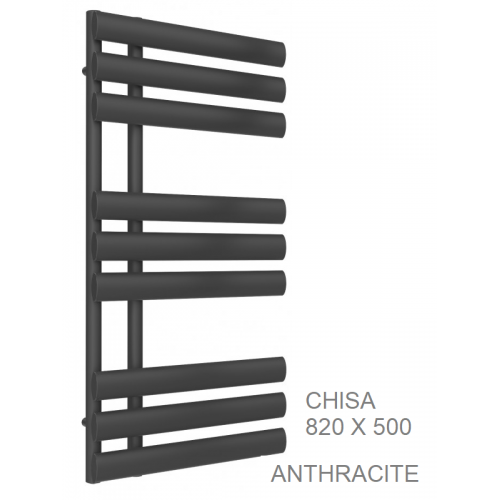
Showing 1 to 4 of 4 (1 Pages)
Frequently Asked Questions
How does the heat output difference between the Chrome and Anthracite finishes affect my bathroom temperature?
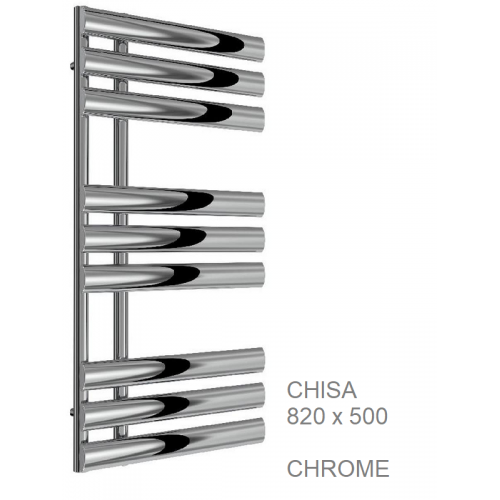
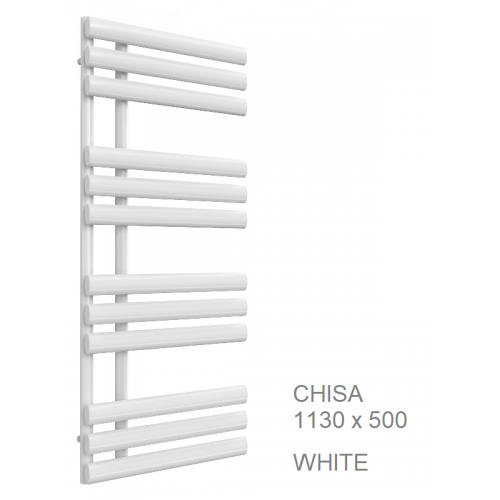
The finish of a radiator significantly impacts its thermal efficiency due to emissivity rates. For The Chisa, the Anthracite or White painted models offer higher outputs (e.g., 1561 BTUs for the 1130mm model) compared to the Chrome version (1305 BTUs) because chrome plating acts as an insulator that traps some heat inside the metal. If your bathroom is larger or poorly insulated, you should solve this potential heat deficit by choosing the painted finish for maximum efficiency or ensuring your BTU calculation accounts for the roughly 20 percent drop in output associated with chrome plating.
What specific components are required to convert The Chisa into a dual fuel towel rail for summer use?
To solve the problem of cold towels in summer when your central heating is off, you can convert The Chisa to dual fuel. This technically requires installing a T-piece on the inlet pipe which allows both the central heating valve and an electric heating element to enter the radiator. You must select an element with a wattage that matches the specific size of your rail (e.g., a 300W or 400W element for the 1130mm Chrome model) to prevent overheating. The element connects to a fused spur, allowing independent electrical operation while keeping the system water-tight.
How do I account for the 102mm depth of The Chisa when planning installation in a narrow space?
The Chisa has a fixed depth of 102mm from the wall to the front face which is a critical dimension for installation in tight areas like behind a door or in a small alcove. To avoid physical obstruction, you must measure the clearance of any swinging doors or drawers near the installation site. You should also add approximately 50mm to 80mm of clearance space in front of the rail to allow for thick towels to be hung without projecting into the walking path or preventing the door from opening fully.
What are the correct pipe center measurements for installing The Chisa to ensure valves fit perfectly?
For the 500mm wide Chisa model, the pipe centers are not exactly 500mm because the valves add width to the installation. Technically, the pipe centers are usually calculated as the width of the radiator minus the valve allowance if the inlets are underneath, or width plus valves if side-tapped. Since The Chisa is a ladder rail with bottom vertical inlets, the pipe centers will be approximately 455mm (depending on your specific valve choice). We strongly recommend having the physical product on site before laying underfloor pipes to avoid costly plumbing alterations later.
Why might the top rungs of The Chisa remain cold while the bottom is hot and how do I fix this?
Cold spots at the top of a vertical ladder rail like The Chisa almost always indicate trapped air pockets which prevent hot water from circulating to the highest point. To solve this, you need to perform a bleeding operation. Locate the air bleed valve at the top of the vertical upright, turn off your heating pump to stop the flow, and use a radiator key to open the valve slightly until water squirts out. This releases the air lock, allowing the internal water pressure to fill the top rungs and restore full heat output.
Is the 12-section design of the 1130mm model superior to the 9-section model for drying capabilities?
Yes, the number of sections directly influences both heat surface area and practical drying capacity. The 1130mm Chisa features 12 horizontal sections compared to 9 on the 820mm model. Technically, this provides more rungs to separate multiple damp towels, allowing better air circulation between layers. If you have a family bathroom with high usage, opting for the 12-section model solves the problem of damp towels not drying quickly enough, as the increased surface area generates a stronger convection current of warm air.
What does the Delta T50 rating mean for the efficiency of The Chisa in a modern heating system?
The BTU outputs listed for The Chisa (e.g., 1172 BTUs) are calculated at Delta T50, which assumes a boiler water temperature of roughly 75 degrees Celsius. If you are installing this on a modern low-temperature system like a heat pump or a condensing boiler running at lower settings (Delta T30 or T40), the actual heat output will be significantly lower. You must solve this sizing discrepancy by applying a correction factor to your calculations, potentially requiring a larger size of The Chisa to achieve the same room temperature.
Can The Chisa be installed on a plasterboard wall given its weight and water volume?
The Chisa is made of mild steel and becomes quite heavy when filled with water (especially the larger 1130mm model). Installing it directly onto standard plasterboard can lead to fixings pulling out over time. To solve this structural issue, you must identify the timber studs behind the plasterboard and anchor the brackets into them. If the studs do not align with the radiator width, you should install a timber noggin or ply reinforcement behind the plasterboard during the first fix stage to provide a solid biting point for the screws.
Does the 10 Year Guarantee cover corrosion if I install The Chisa in a wet room?
The 10 Year Guarantee covers manufacturing defects such as leaking welds or finish degradation under normal conditions. However, installing steel radiators in a wet room where they are directly exposed to constant water spray can technically accelerate corrosion if the coating is compromised. To ensure the guarantee remains valid and to solve potential rust issues, you should install the rail outside the direct spray zone of a shower (Zone 1) and ensure the bathroom has adequate ventilation to reduce standing humidity levels that attack the metal finish.
What type of valves do I need if my pipes come out of the wall versus the floor?
The Chisa features bottom-located inlet connections on the vertical uprights. If your central heating pipes emerge from the floor, you will technically require straight radiator valves to connect vertically. If your pipes emerge from the wall, you will require angled or corner valves to create the 90-degree turn into the bottom of the rail. Choosing the correct valve orientation solves the problem of messy pipework and ensures a clean, professional finish where the chrome or matching coloured pipes look integrated with the rail design.