
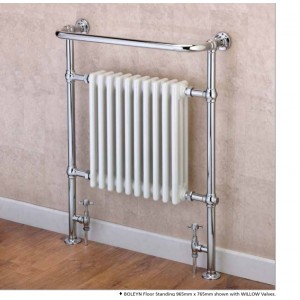
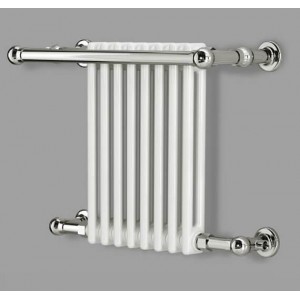
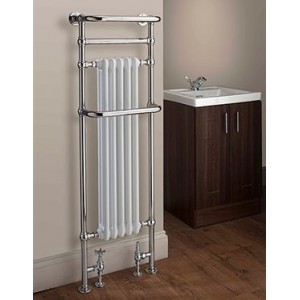
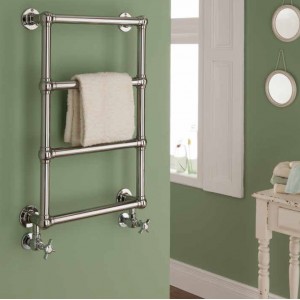
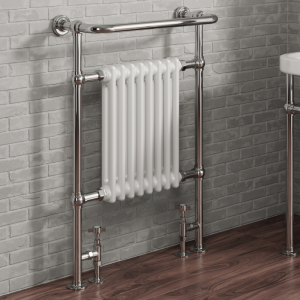
Traditional Towel Rails Products
Frequently Asked Questions
How do I accurately calculate the required BTU output for a traditional towel rail to ensure it heats my large Victorian bathroom effectively?
To get the right heat, you must measure your room first. Measure the height, width, and length of your bathroom. Then, use our BTU calculator (British Thermal Unit calculator). If you have single-pane windows or high ceilings, you need a higher number. Always pick a traditional towel rail that matches or goes slightly above this number. If you pick one with a low BTU, your bathroom will stay cold.
What is the technical difference between a standard central heating connection and a dual fuel kit installation for traditional towel rails?
A standard connection only works when your main home heating is on, usually in winter. A dual fuel kit is smarter. It connects to your pipes for winter heat and has an electric stick (heating element) inside for summer. This means you can have warm towels in July without turning on the heating for the whole house. It is the best choice for year-round comfort.
Can I completely replace my existing standard panel radiator with a floor-mounted traditional towel rail without changing the pipework?
You can, but you must check the pipe centres. This is the distance between the two water pipes coming out of your floor or wall. Traditional rails often have different widths than modern panel radiators. If the pipes do not line up, a plumber will need to move them. Also, check if the new rail gives out enough BTU output to keep the room warm like the old one did.
Why is the top section of my traditional towel rail staying cold while the bottom section is hot, and how do I fix this thermal issue?
This problem is caused by trapped air inside the rails. The air stops the hot water from rising to the top. To fix it, you need to bleed the radiator. Turn off your heating and wait for it to cool. Find the small valve at the top of the rail. Use a radiator key to open it slightly until you hear a hiss. When water starts to drip out, close it quickly. The top should now get hot.
What is the functional difference between thermostatic radiator valves (TRVs) and manual valves for traditional bathroom heating?
Manual valves are like a simple tap; they are either fully on or fully off. You have to turn them by hand to change the heat. Thermostatic radiator valves (TRVs) are smarter. They have a sensor inside that feels the room temperature. If the room gets too hot, the TRV turns the radiator down automatically. This saves you money on energy bills.
Do I need angled, straight, or corner radiator valves for my floor-mounted traditional towel rail installation?
This depends on where your water pipes come from. If your pipes come up from the floor, you usually need straight radiator valves. If your pipes come out of the wall, you usually need angled valves or corner valves. Look at your pipes first before you buy to make sure they fit the traditional towel rail perfectly.
Is it safe to install an electric or dual fuel traditional towel rail in Zone 1 or Zone 2 of my bathroom near the shower?
Electricity and water can be dangerous. Bathrooms are divided into "Zones" based on safety. Zone 1 is inside the shower. Zone 2 is just outside it. For safety, your electric heating element must be rated IPX4 or higher to handle splashes. Always ask a qualified electrician to install it. They will ensure it meets UK safety laws so you do not get a shock.
How does the column radiator insert in a traditional towel rail improve heat output compared to a standard ladder rail?
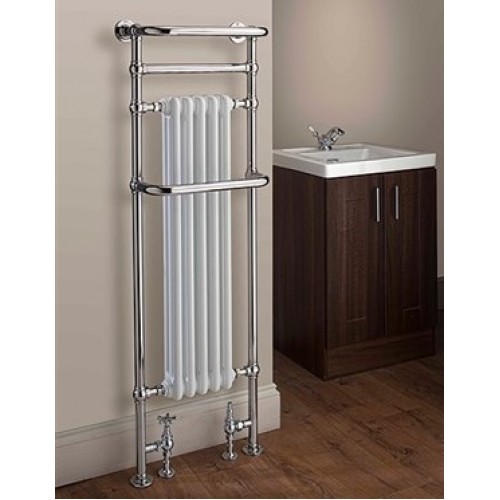
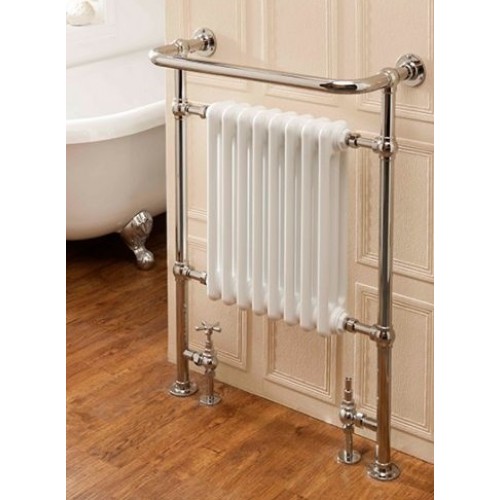
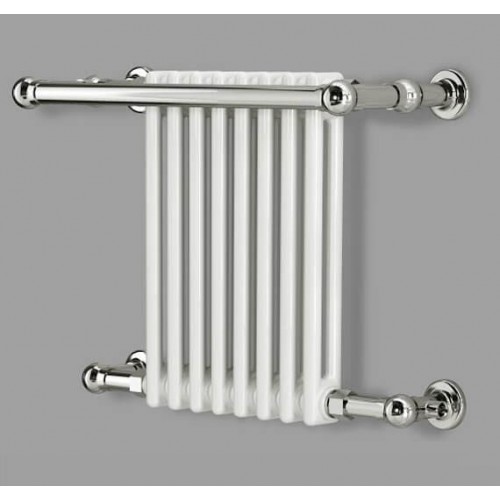
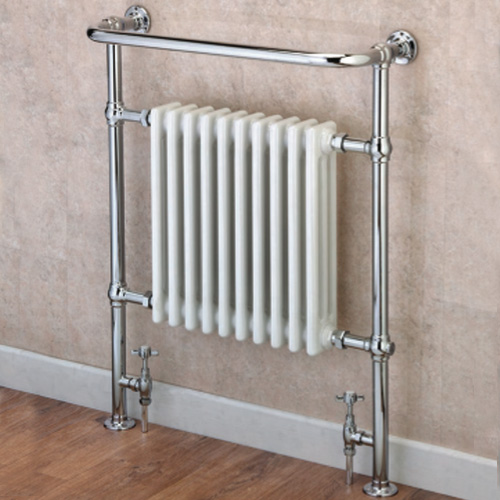
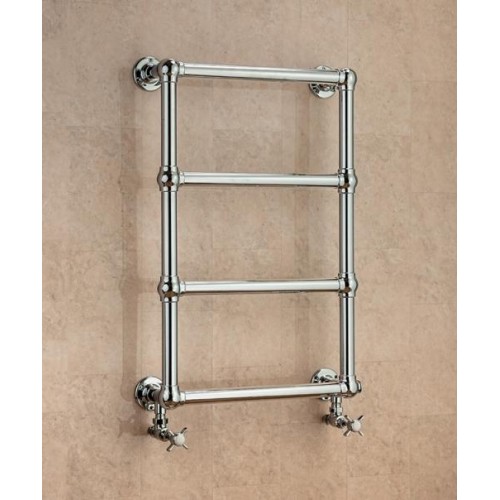
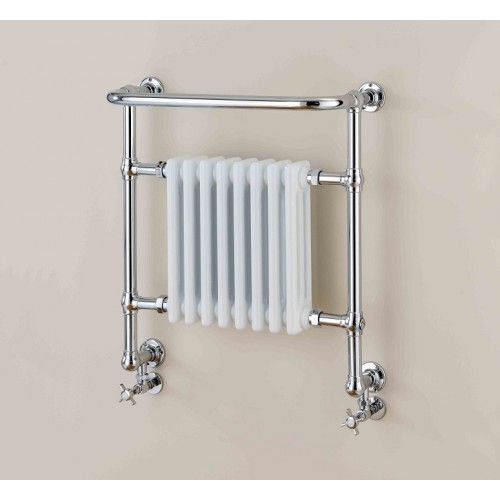
A standard ladder rail only has thin bars, which do not hold much hot water. A traditional towel rail often has a big white column radiator in the center. This part acts like a powerhouse. It holds much more hot water and has a larger surface area. This allows it to push out much more heat (higher BTUs) into the room, keeping the air warm, not just the towels.
What is the difference between Delta T50 and Delta T60 when reading the technical heat output specifications?
Delta T is just a way to measure heat power. It compares the radiator temperature to the room temperature. Most UK shops use Delta T50 as the standard. If you see a rating for Delta T60, the number will look higher, but it is misleading. Always check the Delta T50 number to get the true heat output so you can compare products fairly.
Can I install a traditional towel rail on a secondary hot water circuit or open loop system?
Most modern systems are "closed loop" (sealed). If you have an old "open loop" system or use the same water for your taps and radiators, you must be careful. Steel radiators will rust effectively immediately in these systems. You must buy a brass towel rail or stainless steel one. Brass does not rust. Check your system type with a plumber first.
How do I properly maintain and clean the chrome finish on my traditional towel rail to prevent corrosion and scratches?
Chrome is shiny but can scratch easily. Never use steel wool or harsh chemical cleaners like bleach. These strip the protective layer. Instead, use a soft microfiber cloth and warm soapy water. Wipe it gently. The most important step is to dry it with a dry cloth immediately. This stops water spots and keeps the chrome finish looking brand new.
What are the structural wall requirements for hanging a heavy wall-mounted traditional towel rail safely?
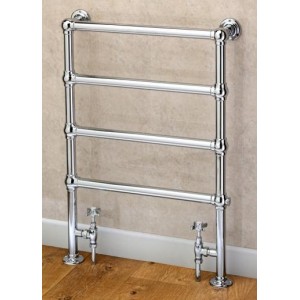
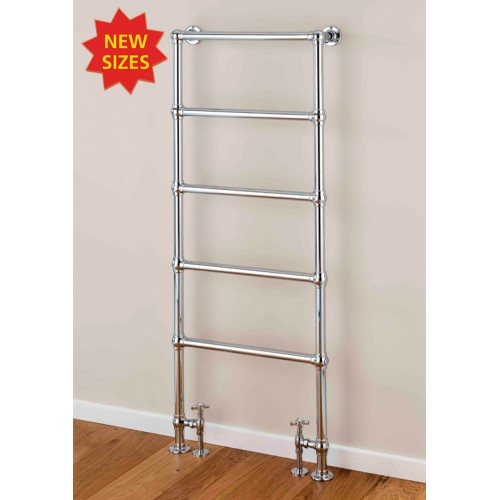
Traditional rails can be very heavy, especially when full of water. You cannot hang them on thin plasterboard (drywall) alone; they might rip off the wall. You need a solid brick wall or wooden studs behind the plasterboard. If you are not sure, choose a floor-mounted traditional rail. These stand on legs on the floor, which takes all the weight safely.
Why is my dual fuel electric element switching off before the towel rail is fully hot?
The electric element has a safety sensor inside. If it gets too hot, it turns off to stop overheating. This can happen if the rail is empty of water or if trapped air is covering the element. Make sure the rail is full of water and bled properly. Also, check that the element is powerful enough (in Watts) for the size of your heated towel rail.
Can I use a smart home thermostat to control my traditional towel rail temperature?
Yes, you can. You can replace the standard head of a thermostatic valve with a smart electronic head. This links to your Wi-Fi. You can then use your phone to turn the heating up or down for just that bathroom. It is a great way to mix classic Victorian style with modern technology.
How do I fix a leaking valve tail on my traditional towel rail without draining the entire system?
A leak often comes from the joint between the valve and the radiator. You might need to tighten the nut. If that does not work, you need to add more PTFE tape (plumber's tape) to the thread. You can usually turn off the two valves (lockshield and wheelhead) to isolate the radiator. This lets you fix the leak without emptying all the water from your house pipes.
What is the typical warranty period for traditional towel rails and what does it cover technically?
A good quality rail usually comes with a 5 to 10-year warranty. This covers the metal structure against leaking or rusting from the inside. However, it usually does not cover the rubber washers or the electric heating element (if you have one), which often has a shorter warranty of 1 or 2 years. Always keep your receipt.
Why do I hear a loud banging or gurgling noise coming from my traditional towel rail when the heating turns on?
Gurgling means there is air inside, so you need to bleed it. Banging noises are different. This is often "water hammer," caused by water rushing through loose pipes. It can also happen if the radiator valves are on the wrong way round (flow vs return). Check the arrows on the valves to make sure water is flowing in the right direction.
How much clearance space do I need to leave around a floor-mounted traditional towel rail for proper air circulation?
You should not box in a radiator. For the best heat, leave at least 10-15cm of space below it and 5-10cm above it. This lets cool air flow into the bottom and hot air rise out of the top (convection). If you cover it up with towels or furniture, the heat gets trapped, and your bathroom will stay cold.
What material is best for heat conductivity in traditional towel rails: mild steel, stainless steel, or brass?
Mild steel is the most common and heats up quickly. Brass is very expensive but holds heat well and will never rust. Stainless steel is very tough and stays hot for a long time after the heating turns off. For most homes, mild steel is the best balance of good heat and affordable price.
Can I paint a chrome traditional towel rail if I want to change the color to match my new bathroom decor?
It is very difficult to paint over chrome because it is so smooth; paint does not stick to it. If you try, it will likely peel off when the radiator gets hot. It is much better to buy a rail that is already the color you want, like white or anthracite. If you must paint it, you need a specialist metal primer and heat-resistant radiator paint.